Rules
Evaluating Derivatives
Function Behavior
Particle Motion
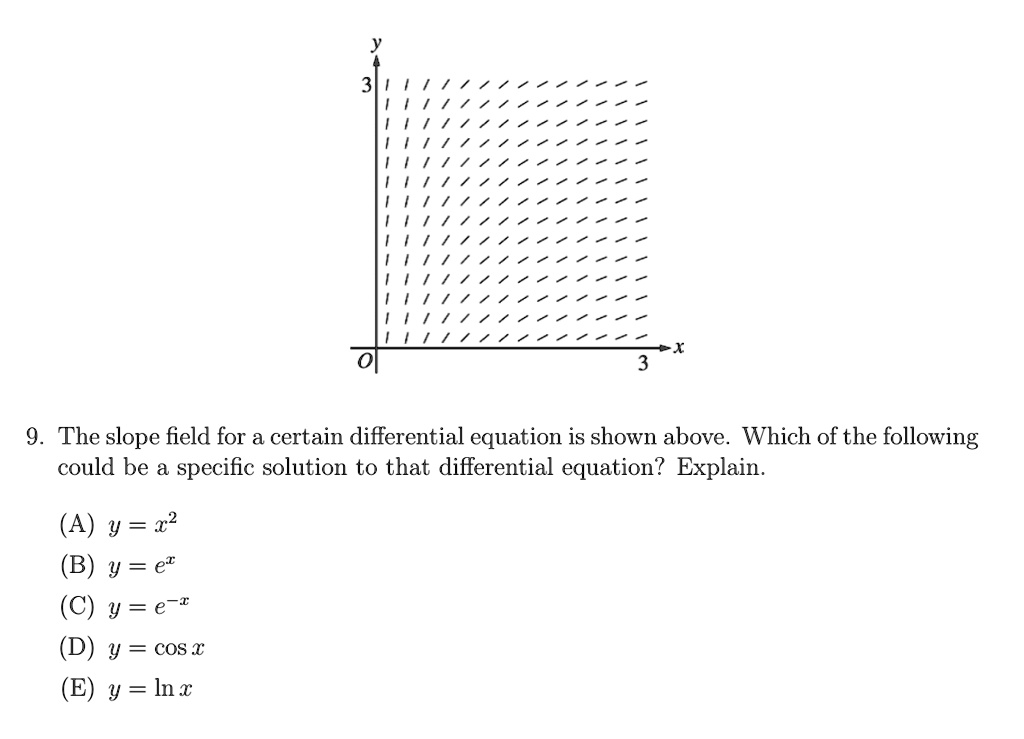
Slope Fields
100
The Power Rule
If f(x)=xn, then f'(x)=nxn-1
100
Derivative of 5
0
100
Behavior of f if f'(x) is positive
Increasing
100
Relation between v(t) and p(t)
v(t)=p'(t)
100
Describe the slope field of dy/dx=0
At every point, the slope is 0
200
The Chain Rule
d/dx f(g(x)) = f'(g(x)) x g'(x)
200
Derivative of (18x)(24x3)
(18)(72x2) + (18x)(24x3)
200
This shows the graph of f'(x). Find the interval(s) where f"(x) is increasing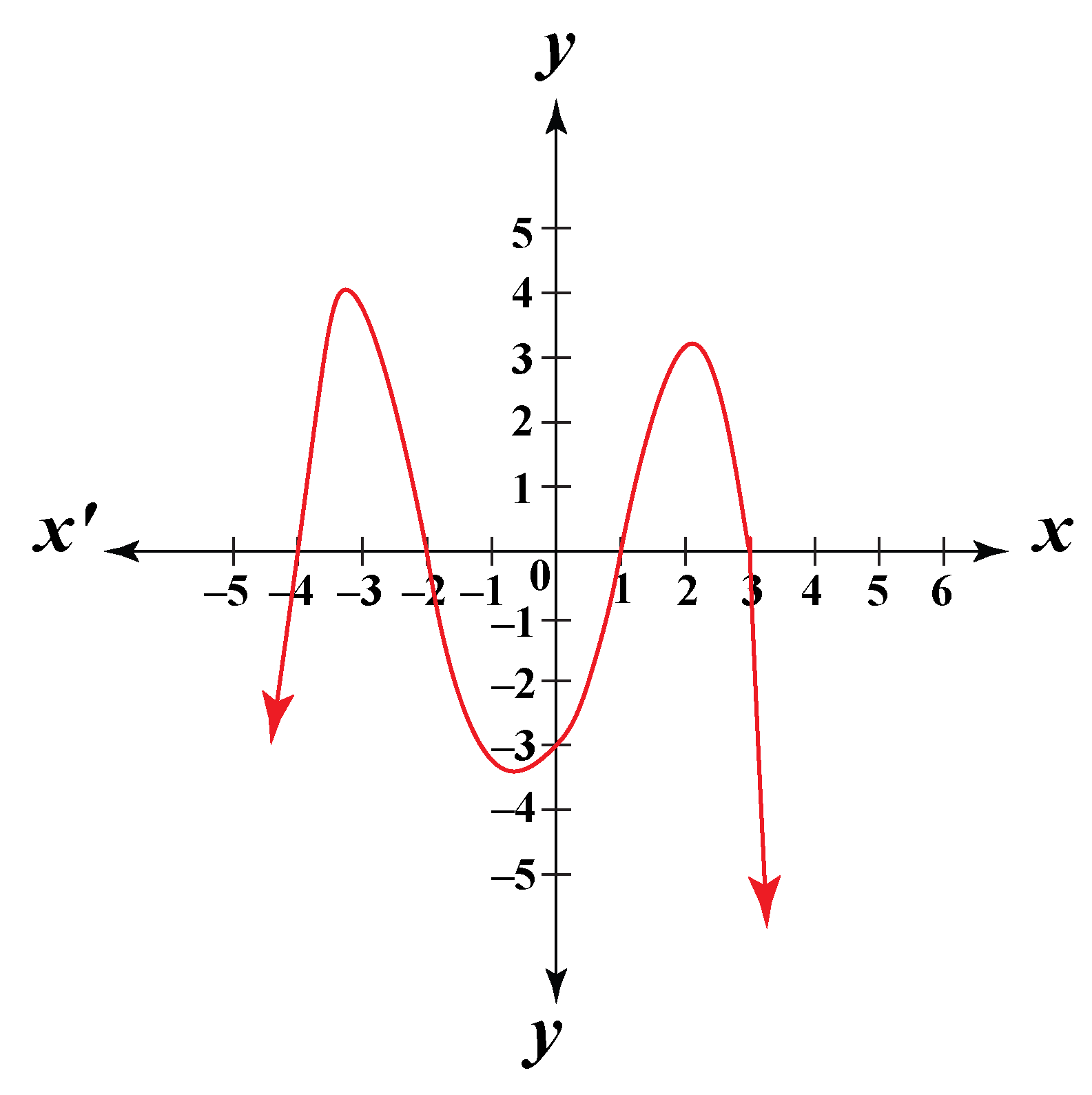
(-2,1)
200
When is a particle speeding up
v(t) and a(t) have the same sign
200
What will the graph of y=x2 look like on a slope field graph at point (1,1)
Positive slope of 1.
300
Derivative of Tangent
sec2x
300
Derivative of (3x2 + 5x)/(6x)
[(6x)(6x+5) - (3x2 + 5x)(6)]/(36x2)
300
Point of Inflection of f(x) on f"(x)
f"(x) crosses 0
300
If p(t) = 4x3 - 9x2 + x, find v(t)
v(t) = 12x2 - 18x + 1
300
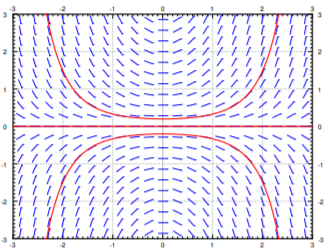
a) y'=xy
b) y=xy
c) y'=x2
d) y=x2y
a
400
Derivative of ax
(ax) x (lna)
400
Derivative of e5y
(5e5y)(dy/dx)
400
This shows the graph of f'(x), find the interval(s) where f(x) is decreasing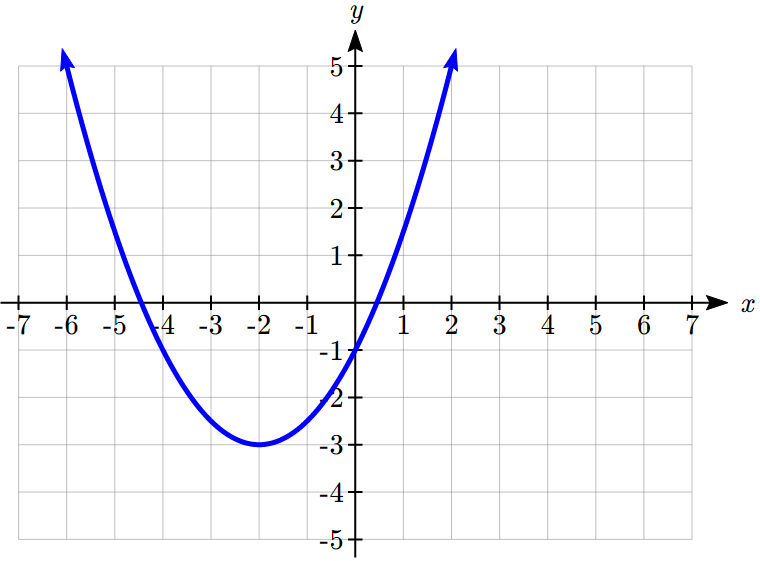
(-4.5,0.5)
400
Calculating speed
|velocity|
400
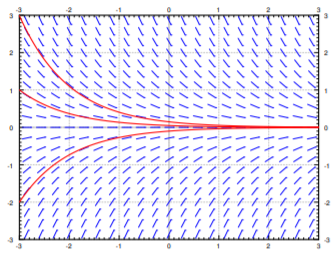
a) y'=y
b) y=xy
c) y'=-y
d) y=x2y
c
500
Derivative of f-1(g(x))
1/(f'(g(x))
500
Derivative of cot-1(7x)
-7/[(7x)2+1]
500
Behavior of p(t) if a(t) is negative
Concave down
500
A particle moves along the x-axis so that its velocity v at any time, t, for [0,16], is given by v(t)=e2sint - 1. Find the intervals of time where the particle is moving to the left.
(pi, 2pi) and (3pi, 4pi) and (5pi, 16)
500
e