PUBLIC DISCOURSE & ADVOCACY
ORGANIZATIONAL COMMUNICATION
INTERPERSONAL COMMUNICATION
IDENTITY & CULTURE
KEY TERMS & QUOTES
NAME THAT THEORY
100
This theory views humans as storytellers and emphasizes narrative coherence and fidelity.
Narrative Paradigm (Walter Fisher, 1984)
100
Who developed the Cultural Approach to Organizations?
Clifford Geertz & Michael Pacanowsky.
100
Who created the Uncertainty Reduction Theory?
Charles Berger (1975).
100
Standpoint Theory claims knowledge is shaped by what?
Social position and lived experience.
100
“Man is an animal suspended in webs of significance he himself has spun.”
Cultural Approach to Organizations.
100

Narrative Paradigm
200
This theory uses the “dramatistic pentad” (act, scene, agent, agency, purpose).
Dramatism (Kenneth Burke, 1945)
200
What method does this theory use to study workplace culture?
Ethnography.
200
Which theory compares relationship growth to peeling an onion?
Social Penetration Theory.
200
Muted Group Theory argues that language is created by which group?
Dominant groups (men).
200
“Life is drama and communication is symbolic action.”
Dramatism.
200

Dramatism
300
What two qualities define “good” stories according to Fisher?
Coherence and fidelity.
300
Which theory argues that communication creates organizations?
Communicative Constitution of Organizations (Robert McPhee, 1995).
300
Name the three information-seeking strategies in URT.
Passive, Active, Interactive.
300
Who developed Co-Cultural Theory?
Mark Orbe (1998).
300
“Privacy management is the negotiation of boundaries.”
Communication Privacy Management.
300
Views organizations as systems of shared meaning, rituals, and stories rather than just machines
Cultural approach to organizations
400
Burke believed all communication is what kind of action?
Symbolic action.
400
Stanley Deetz’s theory criticizes what form of control in workplaces.
Corporate domination/colonization.
400
Which theory focuses on how people react when communication norms are broken?
Expectancy Violations Theory (Judee Burgoon, 1978).
400
What are the three communication strategies in Co-Cultural Theory?
Assimilation, Accommodation, Separation.
400
“All knowledge is socially situated.”
Standpoint Theory.
400
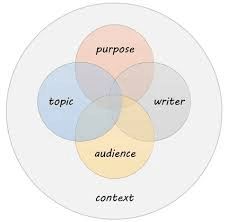
Rhetoric
500
According to Kenneth Burke’s Dramatism, what does the “ratio” between elements of the Pentad (like act and scene) help us discover about communication?
It reveals a speaker’s motive or underlying purpose behind their message.
500
Name the four “flows” in CCO theory
Membership negotiation, activity coordination, self-structuring, and institutional positioning.
500
What is the main idea of Communication Privacy Management Theory?
People manage boundaries around private information.
500
Which theory centers African culture and rejects Eurocentric views?
Afrocentricity Theory (Molefi Kete Asante, 1980).
500
“Afrocentricity is placing African ideals at the center of analysis.”
Afrocentricity Theory.
500
Communication is not just information transmission, but the very mechanism that constructs organizational reality, often serving to privilege managerial interests.
Critical theory of communication in organizations
600
This theory is about the process of developing deeper______________ with another person through mutual self disclosure
Social penetration theory
600
Introduced by Kimberlee Crenshaw in 1989
Intersectionality
600
Developed to study the intersecting lived andongoing experiences of Black women
Intersectionality
600
When speaking with a new classmate, Ben changes the rate of his speech to be clearly different form hers. Ben is most clearly engaging in _______________
Divergence