Social Pyramid & Society
Government Officials & Priests
Scribes & School
Artisans & Peasants
Images & the Opet Festival
Final Jeopardy
100
Why do we show ancient Egypt’s social classes in the shape of a pyramid?
Because most people were in the bottom classes and the fewest people were at the top.
100
How did most government officials get their jobs?
They inherited the position from a family member.
100
Which job in ancient Egypt was only allowed for men: owning land, running a business, working as a scribe, or asking for a divorce?
Working as a scribe.
100
Who actually built the giant stone temples of the pharaohs?
Peasant farmers working during the flood season.
100
In the painting of the stone carvers from an ancient tomb, what are they making?
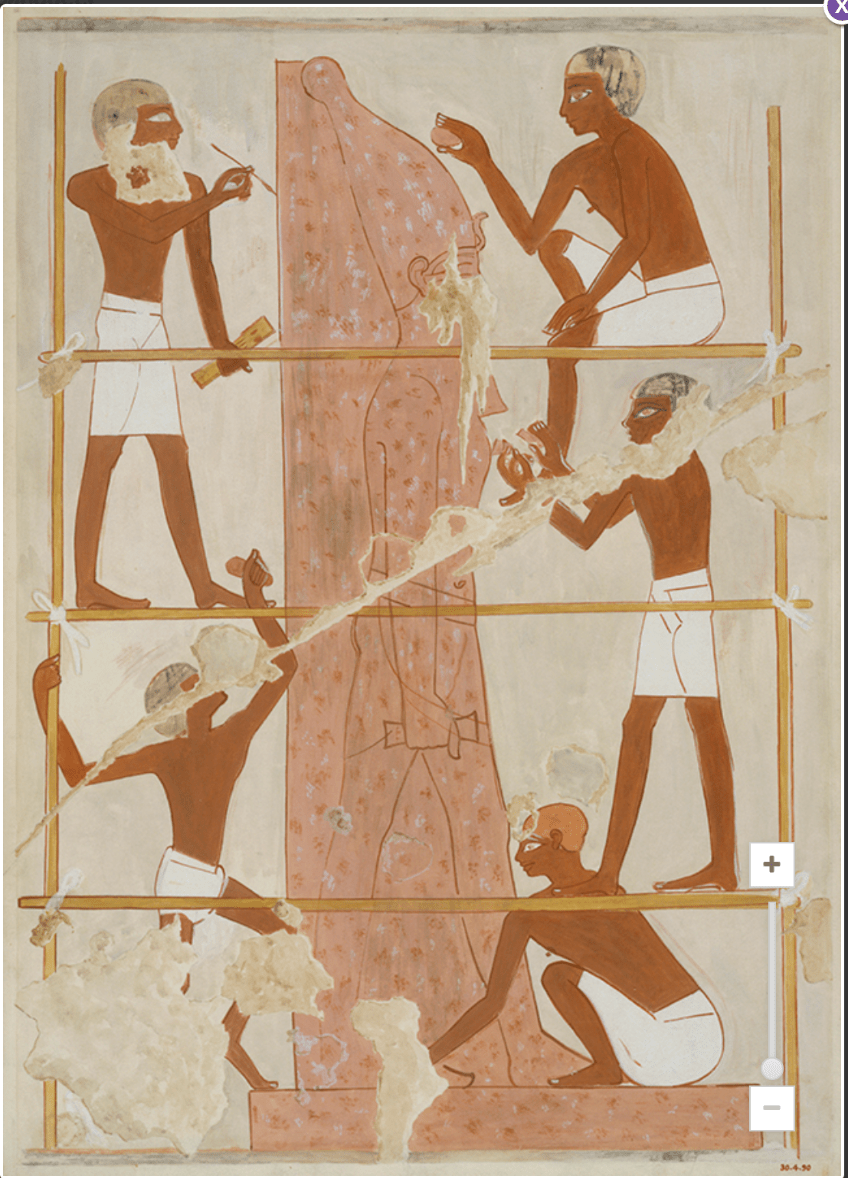
A statue of a standing man wearing a hat.
200
Which social classes were larger in size: the ones near the top or the ones near the bottom of the pyramid?
The classes near the bottom were larger; they had more people.
200
What was one important duty of the vizier?
Deciding court cases as the chief judge.
200
What was one of the few ways a boy from a peasant family could move up to a higher social class?
Attend scribe school.
200
How does the work of artisans help historians learn about life in ancient Egypt today?
Their carvings and paintings show scenes of everyday life.
200
From the stone carvers image, name one thing you can tell about how they worked.
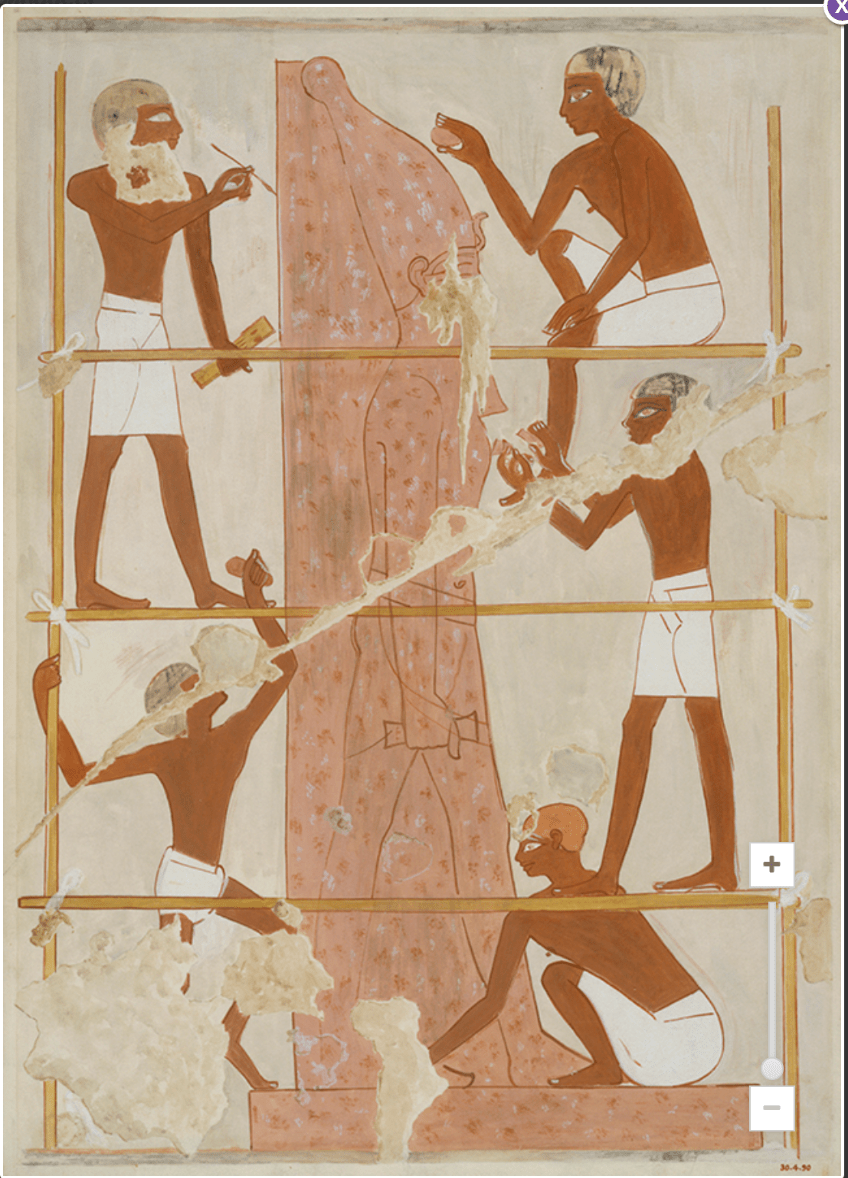
They worked together as a team, and they used tools to chip the hard stone.
300
What is one reason the social pyramid in ancient Egypt was “rigid,” or hard to move up in?
People usually stayed in the same social class as their parents, with very few chances to move up.
300
What could women do in religion that showed they had some rights and respect?
They could become priestesses.
300
Why did it take many years to become a scribe?
Because there were hundreds of hieroglyphs to learn.
300
In a peasant’s year, which season came right after the flooding season of the Nile?
The planting season.
300
Imagine you are a historian studying the stone carvers painting. Give one question you might ask after seeing it.
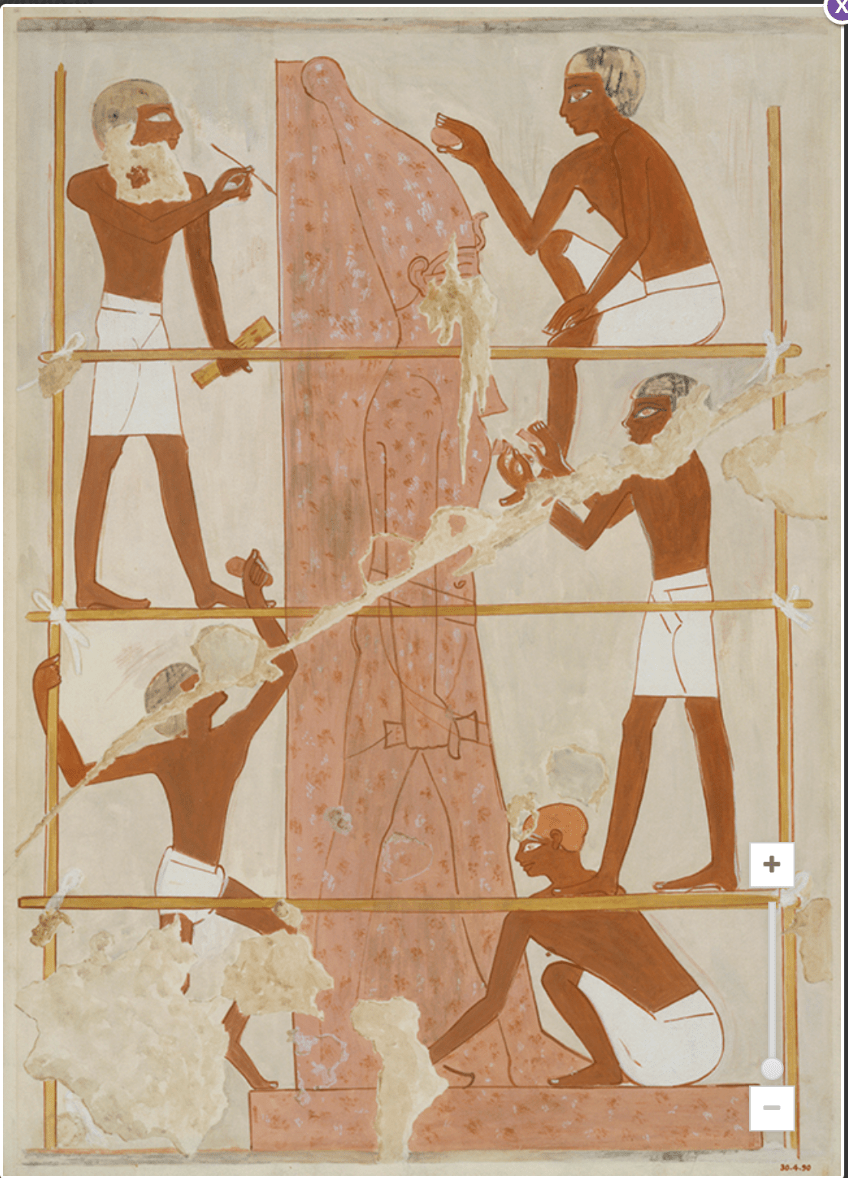
“What did stone carvers wear?” or “How did they reach high places on the statue?” or “How did they wear their hair?”
400
Out of priests, scribes, artisans, and government officials, which group had the lowest social status?
Artisans
400
What special object was kept in the sanctuary, the most sacred room in a temple?
A statue of a god.
400
Skilled scribes wrote on papyrus. What was papyrus made from?
a plant
400
Most peasants lived in what kind of houses?
Mud-brick houses.
400
From that same stone carvers picture, name one thing you can tell about how they worked.
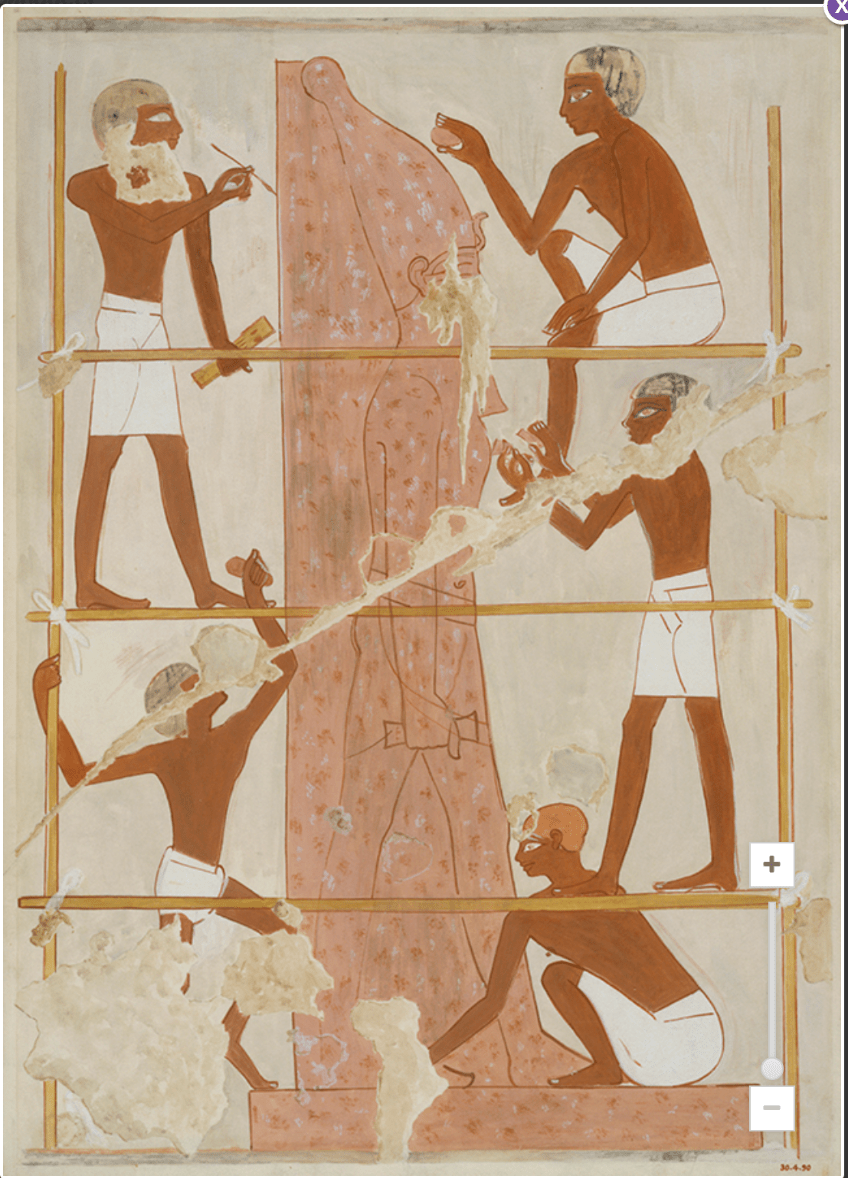
They worked together as a team, and they used tools to chip the hard stone.
500
Explain one way social class could affect a person’s daily life in ancient Egypt (name the social class)
A peasant’s life was mostly hard farm work with few comforts, while a government official had wealth, fine homes, and fancy banquets.
500
Why did Egyptians bury food and drink with some of their dead?
To feed them in the afterlife.
500
Name two kinds of records scribes kept for Egypt.
Answer (any two): Records of grain and food supply, taxes, census (population counts), court cases and laws, or army information like soldiers and supplies.
500
In what form did many farmers pay their taxes to the government?
In grain.
500
Name all 5 social class in order from top to bottom and then from bottom to top
Pharaoh, Gov. Officials, Priests, Scribes, Artisans, Peasants
Peasants, Artisans, Scribes, Priests, Gov. Officials, Pharaoh
500
This Egyptian idea of truth, order, and balance helped support the pharaoh’s power and keep the social pyramid stable.
ma’at