Key Vocabulary
Electric Charges
Circuits
Materials & Symbols
Laws & Formulas
Calculations and Diagrams
100
This is the flow of electrons through a conductor.
electrical current
100
The subatomic particle with a negative charge.
electron
100
A circuit where there is only one path for current to flow.
Series Circuit
100
Give one example of a conductor.
Copper (also aluminum, iron)
100
This law relates voltage, current, and resistance.
Ohm’s Law
100
If V = 10 V and I = 2 A, what is R?
R=5 Ω
200
A material that allows electricity to flow easily.
conductor
200
This type of electricity builds up on an object and does not flow.
static electricity
200
A circuit with more than one path for current.
Parallel Circuit
200
Give one example of an insulator.
Rubber (also plastic, glass, wood)
200
The formula's for Ohm’s Law.
V = I × R
I= V/R
R= V/I
200
If V = 20 V and R = 4 Ω, what is I?
I= 5A
300
The opposition to the flow of electrical current in a circuit.
resistance
300
This happens when electrons move from one object to another.
electron transfer
300
What happens to all bulbs in a series circuit if one bulb burns out?
All bulbs go out
300
This symbol is used to measure current in a circuit.
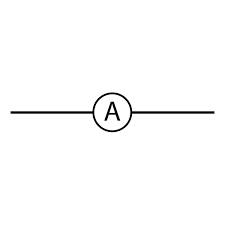
ammeter
300
This law is used to calculate electrical power.
Watt’s Law
300
If I = 3 A and R = 6 Ω, what is V?
V= 18V
400
A device in a circuit that uses electrical energy to do work.
load
400
Why does hair stand up after removing a winter hat?
the transfer of electrons causing repulsion between hairs
400
One advantage of a parallel circuit.
That devices work independently / bulbs stay on if one fails?
400
This symbol is used to measure voltage in a circuit.
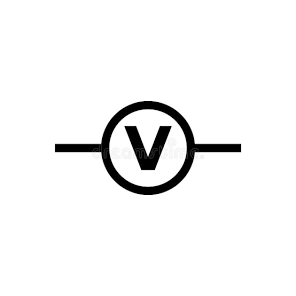
voltmeter
400
The formula for electrical power.
P = V × I
400
Draw an example of a series circuit that includes:
- 3 lights
- 1 switch
- 3-cell battery
Answer on the board.
500
The amount of electrical energy provided to push electrons through a circuit.
voltage
500
The law that states energy cannot be created or destroyed. Only changed from one form to another.
The Law of Conservation of Energy
500
One disadvantage of a series circuit.
If one component fails, the entire circuit stops working
500
This circuit symbol opens and closes the circuit.
A switch
500
This unit is used to measure resistance
the ohm (Ω)
500
Draw a parallel circuit that includes the following:
- 3 light bulbs
- 3 switches
- 2 one-cell batteries
- Each light must be able to turn off and on independently.
Answer on board.