1
2
3
4
5
100
WHAT DOES THIS DIAGRAM REPRESENT?
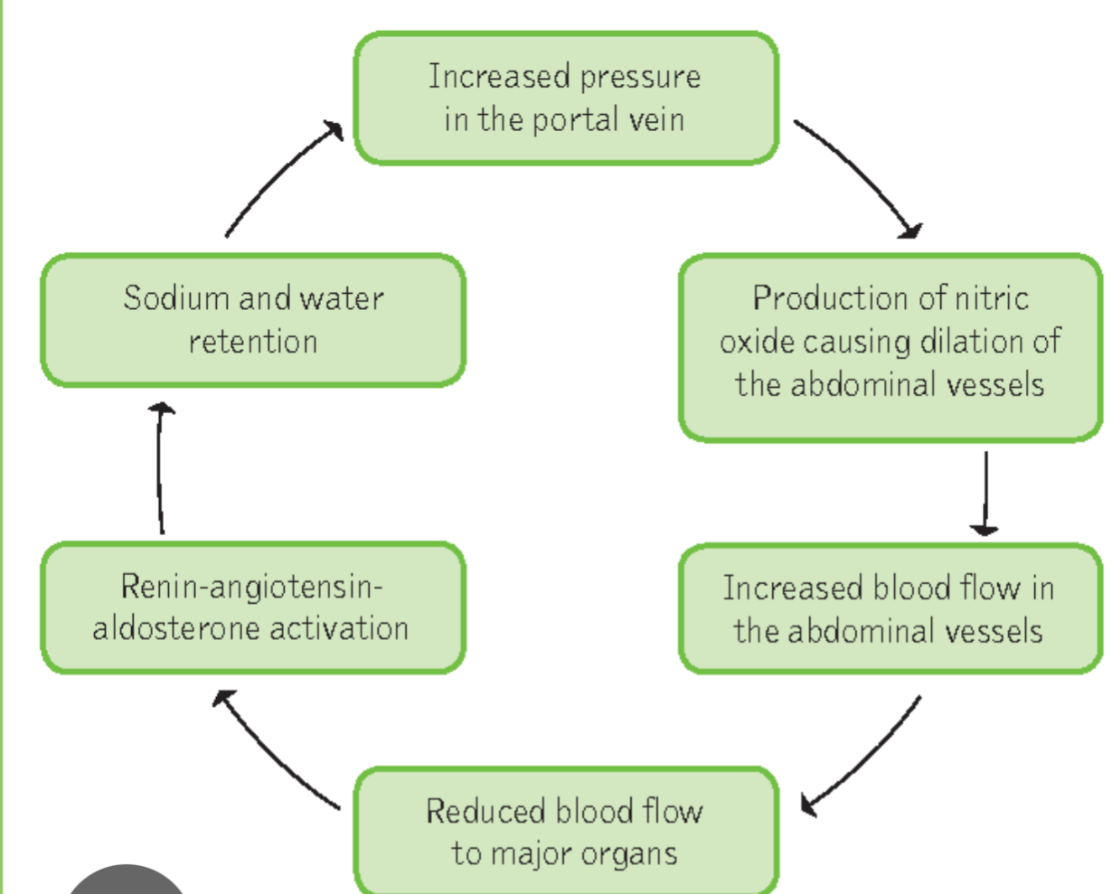
ASCITES
100
THIS MOST OFTEN IS CAUSED BY LIVER CIRRHOSIS AND PORTAL HYPERTENSION
ESOPHAGEAL VARICES
100
WHAT IS ASTERIXIS?
FLAPPING TREMOR OF HANDS , STRAIGHT UP
100
WHAT IS THE PATHOPHYSIOLOGY OF SLE?
AUTOIMMUNE, BODY ATTACKS ITSELF
100
A client with cirrhosis develops confusion and asterixis. Which lab value does the nurse expect?
A. Decreased ammonia
B. Increased ammonia
C. Decreased bilirubin
D. Increased hemoglobin
B. Increased ammonia
200
WHAT ARE COMPLICATIONS OF ASCITES?
SOB
HYPOTENSION
TACHYCARDIA
TACHYPNEA
200
WHAT ARE COMPLICATIONS OF ESOPHAGEAL VARICES?
SEVERE BLEEDING - ASPIRIATION
200
WHAT ARE THE DIAGNOSTIC ASSESSMENTS FOR PORTAL-SYSTEMIC ENCEPHALOPATHY?
INCREASED LIVER ENZYMES ( ALT,AST,ALP)
ELEVATED BILIRUBIN INCREASE INR
ELEVATED AMMONIA
DECREASED CBC,WBC, PLATELEOS AND ALBUMIN
200
WHAT DOES THE ROLE OF PREDISONE IN SLE?
STIMULATES HORMONE EFFECTS, REDUCING INFLAMMATION
IMMUNE SYSTEM SUPRESSANT
200
Which statement indicates understanding of hepatitis A transmission?
A. “It spreads through blood contact.”
B. “It spreads through contaminated food or water.”
C. “It is spread through sexual contact only.”
D. “It is transmitted by airborne droplets.”
B. “It spreads through contaminated food or water.”
FECAL ORAL
300
WHAT IS THE TREATMENT FOR ASCITES?
LOW NA DIET
DIURETICS K-SPARING (SPIRONOLACTONE, FUROSEMIDE)
LABS: NA AND ALBUMIN
ABD MEASUREMENTS
DAILY WEIGHTS ( I&O'S)
PARACENTESIS
300
WHAT IS A THREE LUMEN, EMERGENCY MEDICAL DEVICE INSERTED TO STOP LIFE-THREATENING HEMORRHAGING FROM ESOPHAGEAL VARICES?
SENGSTAKEN-BLAKENMORE TUBE
300
A patient is admitted with hepatic encephalopathy secondary to cirrhosis. Which meal option selection below should be avoided with this patient?
A. BEEF TIPS AND BROCCOLI
B. PASTA AND BREAD
C. CUCUMBERS AND GRAPES
D. FRESH SALAD WITH WATER CHESTNUTS
A. BEEF TIPS AND BROCCOLI RABE (HIGH PROTEIN)
300
HIGH POTASSIUM FOOODS
SPINACH, TUNA, BANANAS, CITRUS, POTATOES AND DRIED BEANS
300
Which assessment finding requires immediate intervention?
A. Jaundice
B. INR 4.0
C. Mild fatigue
D. ALT slightly elevated
B. INR 4.0
Liver makes clotting factors. Elevated INR = bleeding risk → priority.
400
WHAT ARE THE NURSING CONSIDERATIONS FOR ASCITES?
ALBUMIN IV = INCREASE URINE OUTPUT, INCREASE BP
SHOCK FROM SHIFT - LOW BP, HIGH HR
PERITONITIS ( RIGID BOARD LIKE)
RISK OF BLEEDING
FALL RISK
INFECTION
400
WHAT IS HEPATIC ENCEPHALOPATHY ?
AMMONIA BUILD UP THATS CROSSES THE BLOOD AND ENTERS THE BRAIN
400
You are receiving shift report on a patient with cirrhosis. The nurse tells you the patient’s bilirubin levels are very high. Based on this, what assessment findings may you expect to find during your head-to-toe assessment? Select all that apply:
- A. Frothy light-colored urine
- B. Dark brown urine
- C. Yellowing of the sclera
- D. Dark brown stool
- E. Jaundice of the skin
- F. BLUSISH MUSCOUS MEMBRANES
- B. Dark brown urine
- C. YELLOWING OF THE SCLERA
- E. JAUNDICE OF THE SKIN
400
An RN is planning assignments for the shift. Which patient should the RN assign to a licensed practical nurse (LPN)?
A. A patient requiring complex discharge teaching
B. A patient with unstable vital signs needing frequent monitoring
C. A stable patient with diabetes needing routine insulin administration
D. A newly admitted patient requiring initial assessment
C. A stable patient with diabetes needing routine insulin administration
400
Which lab value is most specific for acute pancreatitis?
A. AST
B. Lipase
C. Bilirubin
D. Albumin
B. Lipase
Lipase is more specific than amylase for pancreatitis.
500
What must the nurse instruct the client to do before a paracentesis?
Empty their bladder to prevent accidental bladder puncture.
500
WHAT DOES LACTULOSE DO?
REDUCES AMMONIA PRODUCTIN IN HE
500
WHAT ARE THE 6 F'S ASSOCIATED WITH CHOLEITHASIS ?
FEMALE, FAT, FORTY, FERTILE, FAIR SKIN, FAMILY
500
The nurse is teaching a client with chronic pancreatitis about diet. Which statement indicates understanding?
A. “I will eat a high-fat diet to maintain weight.”
B. “I will avoid alcohol completely.”
C. “I don’t need enzyme supplements.”
D. “I should increase fried foods for calories.”
B. “I will avoid alcohol completely.”
500
Which client should the nurse assess FIRST?
A. Client with sepsis, temp 102°F
B. Client with BP 88/52 and HR 132
C. Client with pancreatitis reporting pain 8/10
D. Client with GI bleed and Hgb 10
B. Client with BP 88/52 and HR 132
Hypotension + tachycardia = decompensating shock → priority.