Lab Equipment
People
Elements
Common substances
Trivia
100
This glass container has a flat bottom and straight sides; it’s used for mixing or heating liquids that don’t need precise measurement.

A beaker
100
Pioneered radioactivity research and discovered polonium and radium.
Marie Curie
100
The atomic number of this element is 79, and it is the metal traditionally used for jewelry and coins because it does not tarnish.
Au --> GOLD
100
This household acid gives lemon juice its sour taste and is used to clean metal.
Citric Acid
100
Which planet in our solar system has the longest day (it rotates slower than it orbits the Sun)?

it rotates once every ~243 Earth days, longer than its year.
200
A conical‑shaped vessel with a narrow neck that lets you swirl solutions without spilling, often used for titrations.
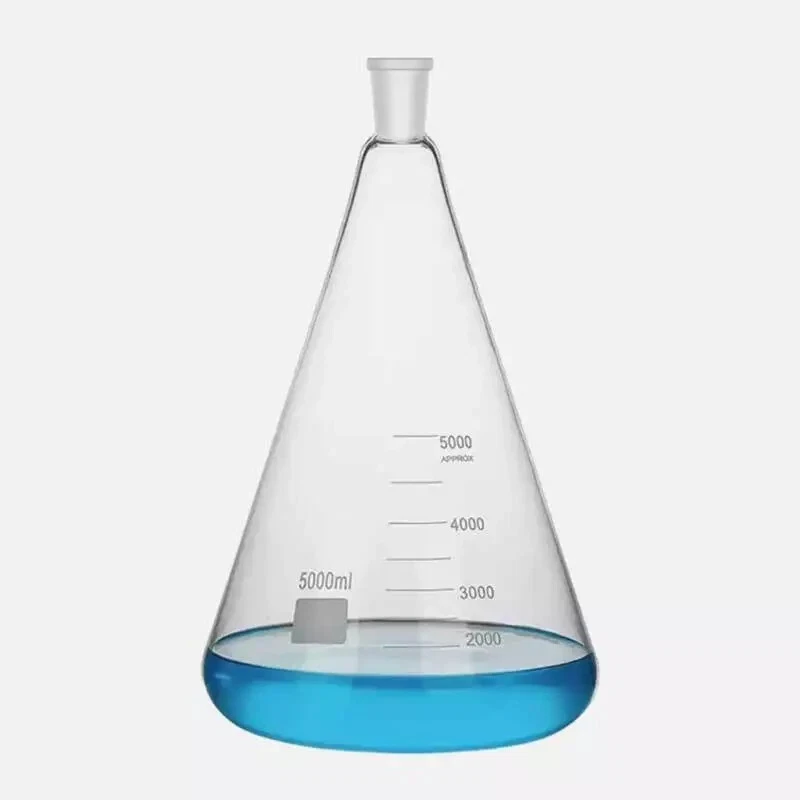 Erlenmeyer flask (conical flask)
200
Produced critical X‑ray diffraction images of DNA that revealed its double‑helix structure.

Rosalind Franklin
200
Its symbol is Na, and the name comes from the Latin natrium, meaning ‘soda’ – it is the main component of table salt
Sodium
200
When mixed with baking soda, this gas inflates balloons and powers homemade volcanoes
Carbon Dioxide
200
What is the name of the process by which plants convert sunlight, carbon dioxide, and water into glucose and oxygen?

300
A handheld tool that can draw up and dispense tiny volumes of liquid (usually microliters) with great accuracy.
Micropipette
300
Revolutionized primatology with long‑term studies of wild chimpanzee behavior.

Jane Goodall
300
This non‑metal has an atomic mass of approximately 12 u and is the basis of all organic molecules; its name derives from the Greek word “άνθρακας” (pronounced án-thra-kas).
Carbon
300
A sweet, crystalline solid that preserves food and fuels fermentation.
Table sugar, sucrose
300
Who formulated the three laws of motion that describe how forces affect the movement of objects?

Isaac Newton
400
A bench‑top device that spins sealed tubes at high speed to separate solid particles from liquids.
Centrifuge (benchtop)

400
Elucidated the ribosome’s structure, earning a Nobel Prize in Chemistry.
Ada Yonath
400
With an atomic number of 26, this transition metal is known for its magnetic properties and is named after the Latin word for ‘iron’
IRON
400
A white crystalline solid that gives seawater its salty taste and is used to melt ice on roads during winter.
Sodium Chloride
400
What layer of Earth’s atmosphere contains the ozone layer that protects us from harmful ultraviolet radiation?

The stratosphere (where the ozone layer resides).
500
A rectangular plastic plate with an array of small wells (e.g., 96‑well) used for high‑throughput assays such as ELISA or cell‑culture screens.
Microplate (96‑well plate)

500
Isolated artemisinin, a life‑saving antimalarial compound.
Tu Youyou
500
The element whose symbol is He was first detected in the solar spectrum before it was found on Earth; its name comes from the Greek word for ‘sun.
HELIUM
500
A mild alkaline powder that reacts vigorously with vinegar to produce bubbles; it’s often used in cleaning agents and as a leavening aid in baked goods
baking soda (sodium bicarbonate)
500
In genetics, what term describes a change in the DNA sequence that can lead to a different trait or disease?
A mutation