A
B
C
D
E
100
A group of gray wolves living in Minnesota is an example of
A. a population.
B. a community.
C. a biome.
D. an ecosystem.
A. a population.
100
VOCAB
Consumers are also called this
Heterotroph
100
VOCAB
Living things
Biotic
100
Almost all autotrophs get their energy from…
A. Producers
B. Decaying matter
C. Hydrothermal pools
D. Sunlight
D. Sunlight
100
VOCAB
Organisms that get their energy by eating other living or once-living resources
Consumers
200
VOCAB
Includes all of the organisms as well as the climate, soil, water, rocks, and other nonliving things in a given area
Ecosystem
200
Which of the following provide most of the energy in ecosystems?
A. Producers
B. Generalists
C. Carnivores
D. Keystone Species
A. Producers
200
True or False
Detritivores eat dead organic matter
True
200
VOCAB
The movement of a particular chemical through the biological and geological part ecosystem
Biogeochemical Cycle
200
Which model shows the number of organisms at each trophic level in an ecosystem?
A. pyramid of numbers
B. biomass pyramid
C. food chain
D. food web
A. pyramid of numbers
300
Which of the following can be both primary and secondary consumers?
A. Herbivores
B. Omnivores
C. Detritivores
D. Carnivores
B. Omnivores
300
VOCAB
Consumers that have a varying diet
Generalists
300
Which organisms help convert gaseous nitrogen into ammonia in the nitrogen cycle?
A. trees
B. squirrels
C. grasses
D. bacteria
D. bacteria
300
True or False
Consumers are also called autotrophs
False
300
VOCAB
Consumer that primarily eats one specific organism or feeds on a very small number of organisms
Specialists
400
Which process is part of the hydrologic cycle?
A. decomposition
B. nitrification
C. ammonification
D. evaporation
D. evaporation
400
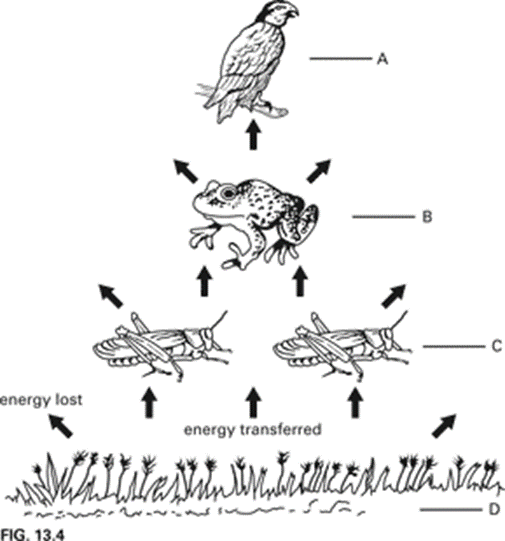
What is the term for the level labeled B in the diagram?
secondary consumer
400
VOCAB
A diagram that compares energy used by producers, primary consumers, and other trophic levels
Energy Pyramid
400
An ecologist counts weeds to monitor their populations. Which of the following best describes the ecologist's methods?
A. hypothesizing
B. modeling
C. experimentation
D. observation
D. observation
400
An ecologist surveys weeds to monitor their populations. Which of the following best describes the ecologist's methods?
A. experimentation
B. observation
C. hypothesizing
D. modeling
B. observation
500
What does the diagram in Figure 13.1 show?
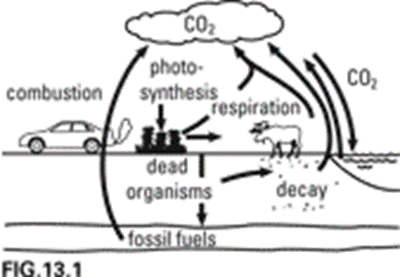
A. the carbon cycle
B. the oxygen cycle
C. the nitrogen cycle
D. the water cycle
A. the carbon cycle
500
What are two processes by which autotrophs make food?
A. chemosynthesis and photosynthesis
B. chemosynthesis and decomposition
C. photosynthesis and respiration
D. decomposition and combustion
A. chemosynthesis and photosynthesis
500
TRUE or FALSE
Oxygen, Carbon, Nitrogen, and Phosphorus are the four elements that cycle through ecosystems
True
500
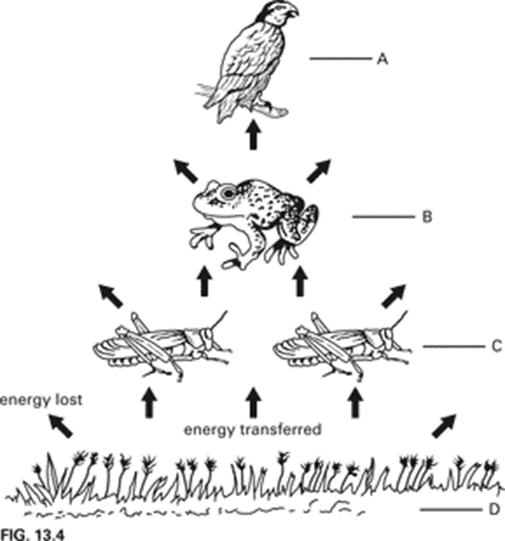
What type of diagram is shown?
Energy Pyramid
500
Which statement is true of producers?
A. They fix most of the nitrogen in ecosystems.
B. They provide most of the energy in ecosystems.
C. They consume most of the biomass in ecosystems.
D. They produce most of the carbon dioxide in ecosystems.
B. They provide most of the energy in ecosystems.