ASCUS Anything!
Breathe, Just Breathe
Urine It to Win It
Body-ody-ody Fluids
It's all In Your Heeaaaaad
The Breast is Yet to Come
100
What term is best used to denote these cells?
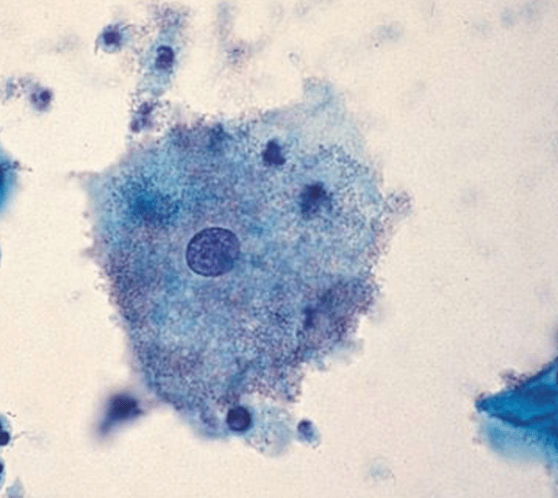
Clue cells
100
The adequacy of bronchoalveolar lavage is established by finding which of the following cells in the specimen?
Pulmonary macrophages
100
This urine specimen is collected from a patient with a clinical history of urothelial carcinoma, and it shows many degenerated cells. What is the most likely interpretation?
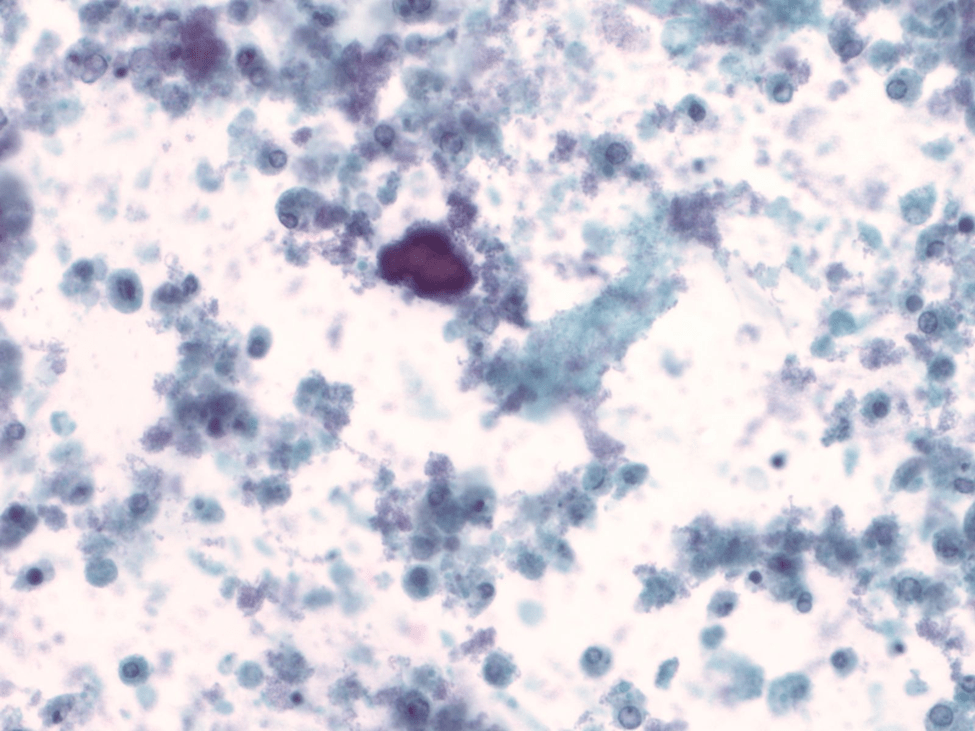
Ileal conduit specimen
100
Most common cause of so called eosinophilic pleural effusions
Pneumo/hemothorax
100
Minimum amount of CSF that may be examined by cytology.
1.0 mL
100
This 42-year-old woman developed a right breast mass after a recent car accident. Fine-needle aspiration of the mass was performed, and the smear is shown here. What is the diagnosis?
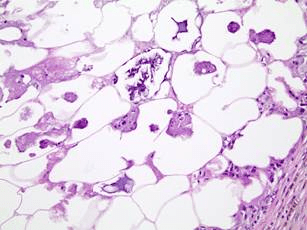
Fat necrosis
200
This cervical smear was obtained from a 23-year-old sexually active nulliparous woman. What is the correct diagnosis?
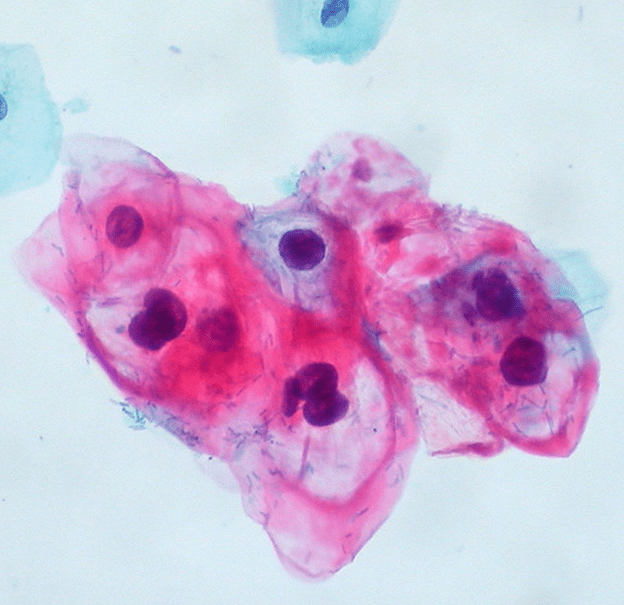
Low-grade squamous intraepithelial lesion (LSIL)
200
Which of the following gene mutations is a predictor of lack of response to EGFR tyrosine kinase inhibitor (TKI) therapy?
KRAS
200
A 48-year-old man presents for follow-up surveillance for urothelial carcinoma. Voided urine sample was obtained and shown here. What do the cells represent?
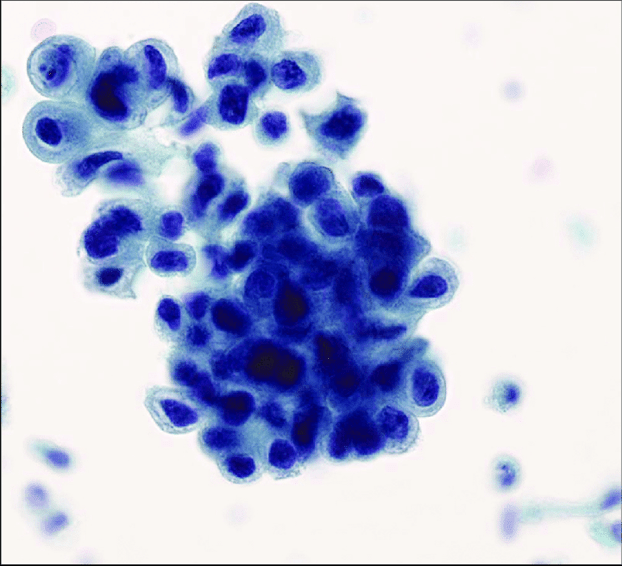
High-grade urothelial carcinoma
200
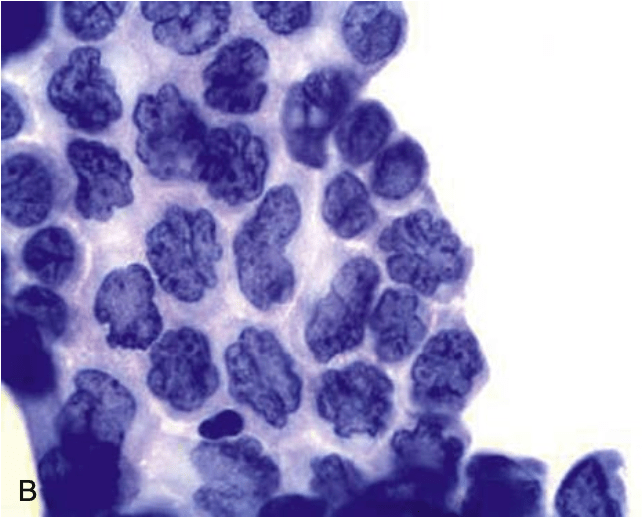 What are these cells?
Mesothelial cells
200
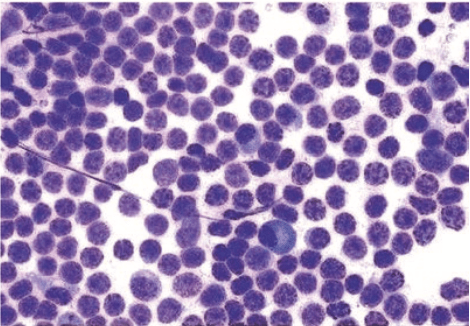
CSF in patient w/ fever, headache. The next ancillary test you would perform.
Flow cytometry (lymphocytosis)
200
This is a Pap-stained smear from a 68-year-old woman with a breast mass. What is the diagnosis?
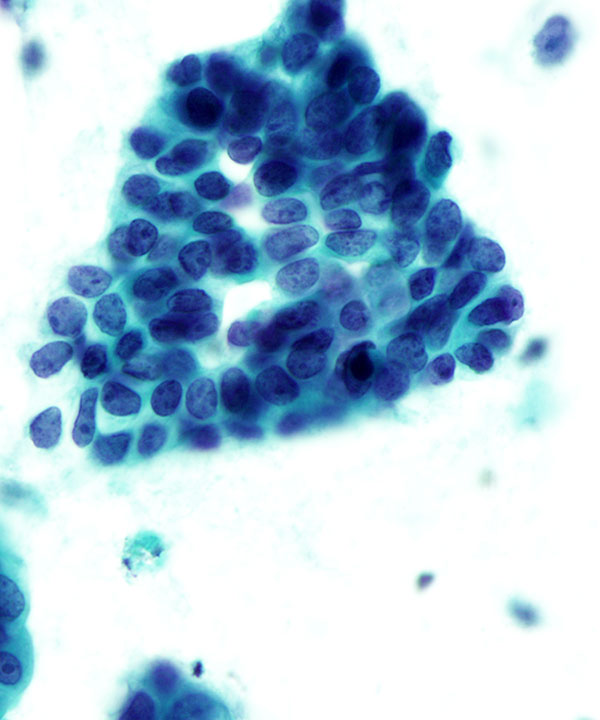
Invasive ductal carcinoma
300
What are these cells in a Pap smear obtained from a 47-year-old woman?
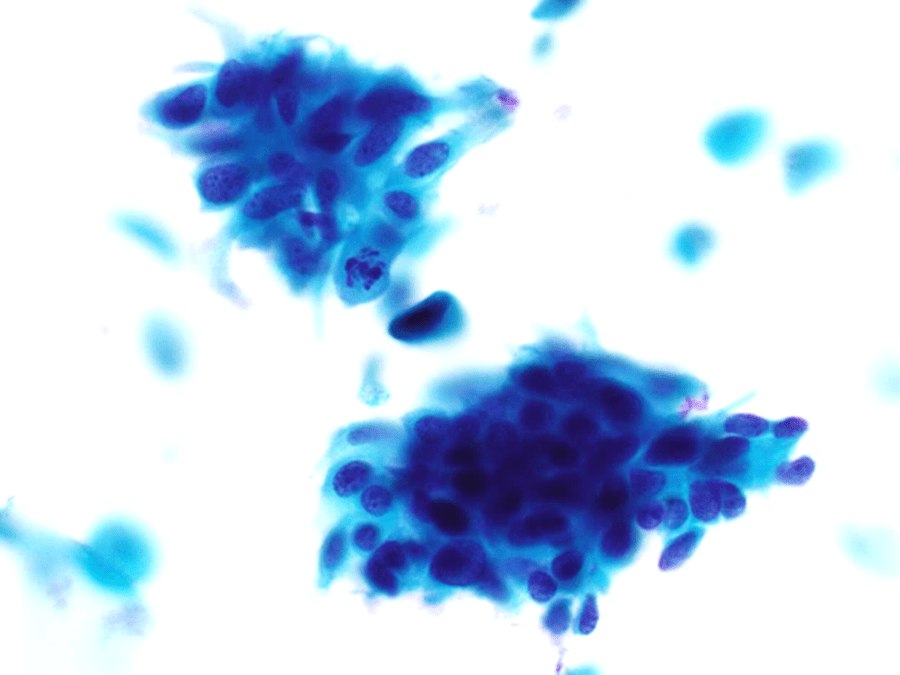
High-grade squamous intraepithelial lesion (HSIL) cells
300
A 39-year-old HIV-positive man presents with dry cough, fever, and dyspnea. Bronchioalveolar lavage is performed and shown in this Pap-stained smear. What is the correct diagnosis?
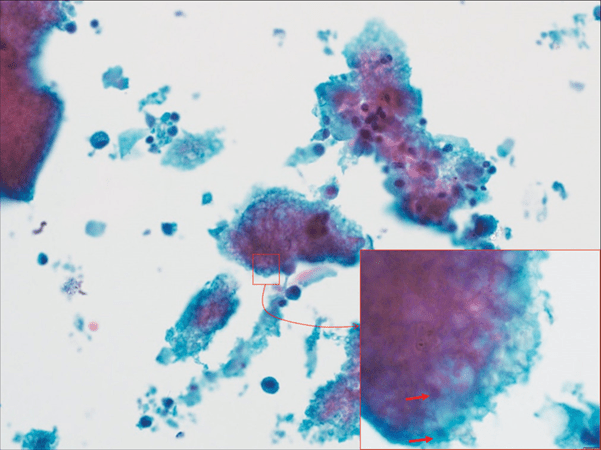
Cryptococcus
300
What do these cells in a voided urine sample represent?
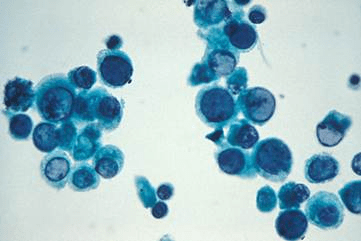
Polyoma virus inclusion
300
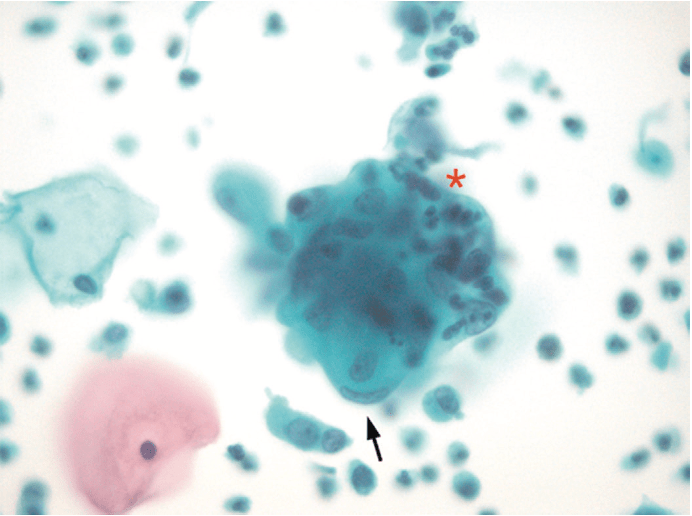
Pelvic wash: F patient, hysterectomy for endometrial adenocarcinoma. A negative IHC for *** supports metastatic endometrial adenocarcinoma over endometriosis.
ARID1A (loss of expression maybe important in tumor progression of endometrioid carcinoma...)
Both (+) for PAX8, vimentin, (-) for CD10
300


Chondrocyte
300
A 32-year-old woman presents with a 2.0 cm movable rubbery right breast mass. A fine-needle aspiration is performed and the smear is shown. What is the correct diagnosis?
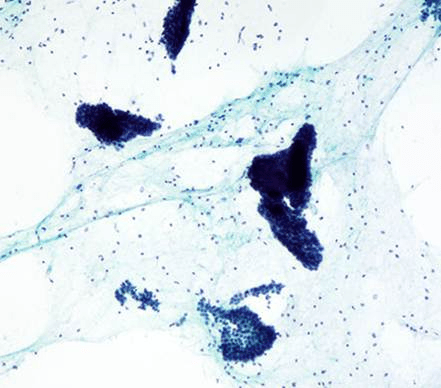
Fibroadenoma
400
This Pap smear was obtained from a 38-year-old woman. What is the diagnosis?
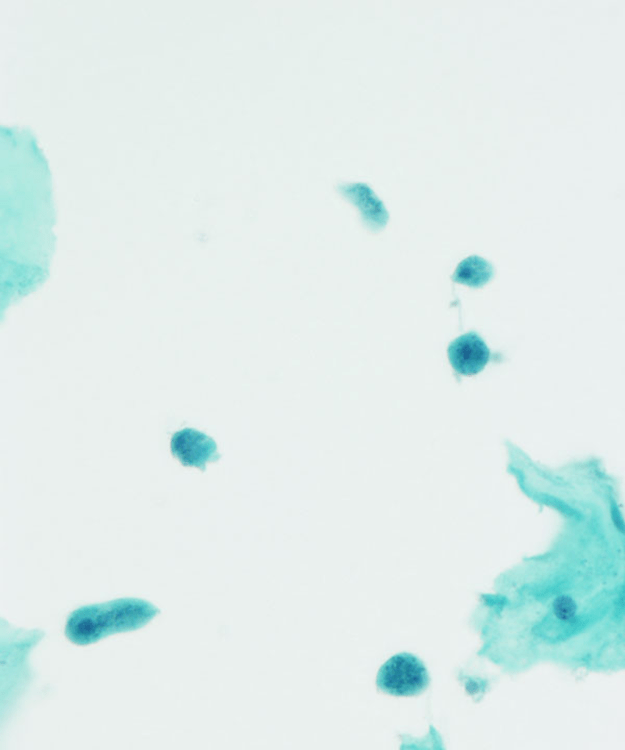
Trichomonas vaginalis
400
What is the diagnosis of this cell group from a bronchial washing specimen?
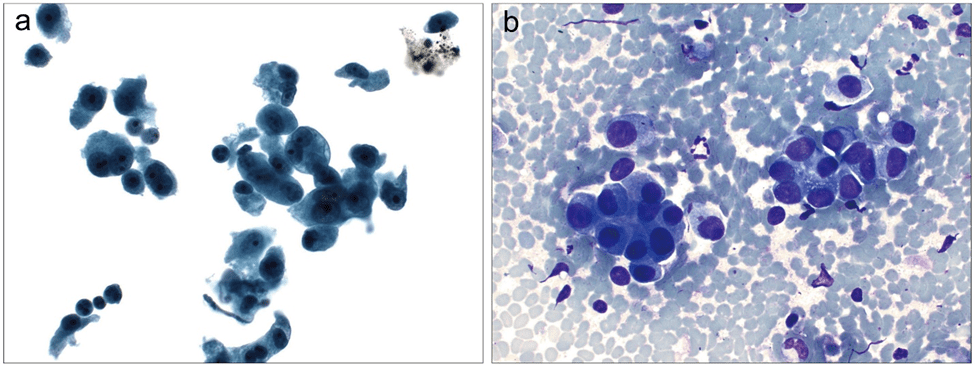
Adenocarcinoma
400
This bladder washing is collected from a 56-year-old man with hematuria. What is the correct interpretation?
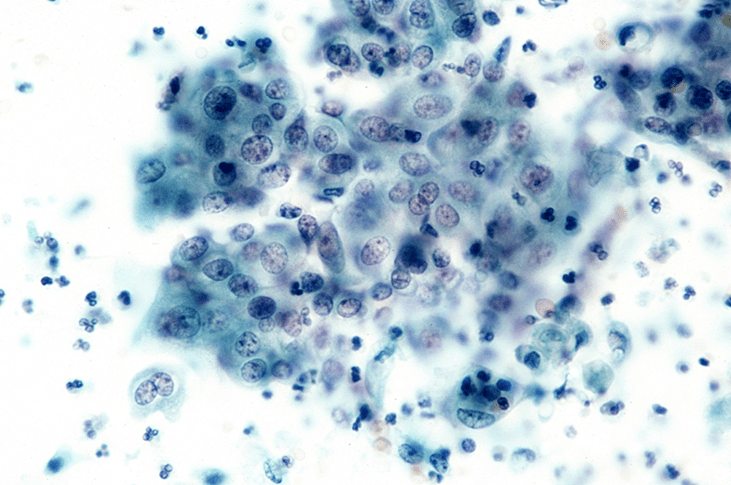
Benign/reactive changes
400
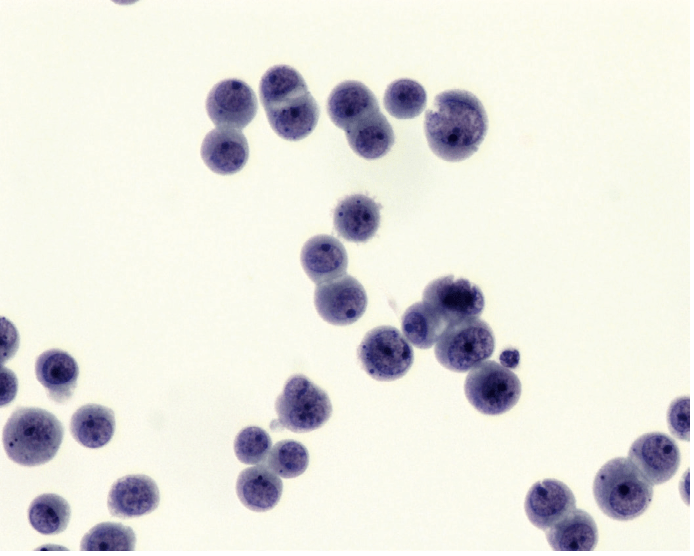 39F w/ fatigue, ascites, R pleural effusion (above). Large ovarian mass. Most likely Dx of ovarian mass?
Fibroma (Meigs/Demons-Meigs syndrome)
400
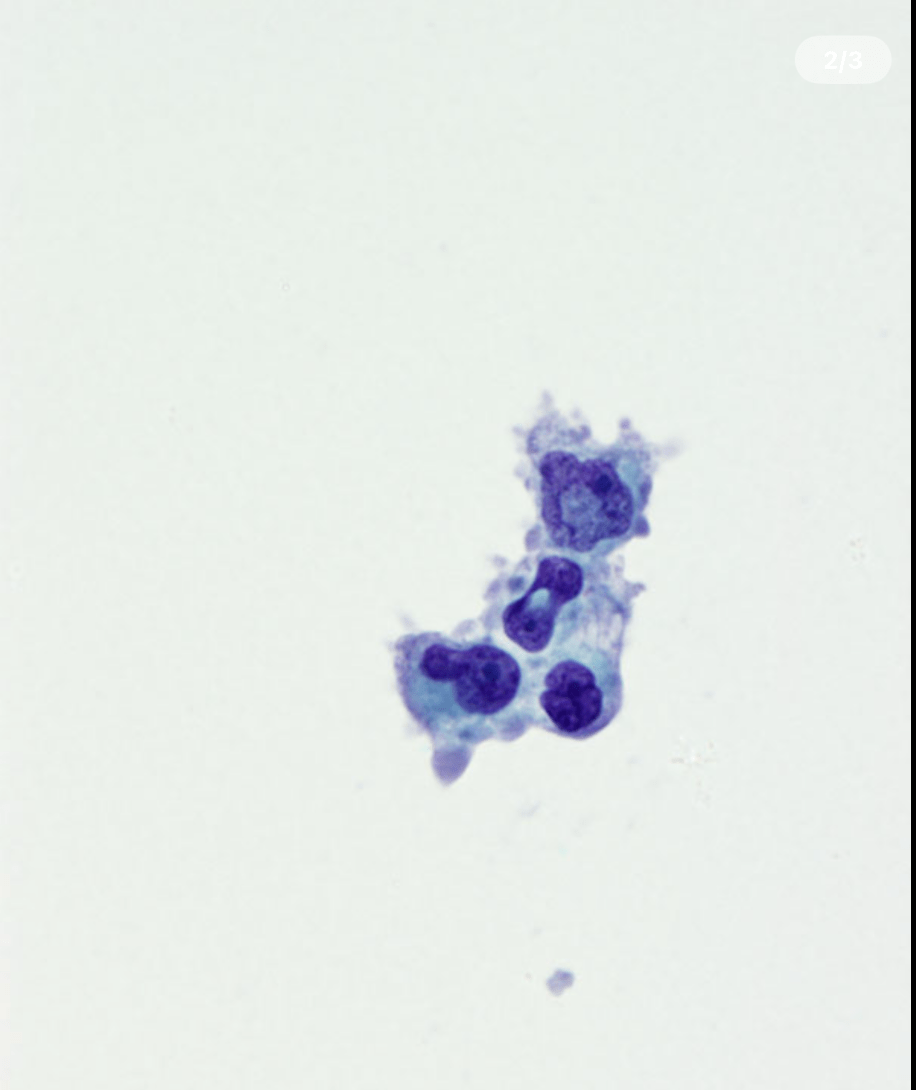 CSF from 43yo. Most likely CNS neoplasm?
GBM
400
What is the diagnosis of this breast fine-needle aspiration smear?
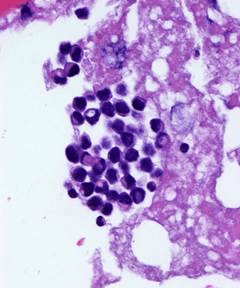
Invasive lobular carcinoma
500
What is the correct diagnosis of this Pap smear obtained from a 62-year-old postmenopausal woman?
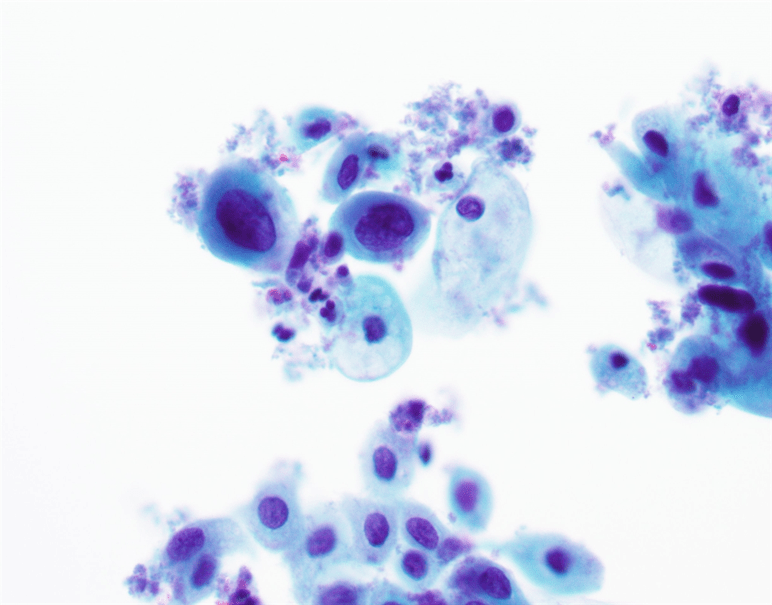
Atrophy
500
These cells are seen on a bronchoalveolar lavage specimen from a 45-year-old woman with marked acute respiratory distress and diffuse lung infiltrates. What is the most likely interpretation?
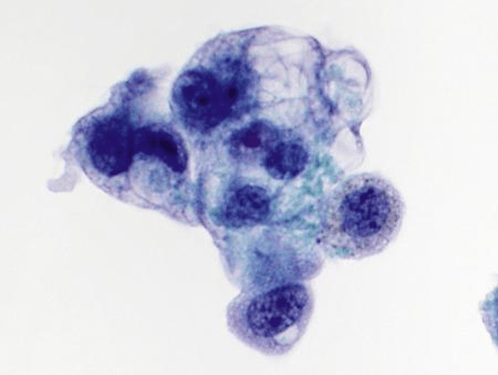
Reactive type II pneumocytes
500
What are these red cytoplasmic inclusions?
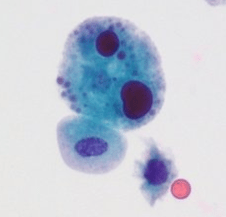
Melamed-Wolinska bodies
500
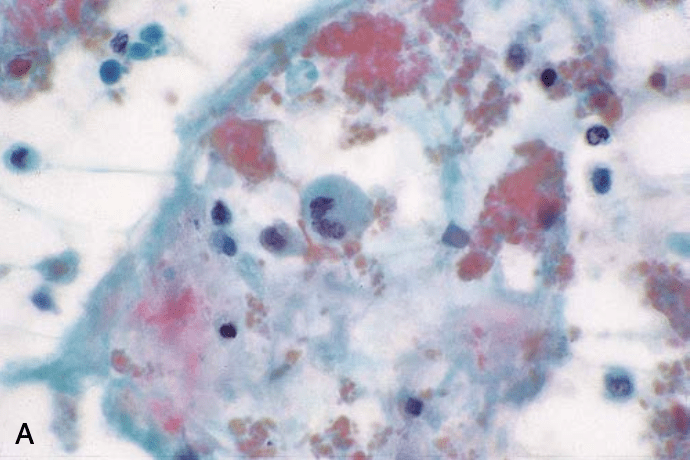 62F, L sided pleural effusion & multiple lung nodules.
Rheumatoid pleuritis
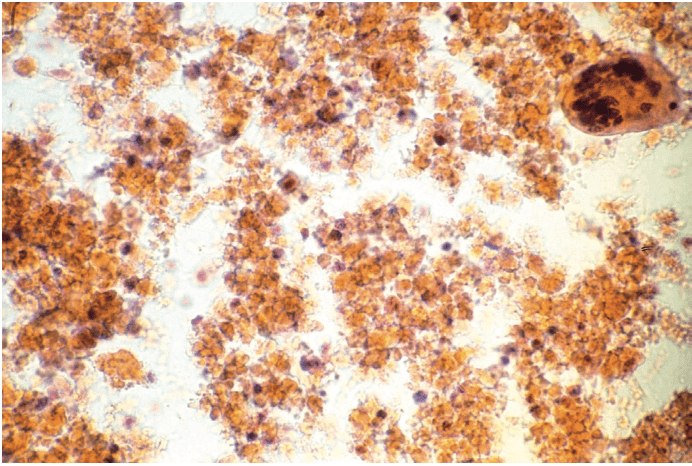
500
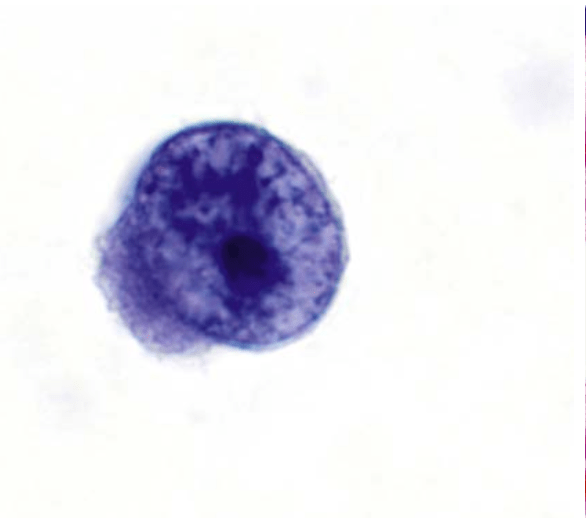 Ventricular CSF from 16M p/w 3v/suprasellar mass, IHC = SALL4+
Germinoma
500
What is the correct interpretation of this breast fine-needle aspiration smear?
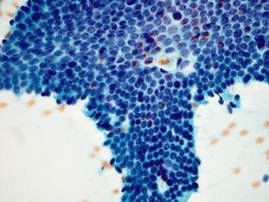
Usual ductal hyperplasia