Foundations and Constitution
Early Republic and Expansion
Civil War and Reconstruction
Industrialization and Reform
Rise to World Power
The Roaring 20s and Depression
The New Deal and World War II
100
Why was the Declaration of Independence written?
To explain the reasons for separating from Great Britain and justify the revolution to the world.
100
What was Washington's advice in his farewell address?
- Neutral in Foreign Affairs
- No political parties
- Avoid debt
100
What was Lincoln's goal regarding the Civil War?
His primary goal was to preserve the Union and keep the country together.
100
Why did unions form?
To give workers collective power to negotiate for better wages, shorter hours, and safer working conditions.
100
What was the purpose of the Open Door Policy?
To ensure all nations had equal trading rights with China and to protect American trade interests there.
100
What caused the Great Depression?
Overproduction, stock market speculation, buying on margin, and the 1929 market crash.
100
What is the purpose of FDR's (Roosevelt's) New Deal?
To provide immediate "Relief, Recovery, and Reform" for the American economy and citizens.
200
What is the function of the US Constitution?
To provide a framework for the federal government and serve as the supreme law of the land.
200
What was the purpose of the Monroe Doctrine?
To prevent European nations from further colonizing or interfering in the Western Hemisphere (The Americas).
200
What was the Abolitionists' goal in relation to slavery?
The immediate and total end of slavery throughout the United States.
200
What led to urbanization (growth of cities)?
The search for factory jobs during industrialization and the massive influx of immigrants to city centers.
200
What are two reasons America joined WWI?
Sinking of the Lusitania
Zimmerman Telegram (Germany asking Mexico to attack us)
200
Why didn't Hoover create a widespread federal relief program?
He believed in "rugged individualism" and feared that direct federal aid would make people dependent on the government.
200
What was US foreign policy prior to entry in WWII? How did we try to get around it to help England?
Isolationism and neutrality (later shifting to "Lend-Lease" to help allies).
300
What is the purpose of the Bill of Rights?
To protect individual liberties and civil rights from potential government overreach.
300
What did American Manifest Destiny mean for Native Americans?
It meant the loss of ancestral lands, forced relocation (such as the Trail of Tears), and a threat to their traditional culture.
300
Why did the North win the Civil War?
Superior industrial resources, a larger population, better railroad infrastructure, and a stronger navy.
300
What resulted from industrialization?
Rapid economic growth, the rise of big business, increased immigration, and a shift from a rural to an urban society
300
What territories did we gain from the Spanish American War?
Philippines, Puerto Rico, and Guam
300
What was the US foreign policy in the 1930's?
A return to isolationism and neutrality to avoid being drawn into the rising conflicts in Europe and Asia.
300
What happens to the role of the Federal Government as a result of the New Deal?
The federal government's power expanded significantly, making it more responsible for the nation's economic well-being.
400
Why were three branches of government created?
To establish a system of checks and balances so no single branch becomes too powerful.
400
What was the goal of the women's Seneca Falls Convention of 1848?
To advocate for women's rights, specifically the right to vote (suffrage) and legal equality.
400
What did the 13th, 14th, and 15th Amendments accomplish?
The 13th abolished slavery; the 14th granted citizenship/equal protection; the 15th granted voting rights regardless of race.
400
What was the goal of the Progressive Movement?
To correct the social, economic, and political injustices resulting from rapid industrialization.
400
What was the US policy in Latin America in the early 1900's?
Interventionism, often referred to as the "Big Stick" policy, to protect US economic and political interests.
400
What are some social movements that happened during the 1920s?
The Harlem Renaissance, Women's Suffrage, Prohibition Movement
400
What does the internment of Japanese-Americans during WWII show?
It shows that in times of war, the government may prioritize perceived national security over individual civil liberties.
500
What is the purpose of amendments to the Constitution?
To allow the Constitution to adapt to changing times, social needs, and legal interpretations.
500
Why was Andrew Jackson criticized?
For his use of the "spoils system," his defiance of the Supreme Court (Indian Removal), and his expansion of executive power.
500
What was the goal of Radical Republicans during Reconstruction?
To punish the South for the war and ensure full political and civil rights for formerly enslaved people.
500
What did the work of Riis and Sinclair show?
They exposed the horrors of the meatpacking industry (Sinclair) and the extreme poverty of city tenements (Riis).
500
What is imperialism?
the policy, practice, or advocacy of extending a nation’s power and influence over other, usually weaker, nations through military force, economic control, or political subversion
500
The women's suffrage movement was linked to what movement?
The Prohibition Movement
500
What are some examples of New Deal Programs?
Public works programs where they were building infrastructure and parks to create jobs
FDIC and SEC regulating banks and the stock market to prevent future risk.
Things like AAA to help farmers.
600
Why did the Articles of Confederation want a weak central government?
Because of a fear of tyranny and "taxation without representation" based on their experience with the British King.
600
What was the main difference between the Federalists and anti-Federalists?
Federalists wanted a strong central government; Anti-Federalists feared it would threaten individual liberties and wanted more power for the states.
600
What did African-Americans face during the Reconstruction Era?
Systematic discrimination, the rise of the KKK, Jim Crow laws, and the economic limitations of sharecropping.
600
What was the purpose of the Sherman Antitrust Acts?
To prevent monopolies and promote fair competition by regulating the power of big business.
600
What was the goal of Nativists?
To restrict immigration and protect the interests/jobs of "native-born" Americans over newcomers.
600
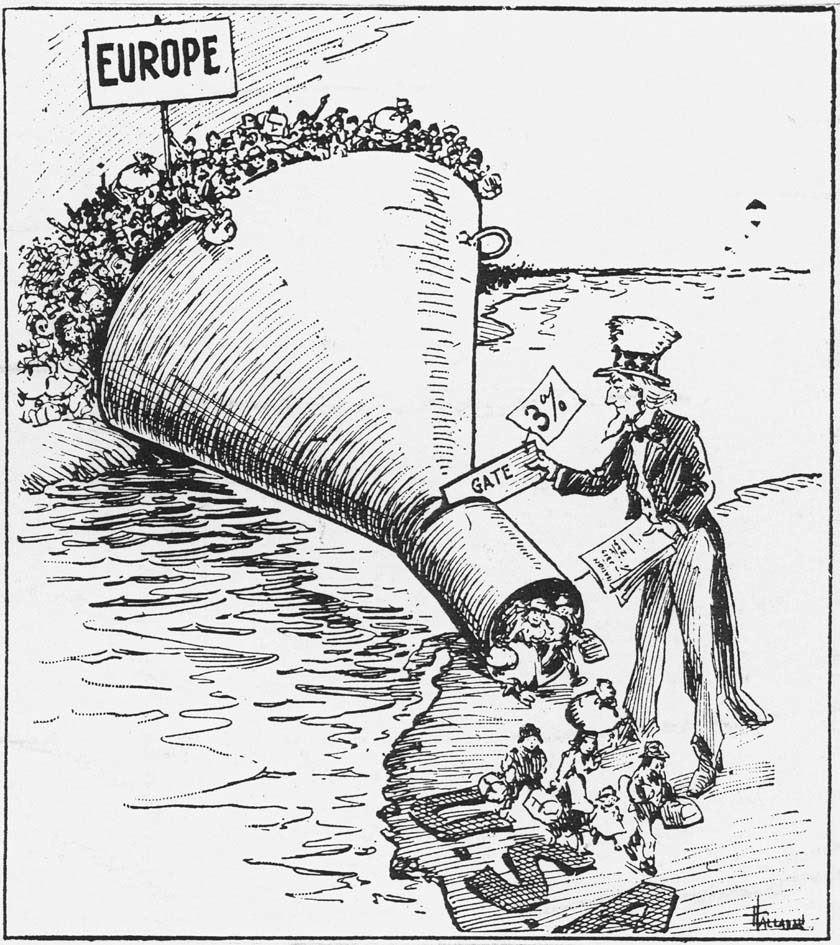
Quotas on immigration during the 1920s.
600
What prompted the United States to join WWII?
The attack on Pearl Harbor.
700
What is the main difference between the Articles and the Constitution?
The Constitution created a strong central government with the power to tax and regulate trade, whereas the Articles gave most power to the states.
700
Why did the Federal Government encourage railroad expansion?
To promote national unity, facilitate trade between the East and West, and encourage settlement of the frontier.
700
What did Plessy v. Ferguson establish?
Separate but Equal
700
What happened to small businesses during the Age of Big Business?
Many were forced out of business or bought out by large corporations and monopolies.
700
Why did the US reject the Treaty of Versailles and the League of Nations?
To avoid becoming involved in future European conflicts
700
What was the Dust Bowl?
a severe environmental and economic disaster in the 1930s (spanning roughly 1933–1940) characterized by massive dust storms and, ["Dirty Thirties"] caused by severe drought, high winds, and poor land management practices on the American Great Plains.
700
Who were the sides of WWII?
Allies: America, Soviet Union, Britain, and France
Axies: Germany, Italy, Japan