Nursing Diagnosis
Bowel Elimination
Patient Care Skills
Skin and Wound Care
Medication Administration
100
What does a nursing care pain usually include?
nursing diagnoses, client problems, expected outcomes, nursing interventions and rationales
100
What is the timing of bowel elimination?
30 minutes to an hour after eating
100
You are assigned to take vital signs on a 74-year-old patient admitted for pneumonia. The patient is resting in bed and appears mildly short of breath.
You obtain the following readings:
- Temperature: 100.8°F (oral)
- Pulse: 112 bpm
- Respiratory rate: 24 breaths/min
- Blood pressure: 88/54 mmHg
- Oxygen saturation: 90% on room air
Questions
- Which vital sign findings are abnormal, and why?
Abnormal findings:
- Temperature 100.8°F → fever (possible infection)
- Pulse 112 bpm → tachycardia
- Respiratory rate 24 → tachypnea
- Blood pressure 88/54 → hypotension
- Oxygen saturation 90% → hypoxemia
100
A patient bumped into a bedside table and has a purple-blue discoloration on the right thigh. The skin is intact with no break in the skin.
1. What type of wound is this?
2. Is it an open or closed wound?
Contusion (bruise) Closed
100
What are the "Rights" of medication administration?
1. Right Patient
2. Right Medicine
3. Right Dose
4. Right Route
5. Right Date and Time
6. Right to Refuse
7. Right to Question
8. Right Documentation
9. Right to Know purpose of medication
10. Right to know effects
11. Right Indication
200
What is a nursing diagnosis?
a clinical judgment concerning a human response to health conditions/life processes or a vulnerability to that response, by an individual family group or community
a statement that describes the patient's health issue or concern
200
What are normal characteristics of feces?
Soft, formed, light yellowish-brown to dark brown,
slightly odiferous, and falls into a slightly curved
shape
200
You are caring for a 65-year-old patient admitted with dehydration. You are assigned to monitor and document strict intake and output for the shift (0700–1500).
During your shift, you collect the following data:
Intake:
- 1 cup of coffee (8 oz)
- 1 bowl of soup (6 oz)
- 120 mL of oral fluids
- IV normal saline running at 75 mL/hr from 0700–1500
Output:
- Urine: 350 mL
- Emesis: 100 mL
Questions
- What is the total oral intake in mL?
- 1 oz = 30 mL
- 8 oz = 1 cup
1. Oral Intake:
- Coffee: 8 oz = 240 mL
- Soup: 6 oz = 180 mL
- Additional fluids: 120 mL
Total oral intake = 540 mL
200
A patient undergoes a scheduled knee replacement surgery. The surgical incision was created under sterile conditions, and there are no signs of infection.
How would you classify this wound?
A. Clean
B. Clean-Contaminated
C. Contaminated
Clean
200
This route of medication administration is taken through the mouth, either by swallowing or buccal
Oral Route
300
What are the first steps to developing a care plan?
client health assessment, medical results and diagnostic reports
300
What should you be assessing with bowel elimination?
color, amount, consistency, unusual shape, unusual odor
300
You are assigned to perform a complete head-to-toe assessment on a 78-year-old patient admitted for weakness and shortness of breath. The patient is alert and cooperative but appears fatigued.
During your assessment, you note the following:
- Alert and oriented ×3 (disoriented to date)
- Skin is pale, cool, and dry
- Respirations are 22/min and slightly labored
- Lung sounds: crackles in bilateral lower lobes
- Heart rate: 104 bpm, regular rhythm
- Abdomen soft, non-tender, active bowel sounds
- Lower extremities: +2 pitting edema
- Patient reports feeling “more tired than usual”
- What findings in the assessment are abnormal?
Abnormal findings:
- Disoriented to date (change in mental status)
- Pale, cool skin
- Respiratory rate 22/min with labored breathing
- Crackles in bilateral lower lobes
- Tachycardia (HR 104 bpm)
- +2 pitting edema in lower extremities
- Increased fatigue
300
 what stage is this pressure ulcer?
Stage 3
300
A healthcare provider orders Amoxicillin 500 mg PO. The medication available is Amoxicillin 250mg/5 mL. How many milliters should the nurse administer?
500 mg / 250 mg x 5 mL = 10mL
400
What areas and abilities does the client assessment relate to?
physical, emotional, sexual, psychosocial, cultureal, spiritual/transpersonal, cognitive, functional, age-related, economic and environmental
400
Which type of enema works by allowing fluid to move into interstiitial fluid as well as be in the colon; distends colon and increases peristalsis?
tap water
400
You are assigned to care for a 79-year-old patient who was admitted after a stroke. The patient has right-sided weakness and mild difficulty swallowing. The patient is alert and able to follow simple commands.
During your shift, you are responsible for assisting with:
- Bathing
- Grooming
- Feeding
The patient has the following needs:
- Requires full assistance with bathing
- Can brush hair with left hand but needs setup help
- Requires assistance with feeding and must be positioned upright
Questions
- What safety precautions should the LPN take before assisting the patient with bathing?
- What is the correct position for the patient during feeding, and why is this important?
Bathing safety precautions:
- Ensure privacy and cover the patient appropriately
- Check water temperature before bathing
- Maintain fall precautions (bed low, call light within reach)
- Assess for fatigue or dizziness before and during care
- Use gait belt if transferring is needed
Correct feeding position:
- High Fowler’s position (upright, 60–90 degrees)
- Prevents aspiration and promotes safe swallowing
400
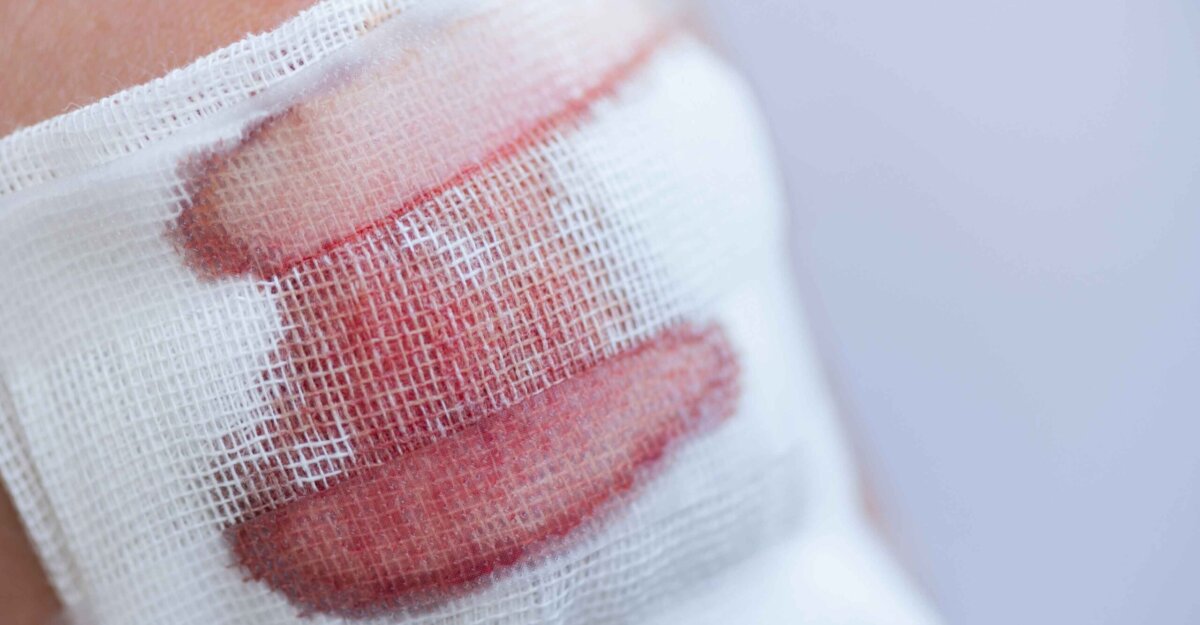 Name this drainage
Sanguineous Drainage
400
Why is it important to document the patient's pain level both before and after administering a PRN pain medication?
1. Evaluates Medication Effectiveness
2. Supports Clinical Decision Making
3. Provides legal protection
4. Promotes patient safety
5. Meets professional and regulatory standards
500
You are caring for a 72-year-old patient admitted with shortness of breath and fatigue. The patient has a history of Chronic Obstructive Pulmonary Disease and reports, “I get tired just walking to the bathroom.” On assessment you note:
- Respiratory rate: 24 breaths/min
- Oxygen saturation: 89% on room air
- Use of accessory muscles when breathing
- Decreased activity tolerance
- Fatigue and difficulty completing ADLs
- Based on the assessment data, what are two possible nursing diagnoses for this patient?
Possible nursing diagnoses:
Impaired gas exchange
Activity Intolerance
500
What are some nursing interventions for patients with ostomies?
Measure stoma, Select an ostomy appliance, empty the appliance, provide skin care, provide emotional support
500
Scenario:
You are assigned to assist a 76-year-old patient who is post–hip surgery (post-op day 2). The patient has orders for “up with assistance” and is using a walker. The patient reports mild dizziness when standing.
During your shift, you need to assist the patient from bed to chair and then ambulate them 10 feet in the hallway.
The patient has:
- Blood pressure: 104/66 mmHg lying
- Heart rate: 96 bpm
- Reports feeling “a little lightheaded when I sit up”
- Surgical dressing is clean, dry, and intact
Questions
- What safety precautions should the LPN take before attempting to transfer the patient?
- What equipment should be used to ensure a safe transfer and ambulation?
- What assessment findings would make you stop the transfer or ambulation immediately?
Safety precautions:
- Assess for dizziness, pain, and vital signs before activity
- Ensure non-skid footwear is on patient
- Clear environment of clutter
- Lock bed and chair wheels
- Explain the procedure to the patient
- Allow patient to dangle legs before standing
Equipment needed:
- Walker
- Gait belt
- Non-slip socks or shoes
- Possibly wheelchair if patient becomes unstable
Stop ambulation if:
- Severe dizziness or lightheadedness
- Shortness of breath or chest pain
- Sudden weakness or inability to bear weight
- Pale, diaphoretic appearance
- Drop in blood pressure or signs of orthostatic hypotension
500
When you assess a wound, what should you include in your documentation?
Location, size, depth, color of the wound and appearance of the surrounding skin, condition of surrounding skin, drainage, odor, discomfort level
500
At 0800, you administer Hydrocodone/Acetaminophen 5 mg/325 mg PO to a patient for postoperative pain rated 8/10.
One hour later, during reassessment, you note the following:
- Pain level: 3/10
- Respiratory rate: 10 breaths/min
- Oxygen saturation: 91% on room air
- Patient is difficult to arouse and falls asleep during conversation
Question
- What side effects or adverse reactions is this patient experiencing?
side effect: a predictable and often expected response to a medication-mild drowsiness after taking an opioid
adverse reaction: an unintended, harmful, or potentially life-threatening response to a medication Ex. respiratory depression after opiod administration