Cell, Cell, Baby
Room to Function
Specialists at Work
Insane in the Membrane
Water you doing?
100
This lipid boundary surrounds the cytoplasm of all typical living cells.
What is the plasma membrane? (/CSM)
100
These discrete subunits of cells are adapted to carry out specific functions.
What are organelles?
100
These unspecialised cells can keep dividing and can develop into different specialised cell types.
What are stem cells?
100
Amphipathic phospholipids naturally arrange themselves into this double layer when surrounded by water.
What is a phospholipid bilayer?
100
This is the net movement of water across a membrane due to differences in solute concentration.
What is osmosis?
200
A cell contains a cell wall, cytoplasm, a loop of naked DNA and 70S ribosomes, but no nucleus. This is the type of cell.
What is a prokaryotic cell?
200
Separating the nucleus from the cytoplasm keeps transcription apart from this process, which occurs at ribosomes.
What is translation?
(accept protein synthesis)
200
Adult stem cells in bone marrow can form several related cell types, but not every type of cell in the body. They have this level of potency.
What is multipotent?
200
Oxygen moving directly between phospholipids from an area of higher concentration to lower concentration uses this transport process. No protein required.
What is simple diffusion?
200
A cell is placed in a solution with a higher solute concentration than the cell contents. The surrounding solution is described by this term.
What is hypertonic?
300

This cell has a nucleus, chloroplasts, a large sap vacuole and a cell wall. Identify the type of eukaryotic cell shown.
What is a plant cell?
300
Despite appearing on many cell diagrams, these three structures are not considered organelles: the cell wall, cytoplasm and this internal network of fibres.
What is the cytoskeleton?
300
During early embryonic development, differences in chemical gradients can cause cells to switch different genes on or off. This process ultimately produces cells with different structures and functions.
What is differentiation?
300
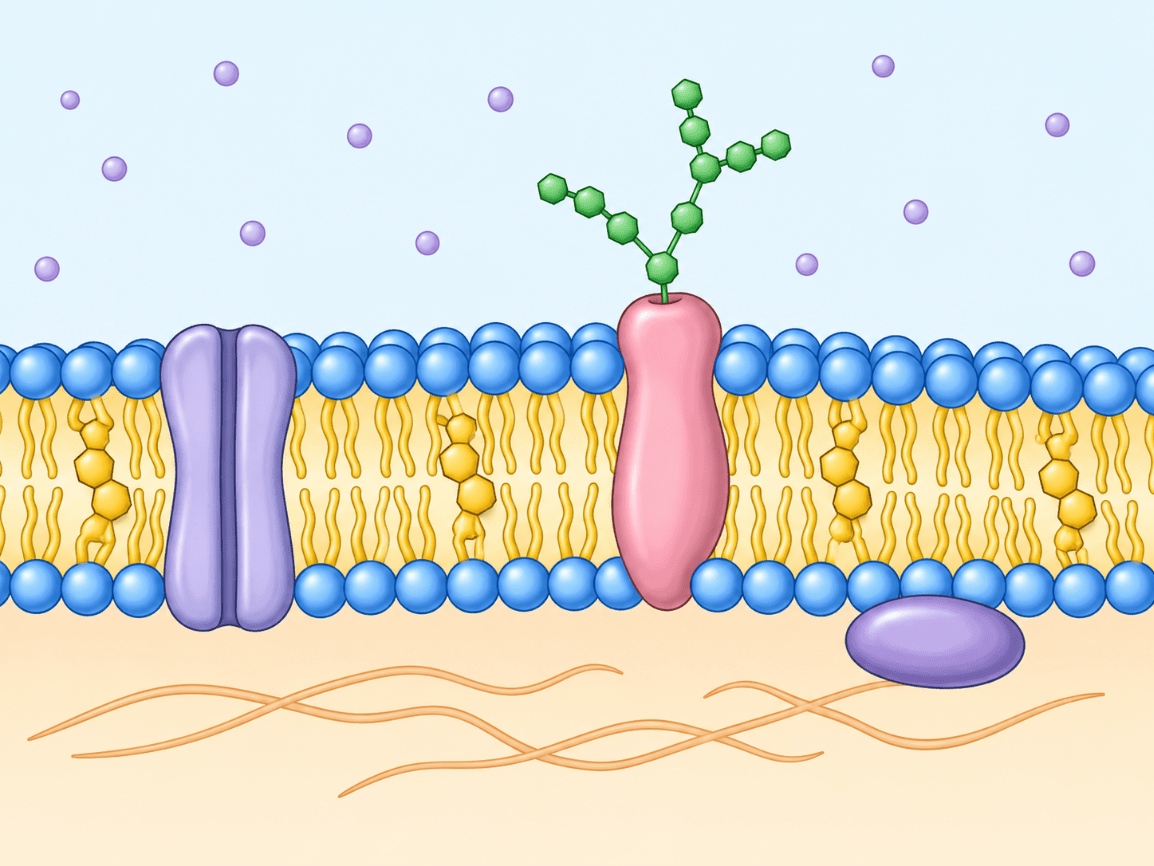
This membrane component has a carbohydrate chain projecting from the extracellular surface and can be involved in cell recognition.
What is a glycoprotein?
300
In this type of solution, water continues moving both into and out of a cell, but there is no net movement because the system is in dynamic equilibrium.
What is isotonic?
400
A cell appears 40 mm long in an image but is actually 20 μm long. This is the magnification of the image.
What is ×2000?
400
Keeping digestive enzymes inside lysosomes rather than loose in the cytoplasm demonstrates this advantage of compartmentalisation.
What is the separation of incompatible biochemical processes? OWTTE
400
A cube-shaped cell has sides 2 cm long. Its surface area is 24 cm² and its volume is 8 cm³. This is its surface-area-to-volume ratio.
What is 3:1?
400
An ion moves down its concentration gradient through a specific membrane channel without ATP being used. This is the transport process.
What is facilitated diffusion?
400
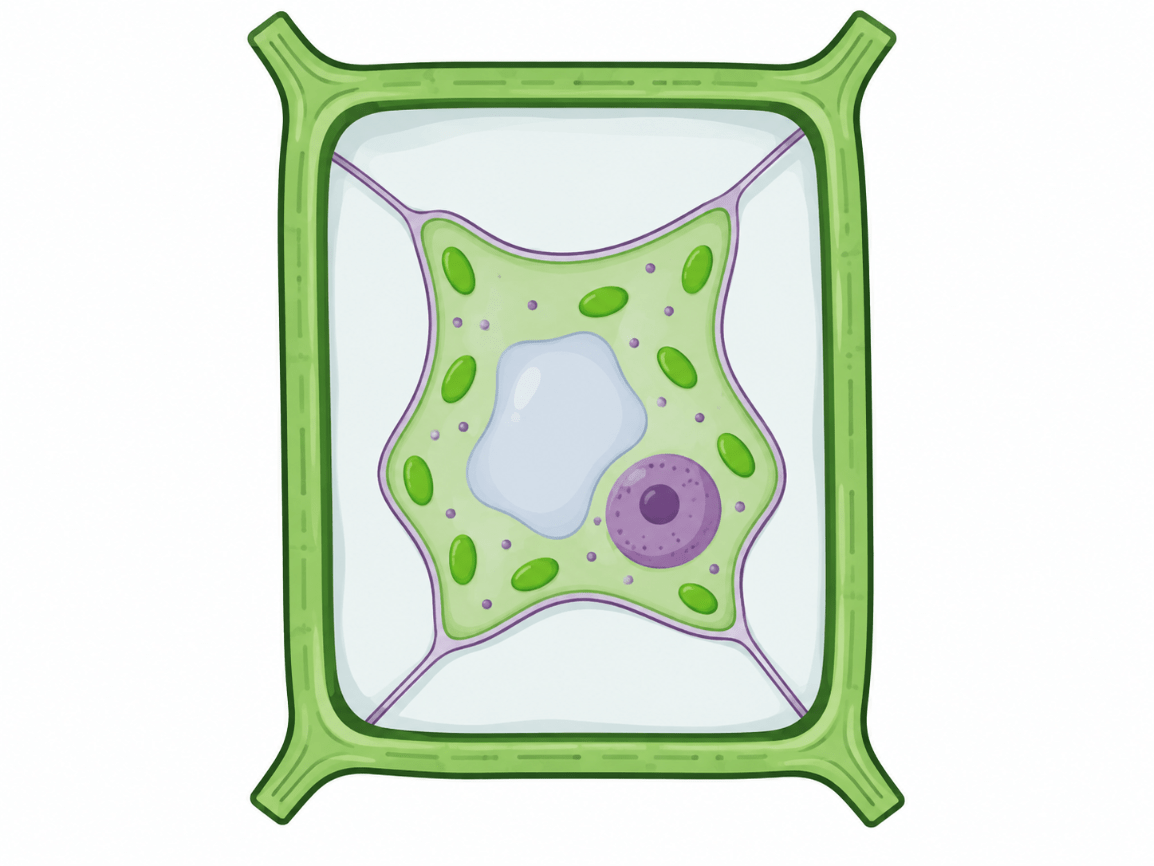
A plant cell has lost water until its plasma membrane has pulled away from the cell wall. This condition has occurred.
What is plasmolysis?
500
Ribosomes cannot normally be resolved clearly using a light microscope, but can be seen using this type of microscopy because it provides much greater resolution.
What is electron microscopy?
500
Reactions can occur more efficiently inside a small compartment because enzymes and their substrates can be accumulated there. Compartmentalisation therefore increases this local property.
What is concentration?
500
Put these stem-cell types in order from greatest to least developmental potential: multipotent, totipotent, pluripotent.
What is totipotent → pluripotent → multipotent?
500
A membrane protein continues moving particles into a region where they are already more concentrated. When ATP production stops, the movement stops too. This is the transport process.
What is active transport?
500
Potato tissue is placed in several sucrose solutions. At 0.30 mol dm⁻³ it gains 4% mass; at 0.40 mol dm⁻³ it loses 4% mass. Assuming a linear trend between these points, this is the approximate isotonic sucrose concentration.
What is 0.35 mol dm⁻³?