Extinction
History of Life on Earth
Carbon Cycle
Earth Systems
Life's Evolution
100
What is the term for the normal, ongoing loss of species that occurs over time?
Background extinction rate
100
What type of organisms made up much of the earliest life on Earth?
Single-celled organisms
100
Which, of the four processes in the carbon cycle, removes carbon dioxide from the atmosphere?
Photosynthesis
100
After a major volcanic eruption, ash blocks sunlight from reaching plants. What process would be directly affected?
Photosynthesis
100
What gas was produced by early photosynthetic organisms and eventually became abundant in Earth's atmosphere?
Oxygen
200
What type of event could cause a mass extinction by dramatically changing Earth's environment?
A major asteroid impact OR other acceptable answers
200
What was the time period called when we witnessed major change in the diversity or complexity of organisms?
The Cambrian Explosion
200
Respiration releases carbon dioxide into the atmosphere. Which Earth systems are involved when carbon moves from an organism into the atmosphere?
Biosphere → atmosphere
200
What human activity can directly increase the amount of carbon dioxide in the atmosphere?
Breathing, burning fossil fuels, etc.
200
The evolution of aerobic respiration became possible when organisms gained the ability to use what gas for energy?
Oxygen!
300
Why can studying past mass extinctions help scientists understand threats to biodiversity today?
Past extinctions show how major environmental changes can affect species and biodiversity, helping scientists recognize potential threats today.
300
Put these developments in a logical sequence: complex multicellular life, early single-celled life, Cambrian Explosion, formation of Earth.
Formation of Earth → early single-celled life → complex multicellular life → Cambrian Explosion
300
What is one major carbon reservoir found in the geosphere?
Fossil fuels
300
How could a human activity that destroys habitats contribute to extinction?
It can remove or alter the resources and environmental conditions organisms need to survive, causing populations to decline and potentially become extinct.
300
What happened to much of the oxygen produced by early photosynthetic organisms before oxygen became abundant in the atmosphere?
It reacted with rocks in the ocean and rock "sponges" on land (before it could begin filling up the atmosphere)
400
A species is unable to survive after its environment changes dramatically. What is the most likely reason this species becomes extinct?
The species cannot adapt to the new environmental conditions.
400
Approximately when did complex life begin to evolve?
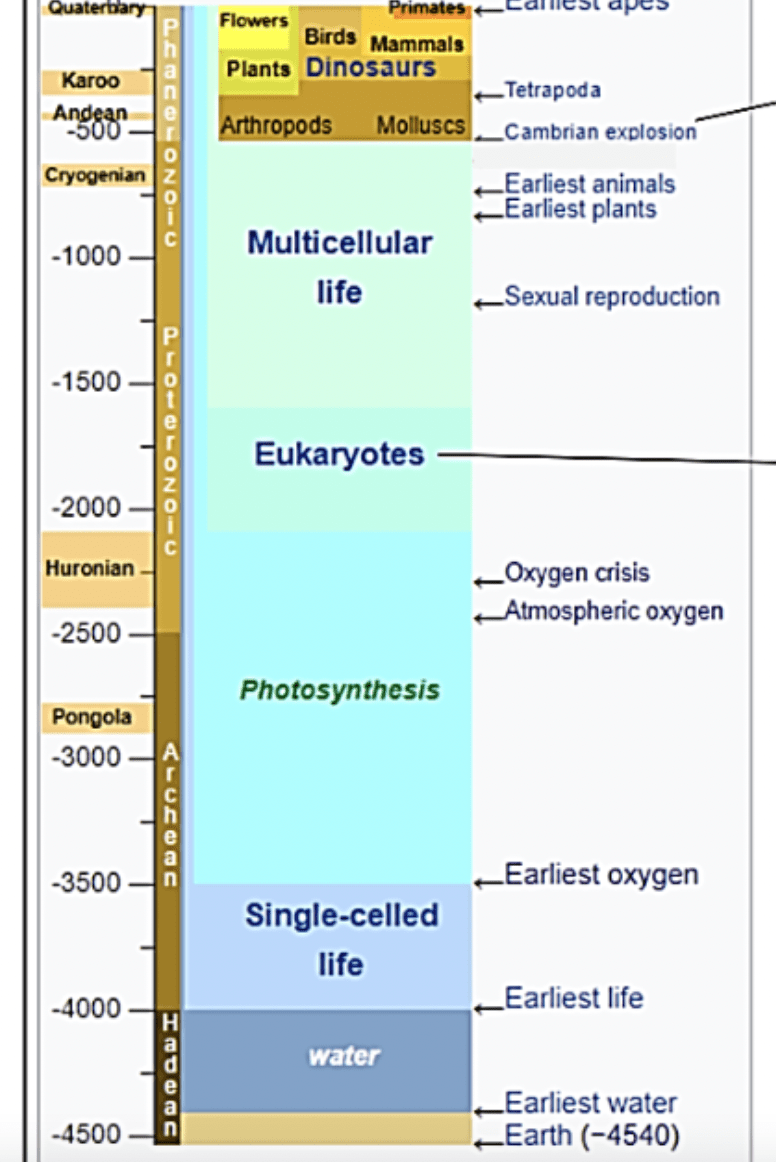
About 1 billion years ago
400
A graph shows that atmospheric carbon dioxide increases steadily over several decades. What does this suggest about the movement of carbon?
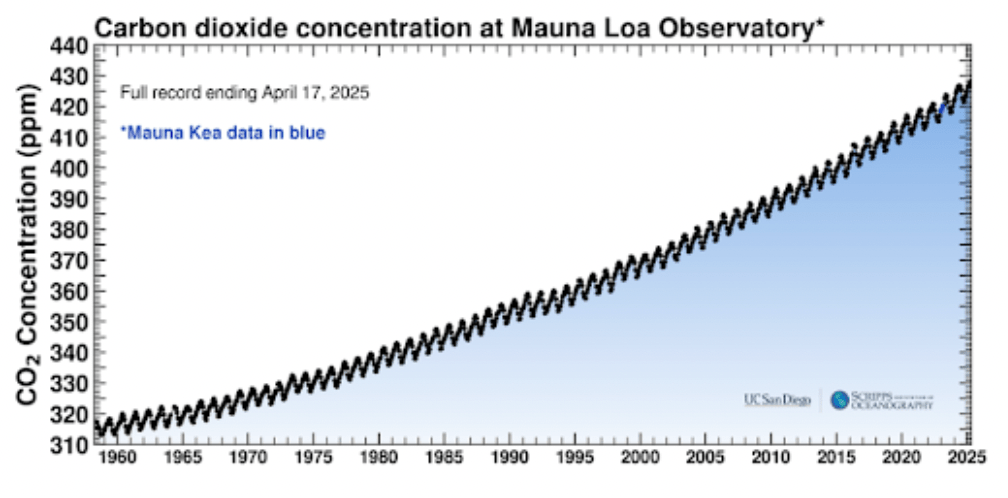
More carbon is entering the atmosphere than is leaving it.
400
A human activity increases atmospheric carbon dioxide. Explain how this could eventually affect life on Earth.
Increased atmospheric CO₂ can contribute to environmental changes that alter habitats and conditions, potentially making it harder for some species to survive and increasing extinction risk.
400
Why did the development of an ozone layer help make land more suitable for life?
The ozone layer provided protection from harmful ultraviolet (UV) radiation.
500
A mass extinction eliminates many species from an ecosystem. Explain how this extinction could affect the evolution of life that survives afterward.
The loss of species can create new opportunities and environmental conditions for surviving organisms, allowing surviving populations to evolve and diversify into available niches.
500
Fossils from the Cambrian Explosion include organisms similar to what two types of soft-bodied organisms?
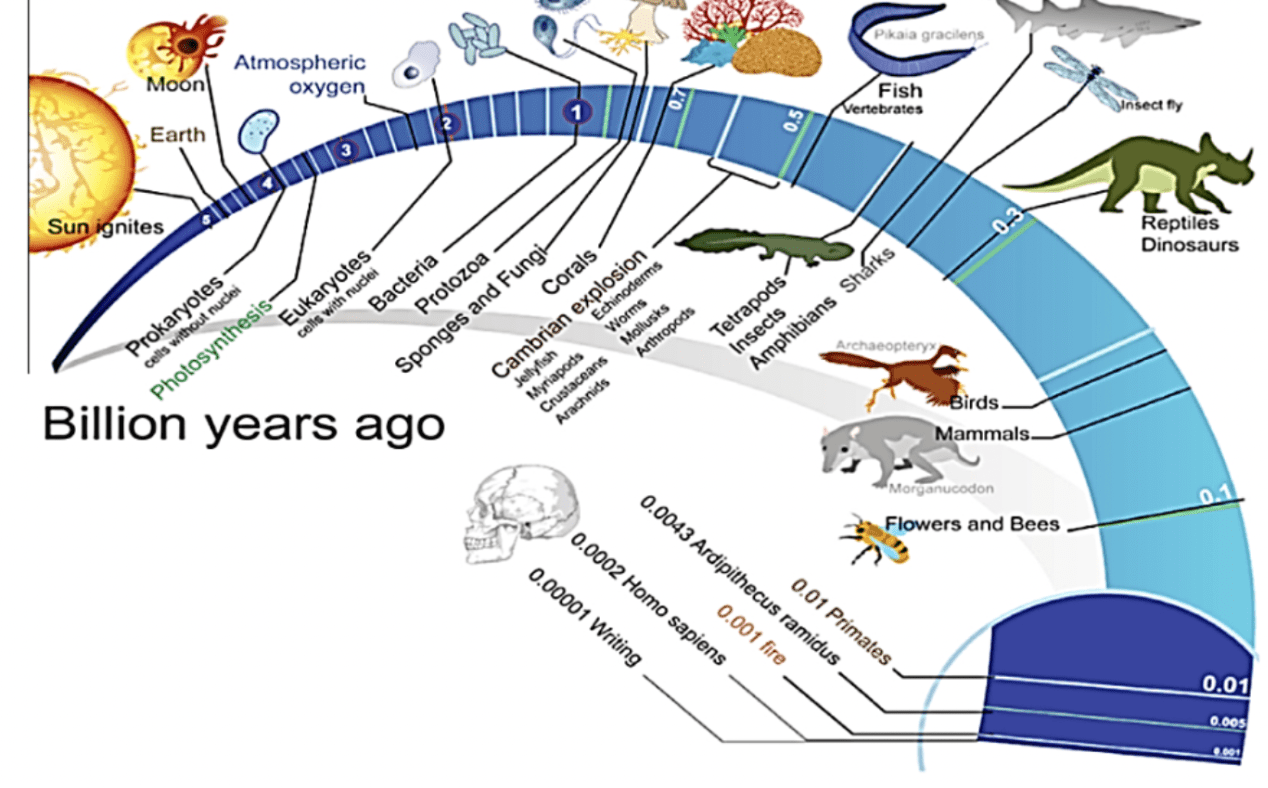
Jellyfish and worms
500
A large amount of fossil fuel is burned over many years. Explain how this changes the carbon cycle and atmospheric carbon dioxide levels.
Burning fossil fuels transfers carbon stored in the geosphere into the atmosphere as carbon dioxide, increasing the amount of atmospheric CO₂.
500
A volcanic eruption blocks sunlight for an extended period. Explain how this single event could affect multiple Earth systems.
Volcanic ash can reduce sunlight reaching the biosphere, decreasing photosynthesis and plant growth. This can reduce food and energy available to organisms and disrupt ecosystems, potentially causing population declines and extinctions.
500
Construct an explanation connecting these events: photosynthesis → increased oxygen → aerobic respiration → more complex life.
Photosynthetic organisms released oxygen, causing atmospheric oxygen levels to increase. Organisms could then use oxygen for aerobic respiration, which provides more usable energy. This increased energy availability supported the evolution of larger and more energy-demanding organisms.