PT & REHAB
CBT
FOODBORNE ILLNESS
PHOTO QUIZ
BOARD REVIEW
100
A 38 year old runner has Achilles tendinopathy. Which exercise approach is appropriate?
A. Complete rest until pain-free
B. Stretching only
C. Slow-resistance training
D. Passive modalities only
Answer: C. Slow-resistance training
Explanation: Slow-resistance exercise is effective for tendinopathy and may be easier to follow than eccentric-only programs.
Clinical pearl: Progressive tendon loading is preferred over prolonged rest.
100
A 34-year-old patient with generalized anxiety disorder asks whether CBT or medication is more effective. What does evidence suggest?
A. CBT is superior to all medications
B. Medications are superior to CBT
C. CBT and medication have comparable efficacy
D. CBT should only be used after medication failure
E. Combination therapy is always required
Answer: C. CBT and medication have comparable efficacy
Explanation: Per the AAFP 2026 CBT article, CBT or medication is the primary treatment for anxiety disorders, with combination treatment also effective. A 2018 BMJ meta-analysis found no significant difference in response or remission rates between second-generation antidepressants and CBT for major depressive disorder.
Clinical pearl: Patient preference, access, and prior treatment response should guide selection between CBT and pharmacotherapy.
100
A 24-year-old college student presents with 24 hours of watery diarrhea, nausea, and mild abdominal cramps after eating at a campus dining hall. He is afebrile, has no blood in stool, and is tolerating oral fluids. What is the most appropriate initial management?
A. Immediate stool culture and ova/parasite testing
B. Empiric antibiotic therapy with ciprofloxacin
C. Supportive care with oral rehydration and symptom monitoring
D. Admission for intravenous fluids and observation
E. Abdominal CT to rule out appendicitis
Answer: C. Supportive care with oral rehydration and symptom monitoring
Explanation: Per the AAFP 2026 Foodborne Illness article, most foodborne illnesses are self-limited and resolve with supportive care. The IDSA 2017 infectious diarrhea guidelines recommend against routine stool testing for uncomplicated acute watery diarrhea in immunocompetent adults. Oral rehydration is the cornerstone of treatment; antibiotics are reserved for severe disease, high-risk hosts, or specific pathogens.
Clinical pearl: Not all diarrheal illness requires diagnostic testing or antibiotics. Reserve stool studies for severe symptoms, bloody diarrhea, high fever, immunocompromise, or prolonged duration (>7 days).
100
A 4-year-old child presents with low-grade fever, painful oral ulcers, and vesicular lesions on the palms and soles. The mother reports similar symptoms in several children at daycare. What is the most likely diagnosis?
A. Herpes simplex virus infection
B. Hand-foot-and-mouth disease
C. Varicella-zoster virus infection
D. Impetigo
E. Contact dermatitis
Answer: B. Hand-foot-and-mouth disease
Explanation: Per the AAFP 2026 Rash on Both Feet article, hand-foot-and-mouth disease is a highly contagious childhood viral infection most commonly caused by coxsackievirus. It is characterized by low-grade fever, painful oral ulcers, and vesicles on the hands and feet. Diagnosis is clinical; treatment is supportive as infection typically resolves spontaneously within 10–14 days.
Clinical pearl: Hand-foot-and-mouth disease often presents with lesions on the buttocks as well. Do not mistake it for varicella, which has a centripetal distribution and different lesion morphology.
100
Which one of the following does the U.S. Preventive Services Task Force (USPSTF) most strongly recommend to improve the prevention and diagnosis of skin cancer? (check one)
A. Routine counseling for sun protection methods in patients 6 months to 24 years of age with fair skin.
B. Routine counseling for sun protection methods in patients older than 24 years with average risk.
C. Counseling asymptomatic adults to perform a regular skin self-examination.
D. Performing a complete visual skin examination in asymptomatic adolescents and adults.
Answer: A. Routine counseling for sun protection methods in patients 6 months to 24 years of age with fair skin.
The USPSTF recommends sun protection counseling against ultraviolet radiation in individuals with fair skin up to 24 years of age to reduce skin cancer risk. It is less clear whether preventive counseling is of benefit in people older than 24 years. Insufficient evidence exists for counseling on self-examination or performing a visual examination of the skin for asymptomatic patients at low risk. However, a diagnostic visual examination is beneficial in patients at higher risk.
200
A 26 year old basketball player with patellar tendinopathy has mild pain during rehabilitation exercises without worsening later that day or the next morning. What is the best recommendation?
A. Stop all exercise
B. Continue rehabilitation with pain monitoring
C. Use only ultrasound
D. Return immediately to full sport
Answer: B. Continue rehabilitation with pain monitoring
Explanation: Mild, tolerable pain during exercise can be acceptable if symptoms do not significantly worsen afterward.
Clinical pearl: Pain during rehabilitation does not always indicate harm.
200
A 28-year-old with panic disorder and mild depression prefers non-pharmacologic treatment. She has limited time for weekly therapy sessions. What is the best recommendation?
A. CBT requires weekly in-person sessions to be effective
B. Internet-delivered CBT with therapist support is an effective option
C. Self-help CBT without guidance is equally effective
D. Wait until symptoms worsen before starting CBT
E. CBT is not effective for comorbid anxiety and depression
Answer: B. Internet-delivered CBT with therapist support is an effective option
Explanation: The AAFP 2026 CBT article notes that CBT can be delivered via telehealth and digital platforms. A 2023 JAMA Psychiatry trial (Benjet et al.) demonstrated that clinician-guided internet-delivered CBT achieved 51.8% joint remission of anxiety and depression versus 40% with usual care.
Clinical pearl: Digital CBT platforms expand access without sacrificing efficacy when therapist guidance is included.
200
A 38-year-old woman presents with 3 days of bloody diarrhea, abdominal cramping, and fever to 38.5°C after eating undercooked ground beef. Stool culture grows E. coli O157:H7. What is the most appropriate management?
A. Initiate empiric antibiotic therapy with ciprofloxacin
B. Avoid antibiotics and provide supportive care only
C. Start azithromycin immediately to shorten illness duration
D. Order immediate abdominal CT to assess for colitis
E. Refer for colonoscopy to evaluate for inflammatory bowel disease
Answer: B. Avoid antibiotics and provide supportive care only
Explanation: The AAFP 2026 Foodborne Illness article and IDSA 2017 guidelines advise against antibiotic therapy for E. coli O157:H7 infection. Antibiotics increase the risk of hemolytic uremic syndrome (HUS) by 2- to 4-fold through enhanced Shiga toxin release. Supportive care with monitoring for HUS (CBC, creatinine, urinalysis) is indicated.
Clinical pearl: For suspected Shiga toxin-producing E. coli (STEC), antibiotics are contraindicated. Monitor for HUS, particularly in children and elderly patients.
200
A 22-year-old woman presents with deep, horizontal depressions across multiple fingernail plates that appear to be breaking from the base. She recently recovered from hand-foot-and-mouth disease. What is the most likely diagnosis?
A. Retronychia
B. Onychomadesis
C. Beau lines
D. Onycholysis
E. Psoriatic nail changes
Answer: B. Onychomadesis
Explanation: Per the AAFP 2026 Painful Layered Nails article, onychomadesis describes a pathologic process in which growth from the nail matrix is completely halted, leading to deep, horizontal depressions across the nail plate that may cause it to break from the base. It may arise as a sequela of viral infection (e.g., hand-foot-and-mouth disease due to coxsackievirus), other systemic illnesses, trauma, and medications.
Clinical pearl: Onychomadesis is often temporary and self-limited once the underlying cause resolves. Reassure patients that normal nail growth typically resumes within 2–3 months.
200
A 44-year-old patient with asthma has experienced several exacerbations requiring oral corticosteroids in the past few months despite regular use of a medium-dose inhaled corticosteroid (ICS). Which one of the following statements about asthma treatment is correct? (check one)
A. Switching to a high-dose ICS alone does not reduce the frequency of moderate to severe asthma exacerbations compared with a medium-dose ICS alone.
B. Adding a long-acting beta2 agonist (LABA) to a medium- or high-dose ICS likely reduces the frequency of moderate to severe asthma exacerbations compared with continuing a medium-dose ICS alone.
C. Adding a long-acting muscarinic antagonist (LAMA) to a medium-dose ICS possibly reduces the frequency of moderate to severe asthma exacerbations compared with continuing a medium-dose ICS alone.
D. All of the above.
Answer: D. All of the above
This Cochrane review determined the effectiveness and safety of dual therapies (a medium-dose ICS plus a LABA or a medium-dose ICS plus a LAMA) vs. a high-dose ICS alone compared with a medium-dose ICS alone in adolescents and adults with uncontrolled asthma. Adding a LAMA or LABA to a medium-dose ICS reduced symptoms and exacerbations. High-dose ICS did not appear to reduce moderate to severe asthma exacerbations compared with medium-dose ICS. Current guidelines suggest using a combined low-dose ICS plus formoterol (LABA) for both maintenance and reliever therapy. The ICS dose can be increased if symptoms remain uncontrolled. The guidelines also recommend initiating a LAMA in patients with uncontrolled asthma who are already using a medium-dose dual maintenance and reliever inhaler.
300
A 63 year old patient is recovering from a knee injury and has significant quadriceps weakness.He begins knee rehabilitation with seated knee ( long-arc quadriceps) extensions before squats. Why?
A. Open kinetic chain exercises allow isolated strengthening/isolate muscles
B. Closed kinetic chain exercises should be avoided because they load multiple joints.
C. Squats should never be used
D. Functional, sport-specific movements should always precede isolated strengthening exercises.
Answer: A. Open kinetic chain exercises allow isolated strengthening/isolate muscles
Explanation: Open kinetic chain exercises can target a specific muscle group and are useful early in rehabilitation.
Clinical pearl: Rehabilitation commonly progresses from range of motion and low-load isometrics to isolated strengthening, then slow-resistance loading, and finally functional or sport-specific movements.
In simpler words, Progress from isolated strengthening to multijoint functional exercise.
300
A 45-year-old with chronic insomnia and comorbid depression asks about CBT-I versus mindfulness-based approaches. What does evidence indicate?
A. CBT-I and mindfulness have equivalent immediate effects
B. Mindfulness is superior to CBT-I at all time points
C. CBT-I is superior immediately; mindfulness may achieve non-inferiority later
D. Sleep hygiene education is equivalent to both
E. Medications are preferred over either intervention
Answer: C. CBT-I is superior immediately; mindfulness may achieve non-inferiority later
Explanation: Per the AAFP 2026 CBT article, CBT is the primary treatment for insomnia. The 2023 JAMA Psychiatry LIGHTMind trial found mindfulness-based cognitive therapy self-help superior to CBT self-help for depression at 16 weeks, but CBT-I shows superior immediate effects for insomnia with non-inferiority at 5 months for some outcomes.
Clinical pearl: CBT-I remains first-line for chronic insomnia; mindfulness approaches may be reasonable alternatives when CBT-I is unavailable.
300
A 62-year-old man with type 2 diabetes presents with 5 days of watery diarrhea, fever to 39°C, and severe abdominal pain. He recently traveled to Southeast Asia. Stool studies are pending. What is the most appropriate empiric antibiotic regimen?
A. Metronidazole alone
B. Azithromycin 500 mg daily for 3 days
C. Ciprofloxacin 750 mg twice daily for 7–10 days
D. Trimethoprim-sulfamethoxazole DS twice daily for 3 days
E. No antibiotics until culture results return
Answer: B. Azithromycin 500 mg daily for 3 days
Explanation: Per the AAFP 2026 Foodborne Illness article Table 4, azithromycin is first-line for empiric treatment of severe traveler's diarrhea and Campylobacter infection. Fluoroquinolone resistance in Campylobacter exceeds 20% in many regions, making azithromycin preferred. The IDSA 2017 guidelines recommend azithromycin for dysentery or febrile diarrhea in travelers.
Clinical pearl: Azithromycin has replaced fluoroquinolones as first-line empiric therapy for severe traveler's diarrhea due to rising resistance. Reserve fluoroquinolones for specific indications or when azithromycin is contraindicated.
300
A 6-year-old boy presents with fever, headache, and a rash that began on his wrists and ankles and is spreading toward his trunk. His mother reports they recently visited a rural area in Tennessee. What is the most appropriate immediate management?
A. Await PCR confirmation before starting antibiotics
B. Initiate empiric doxycycline therapy immediately
C. Treat with amoxicillin for suspected Lyme disease
D. Order abdominal CT to evaluate for appendicitis
E. Administer acetaminophen and observe for 48 hours
Answer: B. Initiate empiric doxycycline therapy immediately
Explanation: The AAFP 2026 Rash on Both Feet article discusses Rocky Mountain spotted fever (RMSF), caused by Rickettsia rickettsii and transmitted by tick bites. Per the CDC 2026 guidance and MMWR 2016 guidelines, doxycycline is the treatment of choice for all ages, including children under 8 years. The classic triad of fever, rash, and headache is present in only a minority at initial presentation; rash typically appears 2–4 days after fever onset. Delay in treatment beyond day 5 is associated with significantly increased mortality—therefore, empiric therapy should never await laboratory confirmation.
Clinical pearl: RMSF can be fatal even in healthy children. The rash spreads centripetally (wrists/ankles toward trunk) and may involve palms/soles. Treat based on clinical suspicion, not test results.
300
A 54-year-old male with cervical disc disease, generalized anxiety disorder, and opioid use disorder on maintenance therapy presents with a 5-day history of pain and numbness in both hands and feet. He mentions that he had a COVID-19 booster vaccination 6 weeks ago.
On the review of systems, he reports increased urinary frequency and feeling less steady on his feet. A neurologic examination is notable for a slightly wide-based gait, decreased sensation in the upper extremities to the forearms and lower extremities to the calves, and brisk Achilles reflexes with clonus. His muscle strength is normal in both the upper and lower extremities, and there is no spinal tenderness. The remainder of the examination, including vital signs, is normal.
Which one of the following diagnoses is most consistent with this presentation? (check one)
A. Cervical myelopathy
B. Epidural abscess
C. Guillain-Barré syndrome
D. Multiple sclerosis
Answer: A. Cervical myelopathy
This patient presents with findings suggestive of cord compression causing degenerative cervical myelopathy. Cord compression in the cervical spine typically causes ascending loss of sensation in all four extremities, hyperreflexia, and gait instability, and it can progress to cause extremity weakness and bladder and bowel dysfunction. Patients with active intravenous drug use are at risk for epidural abscess, but this would typically cause localized tenderness and signs of systemic inflammation, including fever. Guillain-Barré syndrome is an autoimmune demyelinating disease that can cause ascending numbness and weakness, but is associated with loss of reflexes. Neurologic deficits associated with multiple sclerosis (MS) are variable and MS is in the differential in this case, though the history and presentation are much more consistent with degenerative myelopathy.
400
A 46 year old warehouse worker with lateral elbow tendinopathy has no improvement after 8 weeks of physical therapy.There is no neurologic deficit on exam. What is the best next step?
A. Immediate surgery
B. Continue the same plan indefinitely
C. Reassess adherence, load, diagnosis, and exercise plan
D. Immobilize for 6 weeks
Answer: C. Reassess adherence, load, diagnosis, and exercise plan
Explanation: Lack of progress requires reassessment before labeling therapy unsuccessful.Refractory cases may warrant sports medicine or orthopedic evaluation after reassessment.
Clinical pearl: “Failure of physical therapy” is not a diagnosis. “Failed physical therapy” should prompt evaluation of adherence, ongoing overload, and diagnostic accuracy.
400
A 52-year-old perimenopausal woman reports moderate-to-severe vasomotor symptoms, sleep disruption, and depressive symptoms. She prefers non-hormonal treatment. What is the most appropriate recommendation based on evidence for CBT in menopause?
A. CBT is only effective for vasomotor symptoms in women with breast cancer
B. Group CBT and self-help CBT both reduce hot flash problem ratings and improve sleep
C. CBT reduces vasomotor frequency but not bother or interference
D. CBT for menopausal symptoms requires in-person delivery to be effective
E. CBT should be deferred until after hormone therapy is attempted
Answer: B. Group CBT and self-help CBT both reduce hot flash problem ratings and improve sleep
Explanation: The AAFP 2026 CBT article addresses CBT for menopausal symptoms. The MENOS 2 trial (Ayers et al.) demonstrated that both group CBT and guided self-help CBT significantly reduced hot flush/night sweat problem ratings at 6 and 26 weeks compared with usual care. MSFLASH-04 (McCurry et al.) showed telephone-based CBT-I improved sleep and reduced hot flash interference in perimenopausal and postmenopausal women. The VA/DoD 2024 menopause guideline gives a strong recommendation for CBT for depressive and anxiety symptoms related to menopause.
Clinical pearl: CBT for menopausal symptoms is effective across delivery formats and improves both symptom bother and functional interference, not just frequency.
400
A 28-year-old pregnant woman at 32 weeks gestation presents with fever, myalgias, and diarrhea. Blood cultures grow Listeria monocytogenes. She denies recent consumption of unpasteurized dairy or deli meats. What is the most appropriate management?
A. Discontinue antibiotics once diarrhea resolves
B. Treat with ampicillin or penicillin G for at least 14 days
C. Use trimethoprim-sulfamethoxazole as first-line therapy
D. Observe without antibiotics given mild symptoms
E. Recommend termination of pregnancy due to high fetal mortality
Answer: B. Treat with ampicillin or penicillin G for at least 14 days
Explanation: The AAFP 2026 Foodborne Illness article emphasizes that Listeria infection in pregnancy requires prompt antibiotic therapy to prevent fetal infection, miscarriage, stillbirth, or neonatal sepsis. The IDSA 2017 guidelines recommend ampicillin or penicillin G for 14 days (or longer if immunocompromised or if there is CNS involvement). Trimethoprim-sulfamethoxazole is an alternative for penicillin-allergic patients but is generally avoided in late pregnancy.
Clinical pearl: Listeria in pregnancy often presents with mild maternal symptoms but carries high fetal morbidity. Maintain high index of suspicion and treat aggressively; blood cultures are essential as stool carriage is poorly sensitive.
400
An 80-year-old man presented with acute left foot and ankle pain that started shortly after hospitalization for alcohol withdrawal. He had no related injuries or family history of skin conditions. He frequently traveled to the Dominican Republic, his home country, but was unsure of his immunization status. His vital signs were normal.
Physical examination revealed multiple hyperpigmented macules on the soles of the feet (Figure 1). The rash was not tender or pruritic, and it did not affect any other area.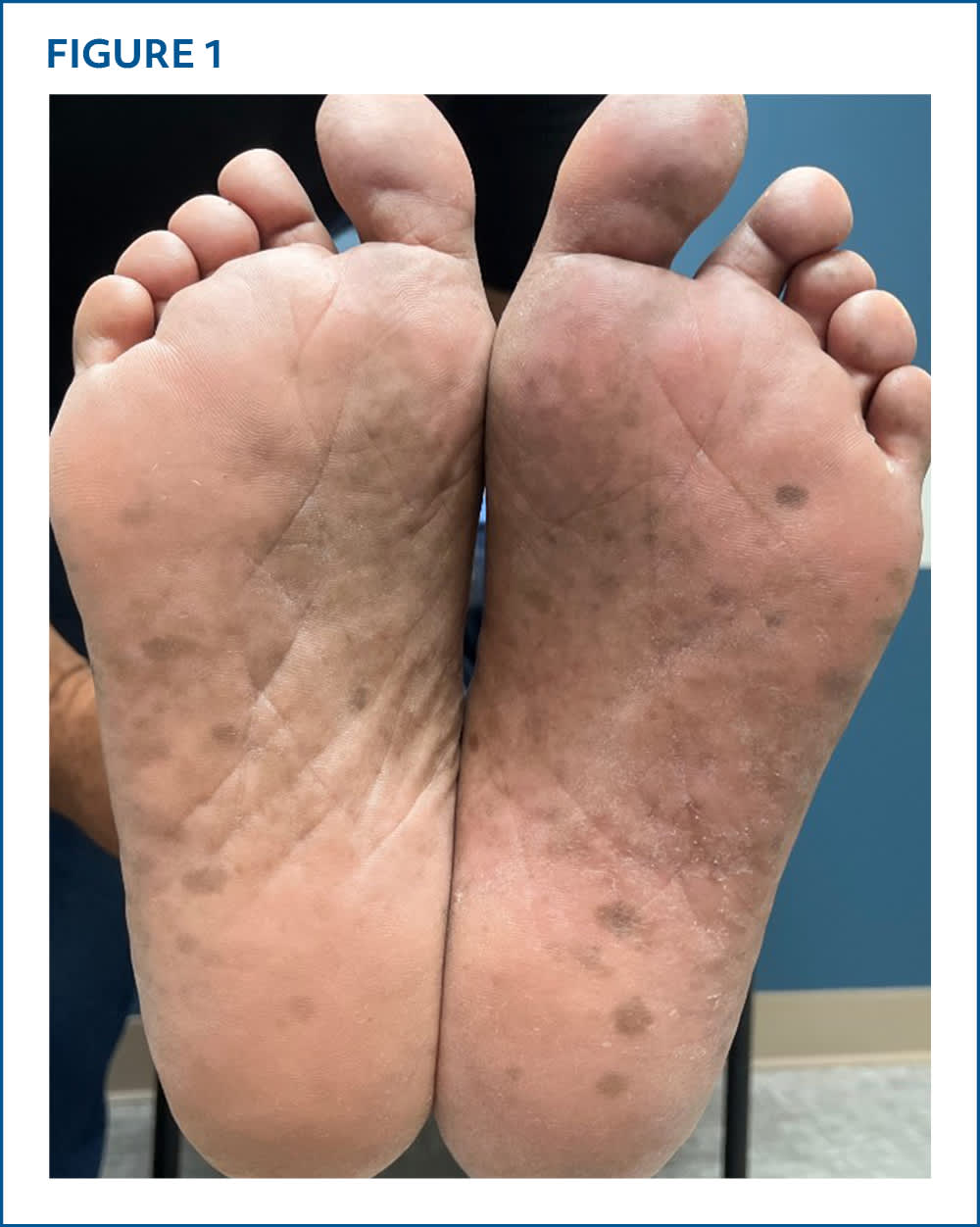
Based on the patient's history and physical examination, which one of the following is the most likely diagnosis?
A. Black walnut stain.
B. Hand-foot-and-mouth disease.
C. Rocky mountain spotted fever.
D. Scabies.
E. Secondary syphilis.
Answer: E. Secondary syphilis
Explanation: Secondary syphilis, caused by Treponema pallidum, presents 2–8 weeks after primary chancre resolution with generalized symptoms and a characteristic macular rash on the palms and/or soles that is copper-colored, small, scaly, and nonpruritic. The CDC STI guidelines note that the rash may resolve within weeks but can recur in untreated patients. Black walnut stains are black, not hyperpigmented macules. Hand-foot-and-mouth disease presents with vesicles and oral ulcers. RMSF presents with fever and a spreading maculopapular or petechial rash. Scabies causes intense pruritus, especially at night, with burrows in interdigital spaces.
Clinical pearl: A nonpruritic macular rash on the palms and soles in an adult should always raise suspicion for secondary syphilis. Confirm with nontreponemal and treponemal testing, and evaluate for other STIs.
400
A 30-year-old patient presents with severe atopic dermatitis that is currently in remission. Which one of the following maintenance therapies is recommended by the American Academy of Allergy, Asthma and Immunology/American College of Allergy, Asthma and Immunology (AAAAI/ACAAI) for this patient? (check one)
A. Crisaborole 2% ointment (Eucrisa), a topical phosphodiesterase-4 inhibitor.
B. Tacrolimus 0.1% ointment, a topical calcineurin inhibitor.
C. Ruxolitinib 1.5% cream (Opzelura), a topical Janus kinase inhibitor.
D. Oral prednisone, a systemic corticosteroid.
Answer: B. Tacrolimus 0.1% ointment, a topical calcineurin inhibitor.
Maintenance therapy with a topical calcineurin inhibitor, such as tacrolimus, or a mid-potency topical corticosteroid is recommended vs. episodic therapy to reduce flare-ups of atopic dermatitis. Crisaborole is recommended only for mild atopic dermatitis; ruxolitinib is not recommended. Systemic corticosteroids should be avoided in atopic dermatitis because of systemic risks.
500
A 31 year old patient has gluteus medius tendinopathy with lateral hip pain and limited access to in-person therapy. Which home program is most appropriate?
A. Ten to twelve exercises to address all potential impairments and maximize treatment intensity.
B. complete unloading and avoidance of all hip movement until pain resolves
C. focused home program of three to five progressive exercises
D. Passive treatment only because home exercise programs are less effective than in-clinic treatment.
Answer: C. Three to five progressive exercises
Explanation: Focused home programs support adherence and allow progressive loading based on symptoms and function.
Clinical pearl: A short, feasible home program is more effective than an overly complex regimen.
500
A 38-year-old patient with alcohol use disorder and comorbid depression is receiving naltrexone and brief medical management in primary care. His depression has improved modestly but he continues heavy drinking. What does evidence suggest about adding CBT to his current regimen?
A. Adding CBT to pharmacotherapy consistently shows superior outcomes for alcohol use
B. CBT plus pharmacotherapy is superior to usual care plus pharmacotherapy, but not clearly better than other evidence-based therapies
C. CBT should replace pharmacotherapy as monotherapy for alcohol use disorder
D. Combined CBT and pharmacotherapy shows no benefit over pharmacotherapy alone
E. CBT is contraindicated in patients with comorbid depression and substance use
Answer: B. CBT plus pharmacotherapy is superior to usual care plus pharmacotherapy, but not clearly better than other evidence-based therapies
Explanation: The AAFP 2026 CBT article discusses CBT for substance use disorders. A 2019 JAMA Network Open meta-analysis (Ray et al.) found combined CBT and pharmacotherapy was superior to usual care plus pharmacotherapy, but CBT did not outperform other specific therapies like motivational enhancement therapy or contingency management when combined with pharmacotherapy. The VA/DoD 2021 SUD guideline identifies CBT as a first-line psychosocial intervention for alcohol, stimulant, and cannabis use disorders, with good confidence in effectiveness.
Clinical pearl: CBT is an evidence-based adjunct to pharmacotherapy for SUD, but selection among psychosocial interventions should consider patient preferences, access, and prior response rather than assuming CBT superiority.
500
A 45-year-old man with HIV (CD4 count 180 cells/µL) presents with 2 weeks of watery diarrhea, weight loss, and fatigue. Stool ova and parasite examination is negative; modified acid-fast stain of stool reveals oocysts. What is the most appropriate treatment?
A. Metronidazole 500 mg three times daily for 7 days
B. Nitazoxanide 500 mg twice daily for 3 days
C. Trimethoprim-sulfamethoxazole 160/800 mg twice daily for 7–10 days
D. Ciprofloxacin 500 mg twice daily for 3 days
E. Supportive care only as infection is self-limited
nswer: C. Trimethoprim-sulfamethoxazole 160/800 mg twice daily for 7–10 days
Explanation: Modified acid-fast oocysts indicate Cyclospora cayetanensis infection. Per the AAFP 2026 Foodborne Illness article Table 4, the treatment of choice for cyclosporiasis is trimethoprim-sulfamethoxazole (TMP-SMX) 160/800 mg twice daily for 7–10 days. Nitazoxanide is an alternative for TMP-SMX-allergic patients but is less effective. In immunocompromised hosts, prolonged or repeated courses may be necessary, and suppressive therapy should be considered.
Clinical pearl: Cyclospora is endemic in tropical regions and causes prolonged diarrhea in immunocompromised patients. Modified acid-fast staining distinguishes it from Cryptosporidium (which also stains acid-fast but is smaller) and Cystoisospora; TMP-SMX is uniquely effective for Cyclospora and Cystoisospora but not Cryptosporidium.
500
A 14-year old boy presented with a 1-year history of pain and irritation in the nail area of both great toes. He was prescribed efinaconazole 10% topical solution (Jublia). The patient returned 2 months later with greenish discoloration of the affected toenails. Bacterial culture grew an aerobic, gram-negative organism. Gentamicin 0.3% eye drops were prescribed to be applied to the nail edges three times per day. The patient returned 1 month later without improvement.
Physical examination revealed yellow-green discolored nails with onycholysis and subungual debris on both great toes. The nails had layered growth with a stacked appearance (Figure 1).
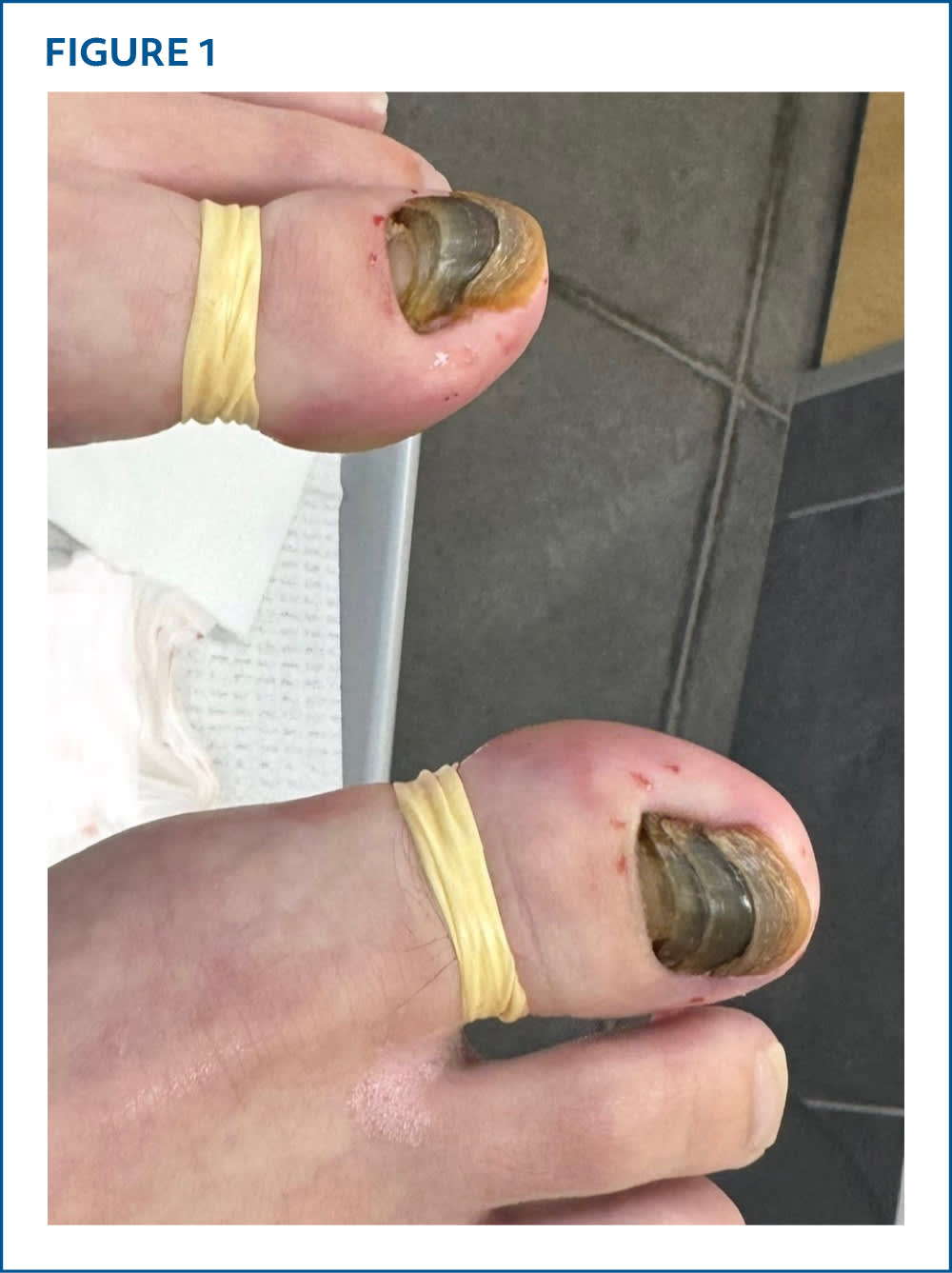
Based on the patient's history and physical examination, which one of the following is the most likely diagnosis?
A. Green nail syndrome.
B. Onychocryptosis (ingrown toenail).
C. Onychomadesis.
D. Refractory onychomycosis.
E. Retronychia.
Answer: E. Retronychia
Explanation: The AAFP 2026 Painful Layered Nails article describes retronychia as a pathologic pattern of nail growth in which the nail plate embeds retrograde into the proximal nail fold, leading to characteristic stacking of successive generations of nail plates. Key features include ongoing paronychia, granulation tissue from under the nail fold, thickening at the proximal nail plate, xanthonychia, and atypical layered nail plate growth.
Clinical pearl: Retronychia is a rare condition most commonly caused by repetitive trauma, often from poorly fitting shoes or high heels. The great toe is usually affected. Definitive management requires complete nail avulsion.
500
A rapidly growing lesion with a central keratin-filled crater develops on the arm of an older patient. Which one of the following diagnostic or therapeutic concerns is specific to the investigation of this lesion? (check one)
A. Dermoscopy cannot be used to differentiate this condition from squamous cell carcinoma.
B. It warrants considering an underlying diagnosis of systemic lupus erythematosus or immunodeficiency.
C. Rapid proliferation of additional lesions should prompt evaluation for an associated systemic malignancy.
D. Referral is warranted due to risk of local bony extension.
Answer: A. Dermoscopy cannot be used to differentiate this condition from squamous cell carcinoma.
The lesion is suspicious for keratoacanthoma. Dermoscopy of keratoacanthoma shares features with squamous cell carcinoma and cannot differentiate the two. Multiple dermatofibromas may be associated with underlying systemic conditions, such as systemic lupus erythematosus or immunodeficiency. Rapid appearance of seborrheic keratoses is sometimes a sign of underlying malignancy. Dermoid cysts detected in childhood have the potential for local bony extension and should be referred for excision