Not Your Grandpa's Management
Jesus, Take the
Steering Wheel
Steering Wheel
Talk to
Strangers
Strangers
Educated
Wild Guesses
Wild Guesses
Barely Functional
Prototypes
Prototypes
Before They
Were Billionaires
Were Billionaires
200
Eric Ries defines a startup as a human institution building something new under this specific, extreme state.
Extreme uncertainty
200
Turning ideas into products, measuring response, and deciding whether to pivot or persevere makes up this three-part loop.
Build-Measure-Learn
200
Steve Blank's famous four-word wake-up-call reminding founders that learning what your customers want exits only outside company offices.
Get out of the building
200
This foundational assumption tests whether a product actually delivers value to customers.
Value hypothesis
200
This three-word term describes the simplest product version needed to complete a Build-Measure-Learn loop.
Minimum Viable Product (MVP)
200
The 26 year old founder of this company tested his online shoe retail hypothesis by snapping photos in local stores and buying the shoes at retail.

Zappos (Nick Swinmurn)
400
Call them corporate rebels, this term describes an entrepreneur launching disruptive ventures from inside an established company.
Intrapreneur
400
In lean thinking, it’s the five-letter word for any human effort, code, or expenditure that fails to teach you what customers want.
Waste
400
A detailed, semi-fictional profile that represents a specific segment of your target audience.
Customer archetype
400
This foundational assumption tests how new customers will discover and adopt a new product.
Growth hypothesis
400
This direct marketing technique uses promotional pages or preorders to test demand for a product that does not yet exist.
Smoke test
400
The 19 year old founder of this social network proved its value hypothesis when over 50 percent of registered users logged in every single day.

Facebook (Mark Zuckerberg)
600
Unlike disruptive innovation, this two-word term describes incremental tweaks made to keep existing, profitable customers happy.
Sustaining innovation
600
Forming the solid base of the startup pyramid, this true north guide rarely changes.
Vision
600
This rhyming two-word phrase describes the trap where founders endlessly tweak models on whiteboard to avoid live testing.
Analysis paralysis
600
These visionary customers feel a problem most acutely, forgives early product bugs, and is eager to give feedback.
Early adopter
600
In this hands-on type of MVP, the product is delivered to early adopters entirely by hand before writing any software.
Concierge MVP
600
Pictured on the right, the 24 year old founder of this company validated demand for this cloud file-sharing service using a simple 3-minute screen-recording video.
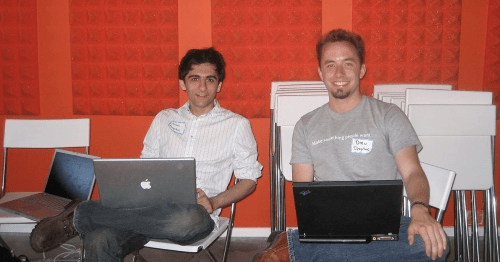
Dropbox (Drew Houston)
800
In a startup, progress is measured in this evidence-backed form of learning.
Validated learning
800
Instead of treating a launch like an inflexible rocket launch, Eric Ries compares steering a true entrepreneurial startup to this flexible activity, pictured below.

Driving
800
To test if bill-paying was painful, Intuit founder Scott Cook picked up the item in this picture and cold-called random households.
Phone book
800
Before Apple launched the iPod, Steve Jobs pointed to this iconic device as proof that people were willing to wear headphones in public.
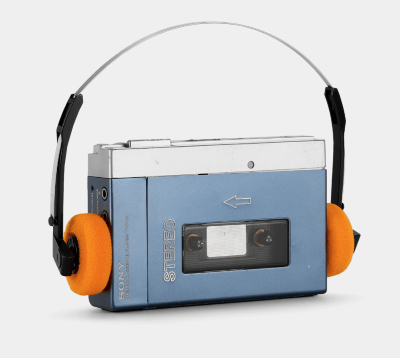
Walkman
800
Named after a classic fantasy movie, this test fools customers into thinking they're using automated technology while humans do the work behind the scenes.
Wizard of Oz MVP
800
The 28 year old founder of this company launched this daily deals giant as a simple WordPress blog, manually emailing PDF coupons for 2-for-1 pizza.

Groupon (Andrew Mason)
1000
Ries coined this ironic two-word phrase for flawlessly and faithfully executing a plan that was completely doomed from day one.
Achieving failure
1000
The lean philosophy traces its roots to Taiichi Ohno and Shigeo Shingo at this legendary Japanese automaker.
Toyota
1000
This core Toyota production system phrase translates literally into English as "go and see for yourself."
Genchi Gembutsu
1000
This catchy phrase describes the odd startup dynamic where having zero revenue is easier to pitch to investors than having small numbers.
Audacity of Zero
1000
Because early adopters care more about being first than having polish, they actively prefer this percentage-named solution.
80% solution
1000
The 21-year old founder of this tech company later based their digital music strategy on the leap of faith that customers would actually pay 99 cents per song on their platform.

Apple iTunes (Steve Jobs)