Natural Selection
Evolution
Modes of Change
Data Analysis
Surprise!
100
What is natural selection?
The organisms that are best fit for the environment survive and reproduce
100
What is evolution?
A change in a species over time
100
A scientist measures the circumference of acorns in a population of oak trees and discovers that the most common circumference is 2 cm. There are very few acorns with circumferences of 3 cm or circumferences of 1 cm. Only the 2 cm circumference acorns survive. What type of selection is this?
Stabilizing - average is best, and only the average sized acorns survive
100
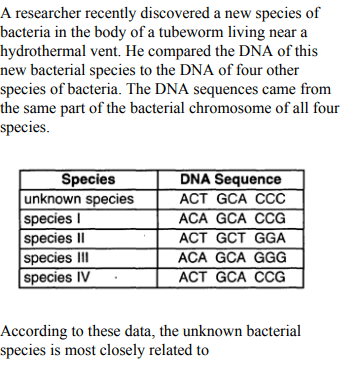
Species IV
100
Which of these can parents pass on to their offspring?
Large muscles, genes, or acquired traits
Genes
200
Define "fit"
The organisms with the best genes that help them to survive better in their environment are the ones who will live long enough to pass on their genes
200
According to the data in this cladogram, which species is the LEAST related to mammals?
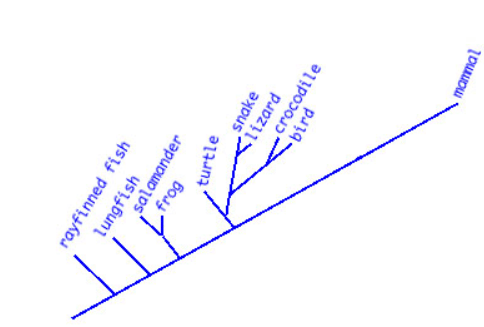
Ray-finned fish
200
The Afrikaner population of Dutch settlers in South Africa is descended from a few colonists. Today, the Afrikaner population has an unusually high frequency of the gene for Huntington's disease. Is this an example of the founder effect or a genetic bottleneck? Please explain.
Founder effect - a small group founded an area and all descendants today can trace their DNA back to that original group
200
What trait separates house cats from leopards?
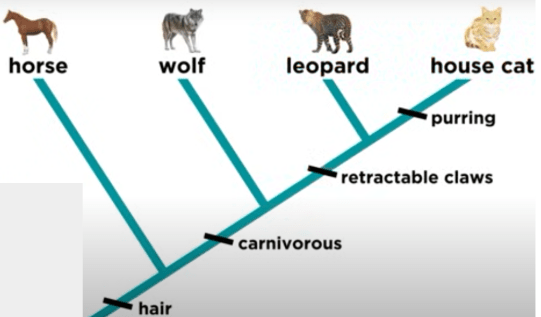
Purring
200
Who was Charles Darwin?
A British naturalist who developed the theory of evolution by natural selection
300
According to Lamarck and the theory of acquired characteristics, how did giraffes get their long necks?
Giraffes stretched their necks out to reach leaves that were higher up, and they passed their stretched-out necks along to their offspring
300
How do homologous structures provide evidence for evolution?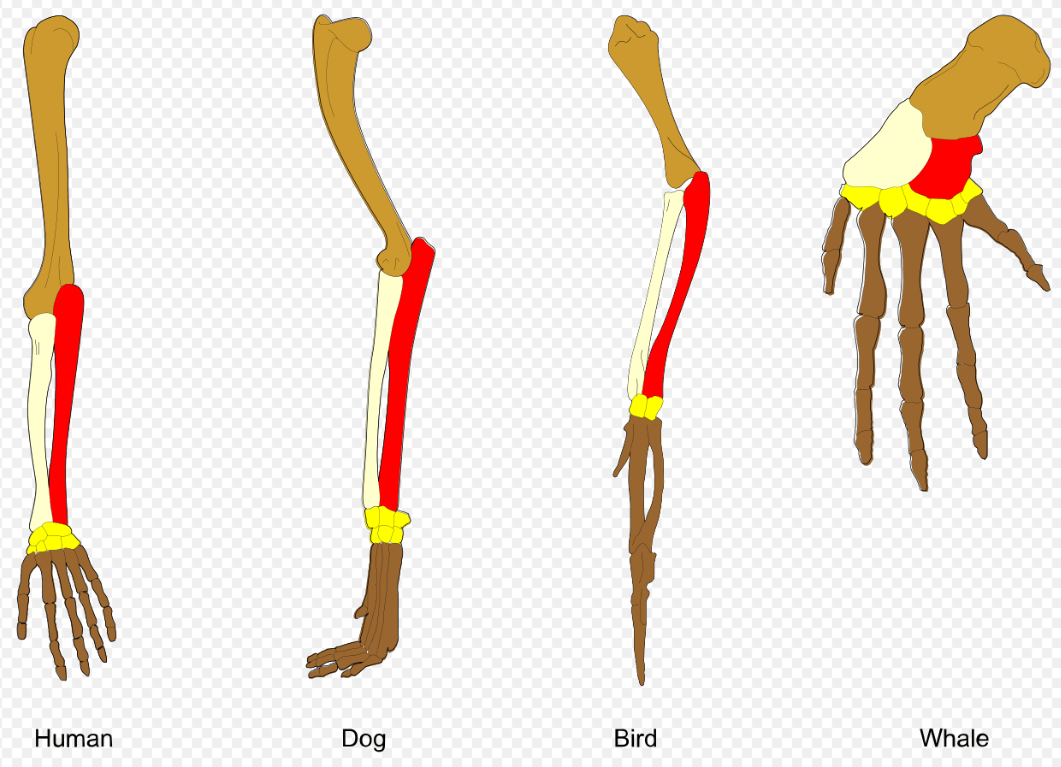
Since homologous structures have the same bones and layout between different species, even though they might be used differently, it shows that all of the species share a common ancestor
300
Which of the five fingers of evolution does this picture show? Please explain
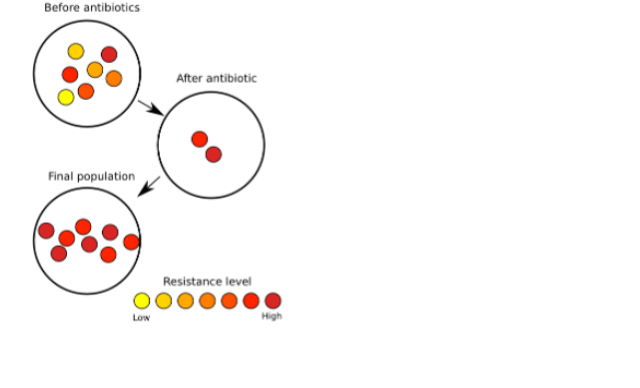
Natural selection - the most resistant bacteria are best fit for the environment, so they survive and live long enough to reproduce
300
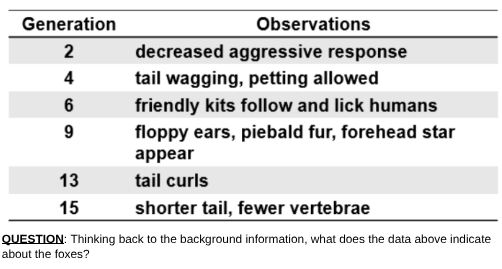
As time goes on, other traits in the foxes that were NOT being selected for also changed
300
Hummingbirds have a beak just the right length to reach the nectar in the long cardinal flower. The cardinal flower’s pollen tube is just the right length for the hummingbird to pick up pollen as it feeds. What type of evolution is this? How do you know?
Coevolution - both species rely on each other. If the hummingbird's beak changes, the flower's pollen tube will also have to change or the species won't be able to interact anymore
400
During the industrial revolution, black peppered moths were more common than white peppered moths. Why?
Pollution covered the trees and the black moths were better fit/could camouflage with the pollution, so they survived longer and reproduced more
400
Is the mystery species more closely related to giraffes or hippos? How do you know?

Hippos - there are two differences in the DNA between the mystery organism and hippos, while there are four differences in the DNA between the mystery organism and giraffes
400
The kit fox lives in the desert and has large ears with greater surface area that keep the fox from getting overheated. The red fox lives in the forest and has a red coat that keeps it camouflaged. What type of evolution is this? How do you know?
Divergent evolution - one fox species eventually split into two different species over time
400
All of these organisms are very different yet have very similar adaptations. How does this show evolution?
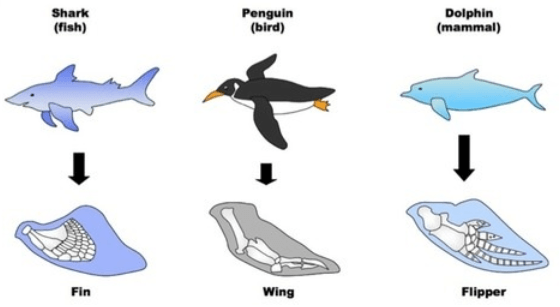
Analagous structures show evolution - three very different species all evolved to have the same adaptation because they live in the same environment
400
Tradescantia ohiensis, a plant also known as bluejacket and its relative, T. subaspera have similar reproductive mechanisms but do not mate, as one species lives in sun while the other lives in shade. What type of isolation is this? Please explain.
Geographic - they live in two different areas
500
Natural selection is one of the five fingers of evolution - what are the other four?
Genetic drift (population size shrinks due to chance)
Non-random mating (choosing who to reproduce with)
Mutations (changes in DNA can produce different traits)
Gene flow (organisms moving from one population to another and taking their genes with them)
500
Are tuskless elephants an example of evolution?
No - evolution changes species over time, and elephants with tusks in Gorongosa National Park are starting to show up more and more now that poaching has slowed down
500
The American toad (Anaxyrus americanus) and Fowler's toad (Bufo fowleri) live in the same area. However, The American toad mates in early summer while Fowler's mates in late summer. What type of isolation is this? Please explain.
Temporal - they are fertile at two different times of the year so they can't reproduce together
500
Based on the data, describe the environment the rock pocket mice must live in. How do you know this?
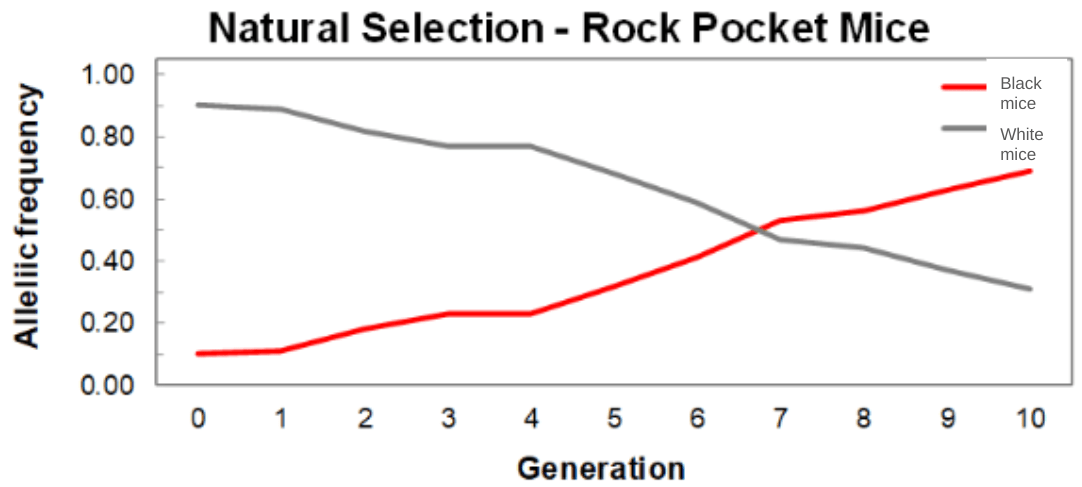
Darker environment - since black mice are more common in the population the environment they live in must be darker
500
How are evolution and extinction related?
Extinction allows for species that are less fit for the environment to disappear while making space for newer, more fit species to come in
Extinction allows for version 2.0 of various species to have space in the environment