Adaptive vs. Nonadaptive Traits
Who will Survive??
Fossils and Environments!
Earth and its Humans
100
What is an ADAPTIVE trait?
a. a trait that describes what an organism looks like.
b. a trait that makes it easier for an organism to meet its needs in the environment.
c. a trait that makes it more difficult for an organism to meet its needs in the environment.
d. a trait that describes how an organism acts.
b. a trait that makes it easier for an organism to meet its needs in the environment.
100
Fill in the Blank:
An organism's ______ can make it easier or more difficult for the organism to meet its needs in its environment
traits
100
True or False:
Fossils give us clues of what past environments were like a long time ago.
True
100
True or False:
Humans' actions can greatly affect our environment in good and bad ways.
TRUE
200
True or False:
Plants can have adaptive and non-adaptive traits.
True!
REMEMBER: plants are LIVING THINGS, so that makes them organisms!
200
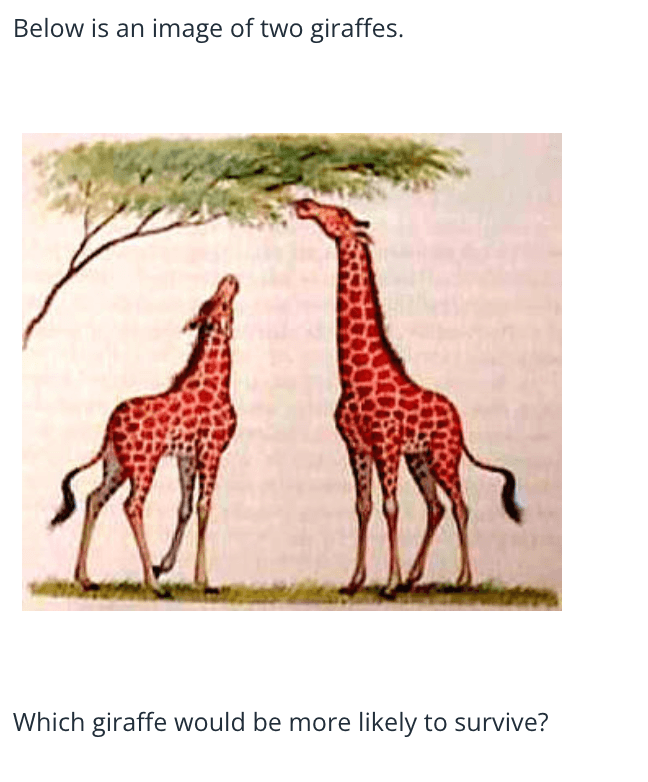 a. the giraffe with the longer neck will be more likely to survive because it can meet its need of eating leaves from trees.
b. the giraffe with the shorter neck will be more likely to survive because it can meet its need of eating leaves from trees.
c. the giraffe with the longer neck will be more likely to survive because it can meet its needs of not being attacked by predators.
a. the giraffe with the longer neck will be more likely to survive because it can meet its need of eating leaves from trees.
200
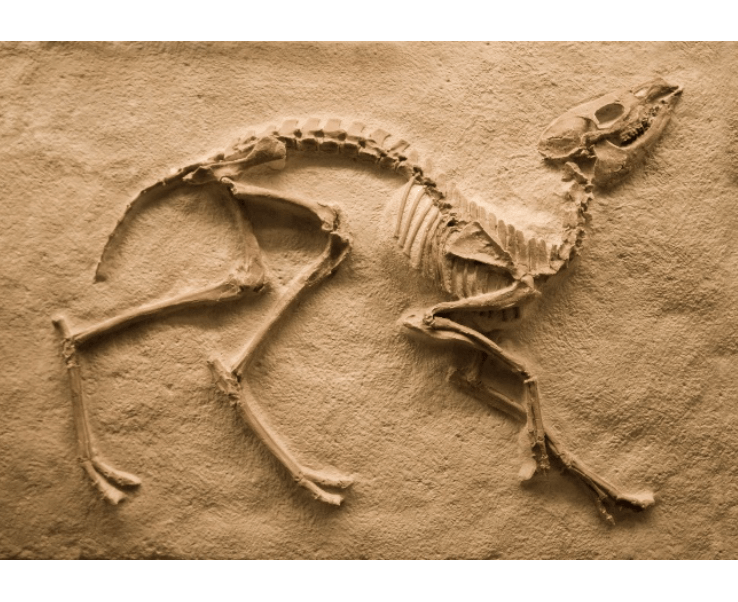 Above is an image of a fossil.
What inference can be made about the organism found in this fossil?
a. the organism most likely swam in water.
b. the organism most likely walked on land.
c. the organism most likely ate plants.
d. the organism most likely ate meat.
b. the organism most likely walked on land.
200
Which of the following examples would greatly affect a bird's ability to survive?
a. A logging company cuts down part of a forest.
b. People leave their camping site without pouring water over their campfire.
c. both A and B
c. both A and B
300
What is a NON-ADAPTIVE trait?
a. a trait that describes what an organism looks like.
b. a trait that makes it easier for an organism to meet its needs in the environment.
c. a trait that makes it more difficult for an organism to meet its needs in the environment.
d. a trait that describes how an organism acts.
c. a trait that makes it more difficult for an organism to meet its needs in the environment.
300
2. Which is an example of how living in a group can help animals get food?
a. Penguins huddle together to stay warm in winter.
b. Seagulls scavenge for food in city trash cans.
c. Adult dolphins swim in a group around their calves.
d. Bees in a hive make honey for their larvae to eat.
d. Bees in a hive make honey for their larvae to eat.
300
True or False:
When habitats change, the kinds of organisms that live there stay the same.
FALSE
300
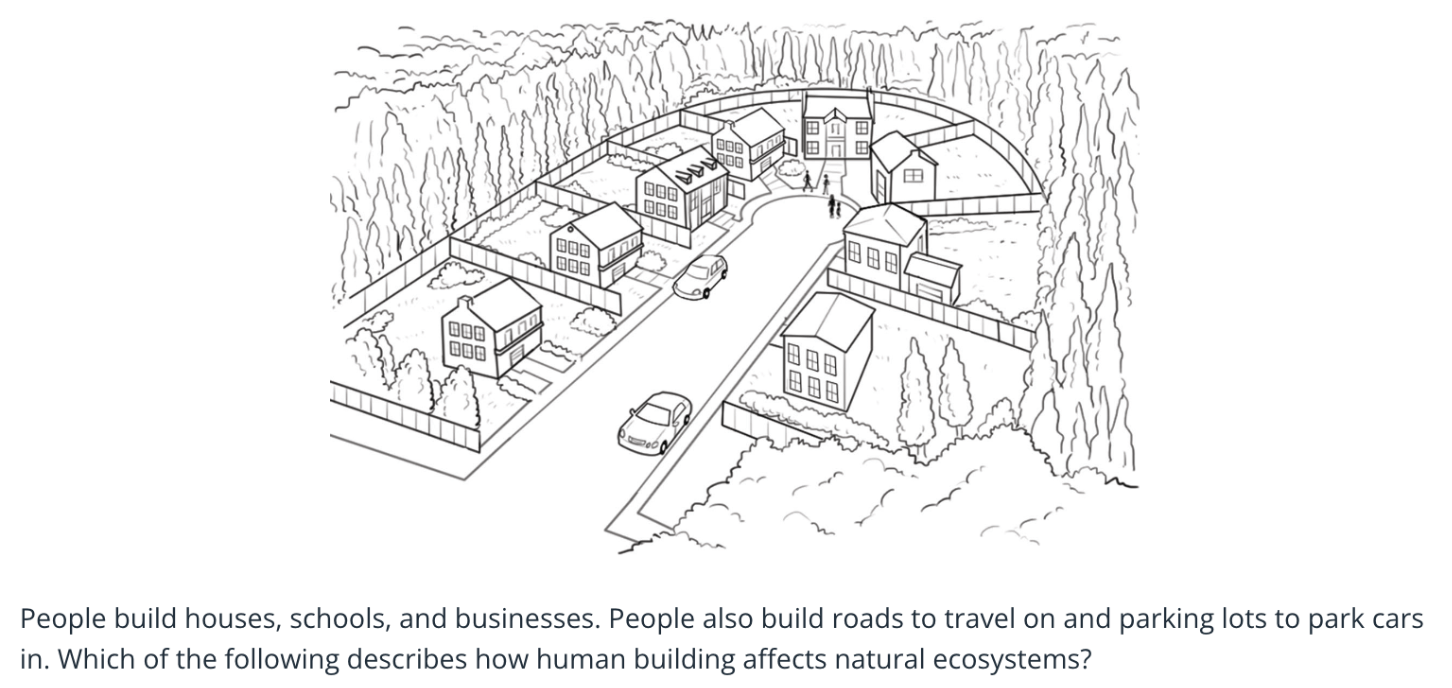
Which of the following describes how human building affects natural ecosystems.
a. People and animals can get along better in nature.
b. People can have trouble getting along with other people.
c. Animals may have a hard time finding food in the environments.
d. Plants will grow faster to make up for places where they were cut down.
c. Animals may have a hard time finding food in the environments.
400
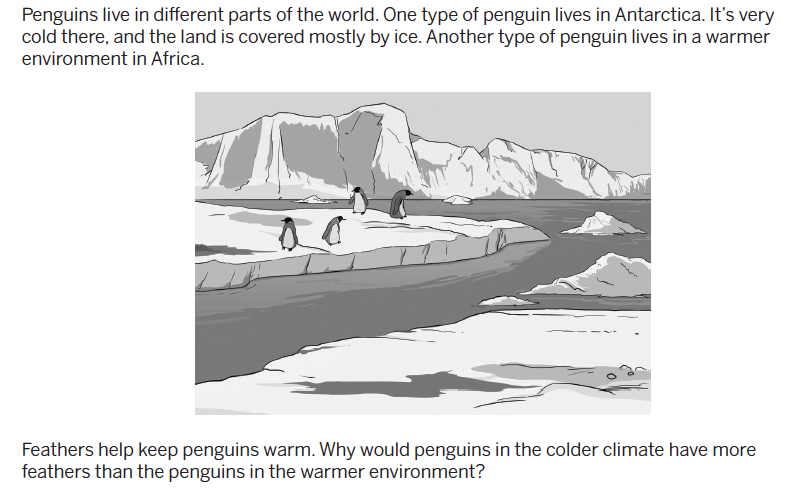
a. Keeping cold helps them swim better.
b. Keeping cold helps them survive.
c. Keeping warm helps them reproduce.
d. Keeping warm helps them survive.
d. Keeping warm helps them survive.
400
Becky has light-colored skin. During the summer, sometimes her skin turns red if she stays in the sun too long.
Which of the following answers is true?
a. Becky's skin color is a trait she inherited.
b. Becky's skin color changed because of the environment's affect on living organisms.
c. Both A and B are correct.
c. Both A and B are correct
400
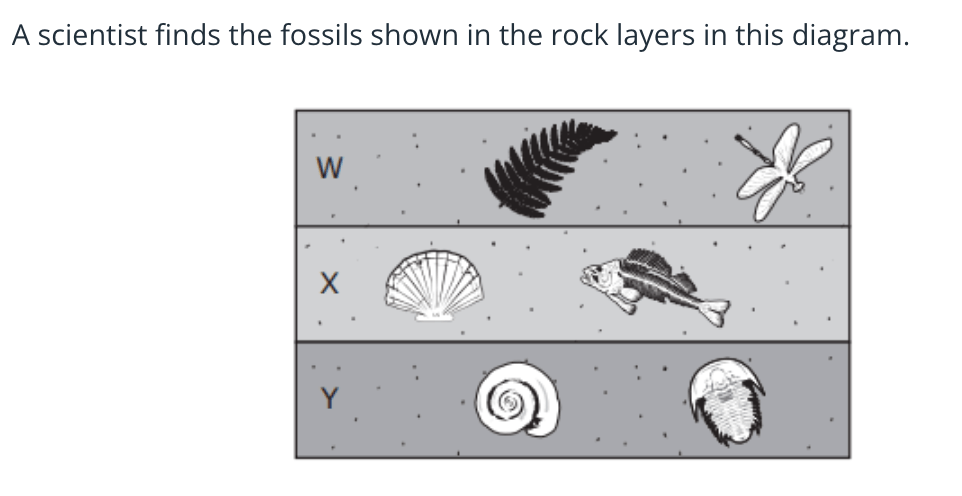 Which layer has the oldest fossils?
a. Layer W, because the fossils are in the top layer.
b. Layer X, because the fossils were formed from ocean organisms.
c. Layer Y, because the fossils are in the bottom layer.
c. Layer Y, because the fossils are in the bottom layer.
400
Scientists did a study to find out why the number of frogs in a certain area decreased. The scientists found that it was because of chemicals used by local farmers. The farmers argue that they need the chemicals to protect their crops.
Which solution helps both the frogs AND the farmers? Select the best answer:
A. Introduce a different species of frog into the area.
B. Expand the size of the farms' fields so more crops can grow.
C. Set aside an area with a pond that is protected from the chemicals.
D. Put a fence around the farms' fields to keep the chemicals from getting out.
C. Set aside an area with a pond that is protected from the chemicals.