Breed ID
Anatomy
Meat Classifications
Terminology
Misc
100
This bred is known for it's mothering abilities and drooped ears. 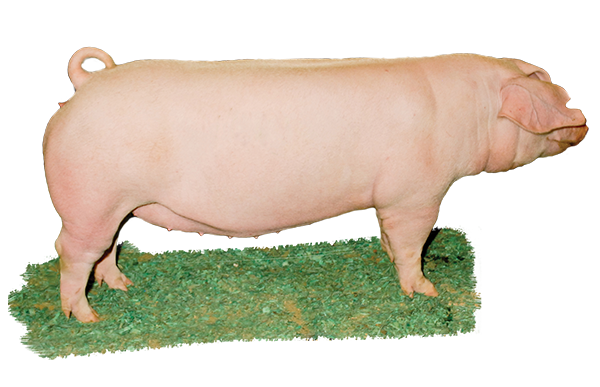
American Landrace.
100
 What allows this species to breathe?
Gills.
100
What yield grade is the best?
1
100
Pedigree is known as?
The ancestry of an animal.
100
This is a loose fold of skin under the chin of an animal.
Dewlap.
200
This bovine breed is known for being heat tolerant, and has a very prominent dewlap.
Brahman.
200
In a bovine, the muscled part between the front legs is called?
Brisket.
200
What determines the USDA beef grades(i.e. Prime, Choice, Select)
Marbling
200
Balance is known as?
The blend of all body parts.
200
What NC market is driven by the farm to table concept?
Sheep.
300
Identify this swine breed.
Hampshire.
300
Identify the top and bottom part of the chicken.

Top = Comb
Bottom = Wattle
300
Market animals are selected primarily on:
1. Muscle
2. Frame Size
3. Finish
300
This is the physical arrangement of bone and body tissue.
Conformation.
300
The forward movement of sperm cells is called?
Sperm Motility.
400
This breed originated from Scotland and is known for it's carcass quality.
Angus.
400
What is the hair on the bottom end of the tail called?
Switch.
400
Describe an ideal swine for meat production.
Wide chested and well muscled.
400
What does EPD stand for?
Expected Progeny Differences.
400
This AKC Classification is known for their hunting abilities.
Sporting.
500
This swine species is known for a red body, dropped ears and high growth rate.
Duroc.
500
The amount of fat is known as?
Finish.
500
What are the two grades of pork?
1. Acceptable
2. Utility
500
Feathers of a chicken or turkey is also known as:
Plumage.
500
The round is the most muscled portion of what species?
Bovine.
600
This breed originated in England, has a red body with a white face and horns.
Horned Hereford.
600
What is the middle portion of the leg called?
Shank.
600
What grade of pork would this be considered?
Utility.
600
What is this structural soundness fault?
Bow legged.
600
What are the three factors of a breeding soundness exam?
1. Sperm Motility
2. Sperm Morphology
3. Scrotal Circumference
700
This bovine breed is known for producing the largest amount of milk.
Holstein.
700
The anatomical term for the area between the ears, on top of the head is called?
Poll.
700
What is the average market weight of Hogs, Lambs, and Beef Cattle?
1. Hogs = 270 lbs
2. Lamb = 125 lbs
3. Cattle = 1300 lbs
700
What is a phenotype?
The physcial characteristics.
700
The turtle has what for protection?
Scutes.
800
This rabbit breed has a unique three layer structure of wool.
Angora.
800
What is the opening on the back of the chicken?
Vent.
800
This beef meat would be considered what grade and due to what?
Prime.
800
The depth of the rib and size of the chest would be considered?
Body Capacity.
800
Name the seven AKC classifications of dogs.
1. Hound
2. Herding
3. Sporting
4. Working
5. Toy
6. Terrier
900
Identify this breed of poultry.
Rhode Island Red.
900
Name the four requirements for selecting beef or swine animals:
1. Conformation
2. Body Capacity
3. Breed Character
4. Structural Soundness
900
The higher the yield or dressing percentage of an animal, will in turn affect what?
More value for the producer.
900
Identify this breed.
Highland.
900
What is the ADG, if:
A calf weighed 450 lbs, and is now weighing 800 after 100 days?
ADG = 3 lbs/day
1000
This breed is known for it's head forming an equilateral triangle from the nose to the tip of the ears.
Siamese.
1000
This is the transparent layer permanently covering the eye in snakes.
Brille.
1000
Name the EIGHT USDA Quality grades for beef cattle.
1. Prime
2. Choice
3. Select
4. Standard
5. Commerical
6. Utility
7. Cutter
8. Canner
1000
Which swine has the greatest depth of rib?
2
1000
Name the five additional things to consider when selecting food and companion animals.
1. Animal Age
2. Attitude
3. Body Composition
4. Feeding Requirements
5. Pedigree