Graphing
Domain, Range and other Nifty Features
Solving Equations
Evaluating Logs
Applied Problems
100
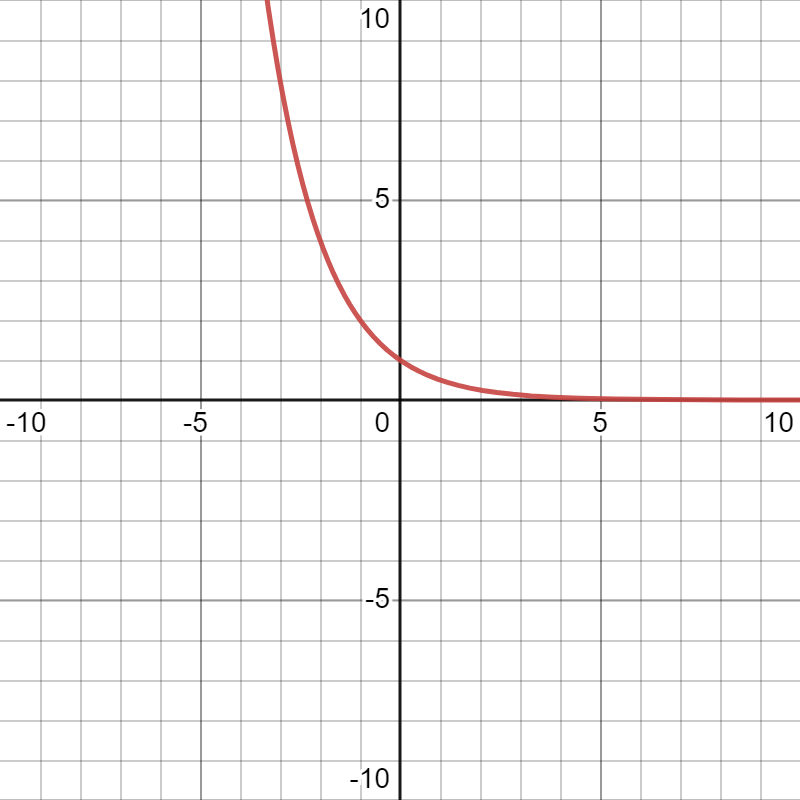
Graph:
y=2^-x
100
The domain and range of
f(x)=lnx
What is
D = (0, oo)
R = (-oo, oo)
100
Solve for x:
lnx=-3
x =
e^-3=0.05
100
log_underset(3)()1=
0
100
The number of beavers, N, in a given area after t years can be approximated by N=5.5(8)^(0.23t) 0<=t<=9 Use the model to predict when the beaver population will reach 78.
about 5.5 years
200
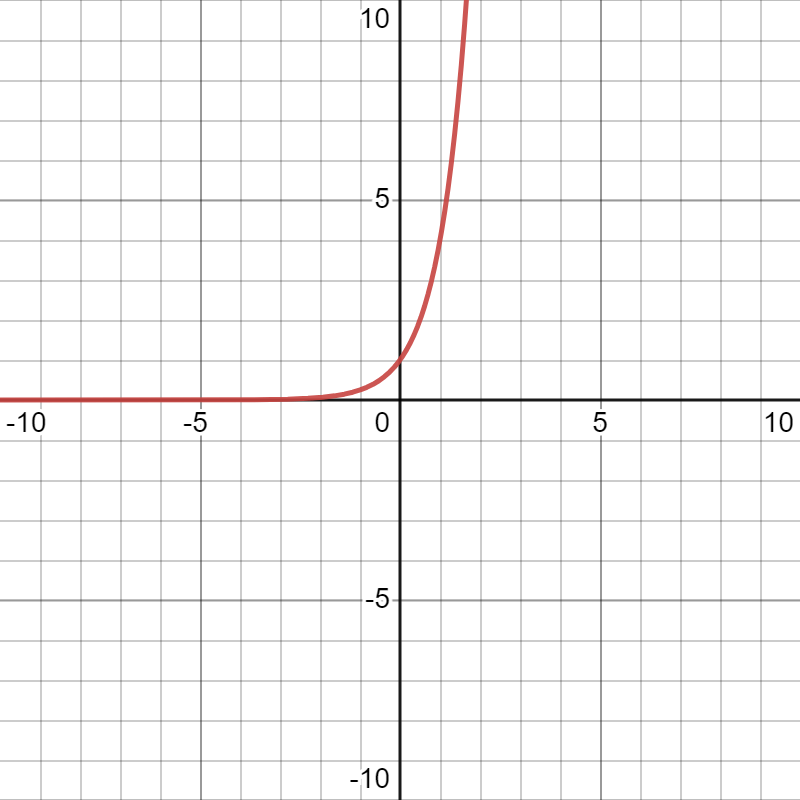
Graph:
y=(1/4)^-x
200
What is the x-intercept of the graph of:
f(x)=2ln(x+3)
(-2, 0)
200
Solve for x:
3-4lnx=11
x=
e^-2=0.14
200
log_underset(pi)()pi^2=
2
200
You invest $450 at an annual interest rate of 7.75%, compounded continuously. How long will it take your money to double?
about 8.9 years
300
Given the graph, what is the equation of the graph in the form y=ab^x 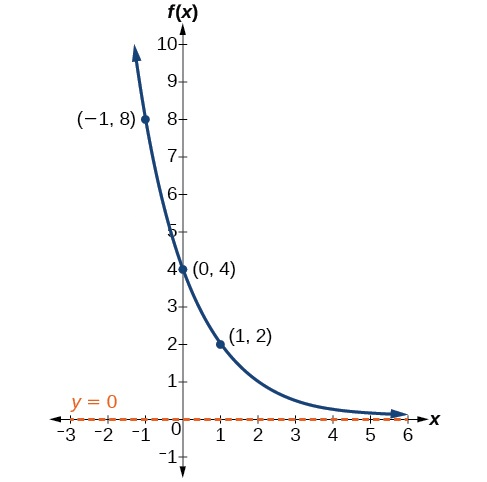
y=4(1/2)^x
300
Find the Domain, Range and x-intercept of
y = log(x+2)
D= (-2, oo)
R= (-oo, oo)
x-int: (-1, 0)
300
Solve for x:
logx+log(x-3)=1
x = 5
300
log_underset(b)()sqrtb=
1/2
300
The half life for Carbon 14 is 5715 years. Using the equation, where A is the amount in grams left after t years. Determine the amount of C14 left after 1000 years. A=6.5(1/2)^(t/5715)
5.76 grams