Properties of Water
Atomic Structure
Macromolecules
Biomolecules
Chemical Reactions
1
Because one end of a water molecule is slightly positive and the other end is slightly negative, water molecules are __________.
Polar
1
What are the two main types of bonds that elements can form with other elements to make compounds?
Covalent and Ionic
1
What is the monomer of a carbohydrate called?
monosaccharide
1
Which of the four macromolecules are known as the primary component of cell membranes?
Lipids (phospholipids)
1
Define activation energy
The amount of energy required to start a chemical reaction
2
The attraction between the oxygen of one water molecule to the hydrogen of a different water molecule is called a?
Hydrogen Bond
2
Define valence electrons
The electrons in an atom's outermost shell, determining its chemical properties and how it bonds with other atoms.
2
The monomer of a nucleic acid is called
a nucleotide
2
Amino acids are held together by this kind of bond, which is created by removing a H₂O molecule
Peptide bond
2
Enzymes speed up chemical reactions inside a cell by doing this
Lowering activation energy
3
The attraction between like molecules is called?
The attraction between unlike molecules is called?
Cohesion ; Adhesion
3
The number of protons in the nucleus determines what value on the periodic table?
The atomic number
3
What are the building blocks of proteins?
Amino acids
3
List three examples of carbohydrates
Simple Sugars: glucose, fructose, galactose
Compound: maltose, sucrose, lactose
Complex Carbohydrates: Starch, glycogen, cellulose
3
What happens to enzymes when they are affected by changes in pH, preventing it from binding to its substrate?
Denaturing
4
A mixture of water and undissolved particles that are so small that they do not settle out is called a?
Suspension
4
In an covalent bond, oxygen would be most likely to pair with which one of the following elements? Why?
a. Iron
b. Hydrogen
c. Argon
d. Aluminum
b. Hydrogen, in a covalent bond oxygen must bond with another nonmetal.
4
Complex organic compounds that store and transfer genetic information to the cell are called?
Nucleic acids
4
Identify the sugars found in the nucleotides for DNA and RNA
Deoxyribose & Ribose
4
The pocket or groove on the surface of an enzyme into which the substrate must fit.
Active site
5
Correctly draw a water molecule, including relative charges and the correct number of electrons
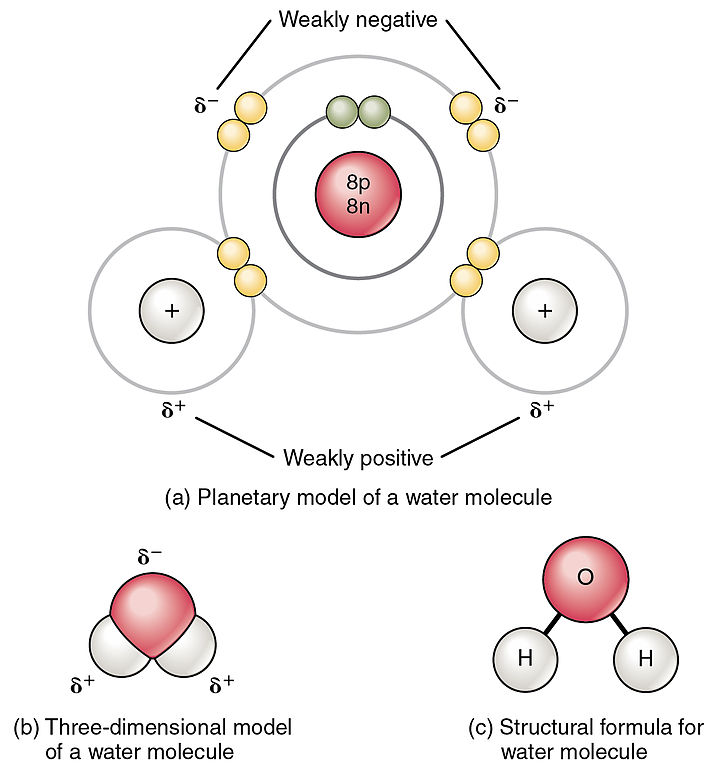
5
How many atoms would be found in this molecular compound?
3C₆H₁₂O₆
72 atoms
5
Name the two building blocks of lipids
Glycerol and Fatty Acids
5
If a fatty acid has one or more carbon to carbon double bonds, it is said to be?
Unsaturated
5
Name the type of chemical reaction: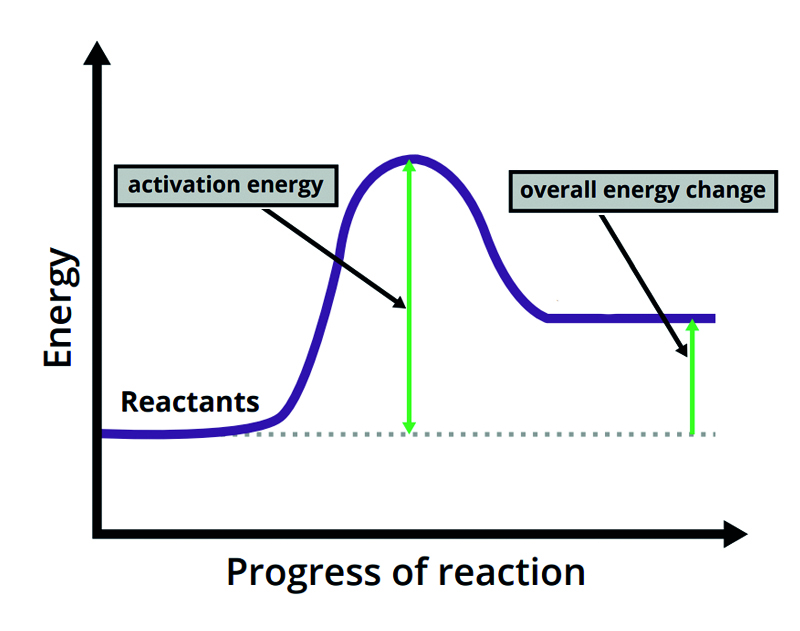
Endothermic reaction