Food Webs & Energy Flow
Populations and Carrying Capacity
Succession and Change
Biotic, Abiotic, Invasive Species
Ecosystem interaction and stability
100
This microscopic aquatic organisms makes its own food and serves as a producer in a food web.
Phytoplankton
100
This term describes the largest population an ecosystem can support over time with the resources available.
Carrying Capacity
100
This gradual change in an ecosystem’s community can follow a disturbance, such as the abandonment of a farm field.
Ecological Succession
100
Which of the following is not an abiotic factor?
Sun, Water, Bacterium, Sand
Bacterium
100
This group breaks down dead matter and returns nutrients to the ecosystem.
Decomposers
200
In a food web, this consumer eats both plant material and animals. The raccoon is one example
Omnivore
200
After a disease was eliminated, Serengeti buffalo numbers fluctuated mostly between 55,000 and 64,000, suggesting this approximate carrying capacity.
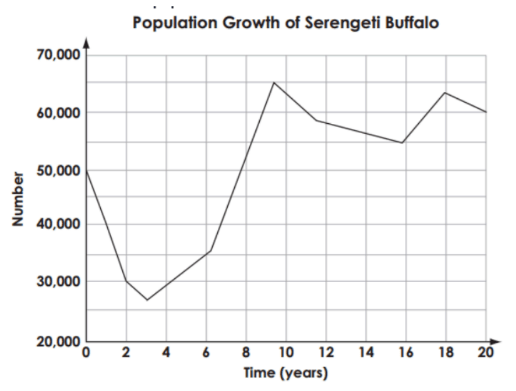
60,000
200
This type of succession can begin on bare rock after a large volcanic lava flow
Primary Succession
200
As annual precipitation increased, Species A declined while Species B increased. This describes the two populations’ overall trends.
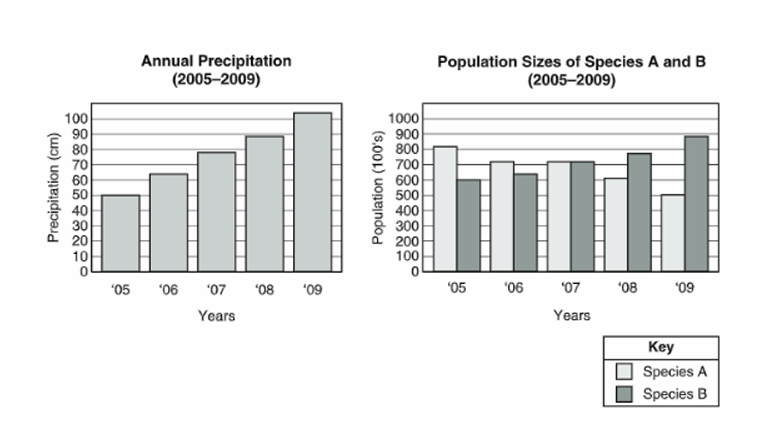
Species A decreasing and Species B increasing
200
Without decomposers, dead matter builds up and, over time, this happens to all populations.
They eventually decrease
300
In a Pyramid with grasses at level one, insects feeding on the grasses occupy this level.
Primary Consumer
300
When resources such as food, water, or shelter become less available, this population limit is likely to happen
A decrease in carrying capacity
300
In a succession sequence that develops from bare rock to mature forest, this kind of community appears at the final stage.
Climax Community
300
If invasive species compete with native organisms for resources, this is the likely effect on native species numbers.
Decrease in Native Species
300
Sea stars prey on mussels in tide pools. Removing them can lower species diversity because competition for this resource increases.
The Space
400
In a freshwater food web with phytoplankton at its base, this organism is among frogs, small fish, phytoplankton, and great herons. Which of the following is at the highest trophic level and has the least energy?
Blue Heron
400
Squirrels usually face heavy predation, but in two years many more survived to reproduce and the population rose sharply. This change in a limiting factor could explain the boom.
decrease in the number of predators
400
In the described succession timeline, the mature forest after more than a century contains these two major kinds of plants.
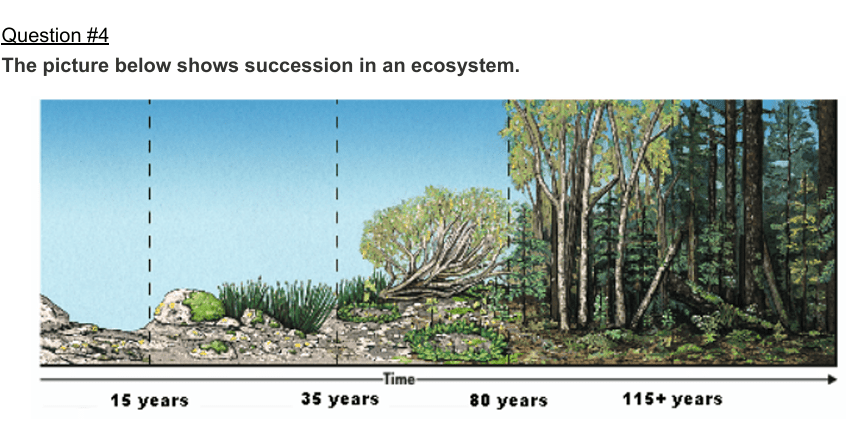
Trees and Shrubs
400
Asian carp and native paddlefish both eat plankton. This type of interaction is likely affecting their population dynamics
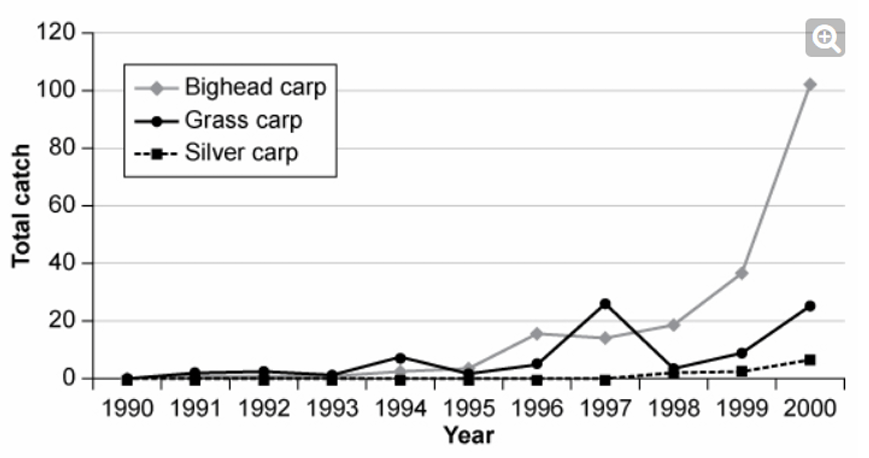
Competition
400
When forests are cleared, Key deer are likely to decline because this essential part of their environment becomes less available
Usable habitat
500
If grasses at the base of an energy pyramid contain 5,000 kilocalories, this amount is available to grizzly bears after three transfers, using the 10% rule
5kilocalories
500
Rabbits produce many offspring, yet their population size changes little from year to year because environmental factors keep the population near this limit.
Carrying Capacity
500
When a white pine falls and opens the forest canopy, plants and animals thrive on the forest floor. This is an example of a community responding to this kind of factor.
External Factor
500
A disease kills many land plants in a preserve. Musk rats lose a food source, and then this predator population may also decline.
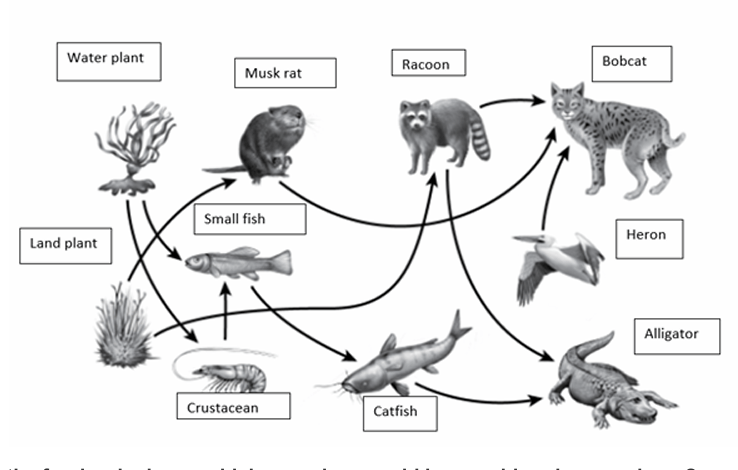
Bobcats
500
A rapid decline in producers can cause this overall ecosystem measure—the total mass of living matter—to decline.
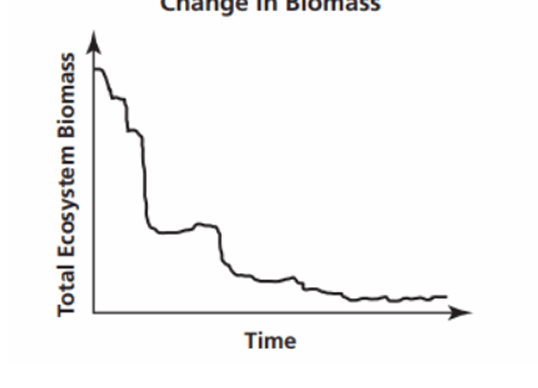
Biomass/ Biodiversity