The Moving Earth
Surface Changes
Rocks & Fuel
Water & Weather
Natural Resources
100
Earth does this once every 24 hours on its axis.
What is Rotation?
100
The breaking down of rock into smaller pieces called sediment.
What is weathering?
100
These types of rocks are formed from layers of sediment being pressed together over time.
What is Sedimentary Rock?
100
This term describes the average weather patterns of a region over a long period (30+ years).
What is Climate?
100
Resources that can be replaced in a short amount of time, such as wind or sunlight.
What are Renewable Resources?
200
Because the Earth rotates, the Sun appears to move across the sky in this general direction.
What is East to West?
200
A V-shaped landform created by the movement of rushing water over long periods.
What is a canyon?
200
The two processes that turn sediment into hard rock.
What are Compaction and Cementation?
200
This spherical heavenly body, made of hydrogen and helium gases, provides the energy that drives the entire water cycle.
What is the Sun?
200
Coal, oil, and natural gas can only be used ONCE, so they are examples of this type of resource.
What are Nonrenewable Resources?
300
This takes approximately 29 days to complete one full cycle of appearances.
What is the Lunar/Moon Cycle?
300
This landform is created when a river drops its sediment (deposition) as it enters a larger body of water.
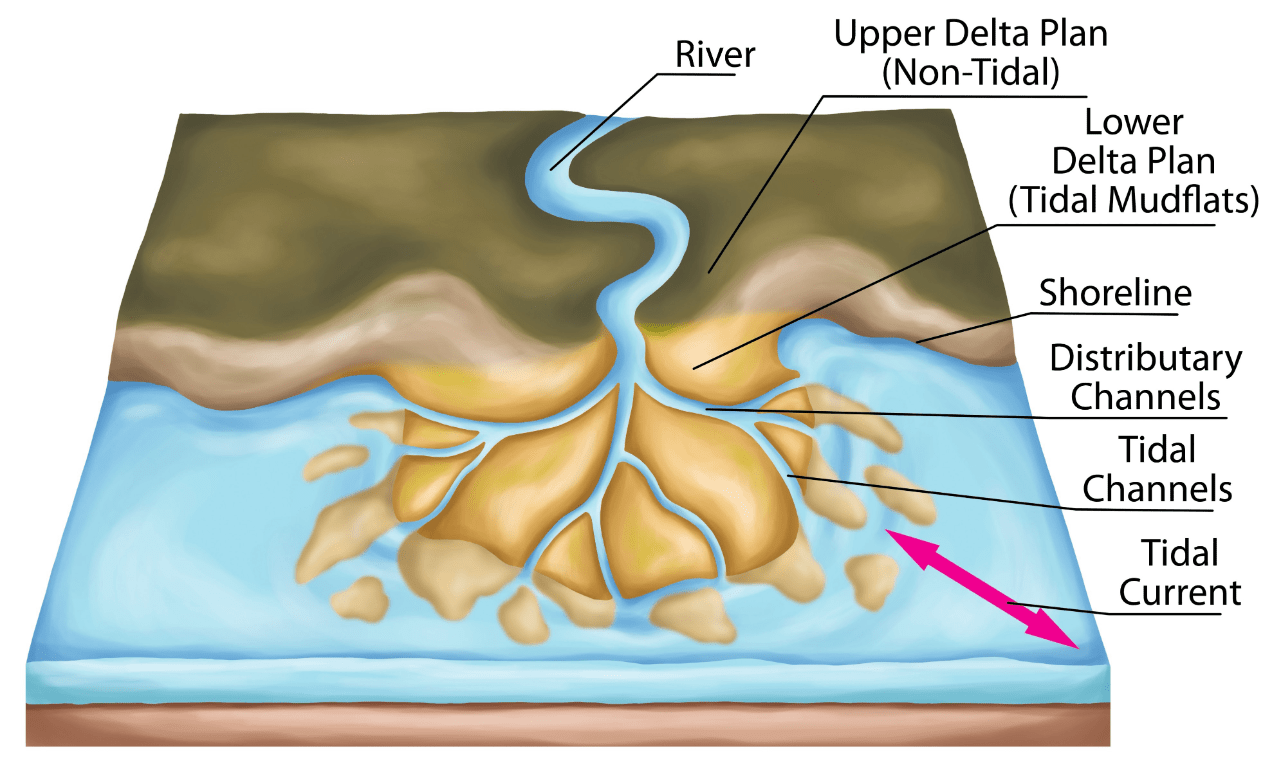 What is a Delta?
300
Fossil fuels like oil and natural gas form from the remains of these organisms buried under the ocean floor.
What is/are Plankton/Microscopic Marine Life/Diatoms?
300
The ocean's main role in the water cycle is to provide most of the Earth's _____.
What is Water Vapor?
300
This renewable resource uses energy transformations as moving air spins a turbine (mechanical to mechanical to electrical).
What is Wind Energy?
400
As the Earth moves throughout the day, shadows change in these two ways.
What are Position/Direction and Length/Shape?
400
The three main agents of weathering, erosion, and deposition.
What are Wind, Water, and Ice?
400
These three "ingredients" are necessary to turn organic matter into fossil fuels over millions of years.
What are Heat, Pressure, and Time?
400
The Sun's energy causes water to evaporate from the ocean; this process is the primary source for what specific weather-related phenomenon?
What is Precipitation/Rainfall?
400
This is a major disadvantage of renewable energy sources like Solar or Wind.
What is Inconsistency? (e.g. The sun doesn't always break through the clouds, and wind doesn't always blow in a given area.)
500
These two factors combined cause the Earth to experience four different seasons.
What is the Tilt of the Earth and its Revolution around the Sun?
500
Large piles of sand found in deserts or near beaches, moved and shaped primarily by wind, but sometimes by water.
What are Sand Dunes?
500
Coal is formed from the remains of dead plants and trees that lived in ancient swamps. There are four types of coal, and they are classified by their heat, carbon, and moisture content. In Texas, we mine the type with the lowest carbon content, highest moisture content, and lowest heating value.
What is Lignite?
500
If a weather map shows a high-pressure system moving into an area, you can typically predict this type of weather pattern.
What is Clear, Dry, or Fair Weather?
500
Some of these are renewable and can be used to produce electricity.
Wind turning a turbine
Coal burning
Natural Gas burning
Sunlight powering photons
Water spinning turbines
Petroleum burning
Steam turning a turbine
What are wind, sunlight, water, and steam?