Microscope Dates
Characteristics of the living things and cell theory
Types of cell
Organelles
100
On what year the microscope was invented?
1590
100
What is the basic structural and functional unit of all living organisms?
A cell.
100
What is the main structural difference between a prokaryotic cell (such as bacteria) and a eukaryotic cell?
Eukaryotic cells have a nucleus
100
Which organelle is known as the "control center" of the cell because it stores DNA and all genetic instructions?
The nucleus.
200
Who names the cell in 1665?
Robert Hooke
200
What term describes a living organism's ability to maintain a stable internal environment, such as sweating to cool down?
Homeostasis.
200
Which two cell structures are found in plant cells but are absent in animal cells?
Chloroplasts and a rigid cell wall
200
What organelle is this?
Mitochondria.
300
What thing was discovered by Anton van Leeuwenhoek?
Bacteria (Animalcules)
300
What term refers to the sum of all chemical reactions in a living organism that break down nutrients to create energy and build necessary materials?
Metabolism.
300
What kind of cell is this?
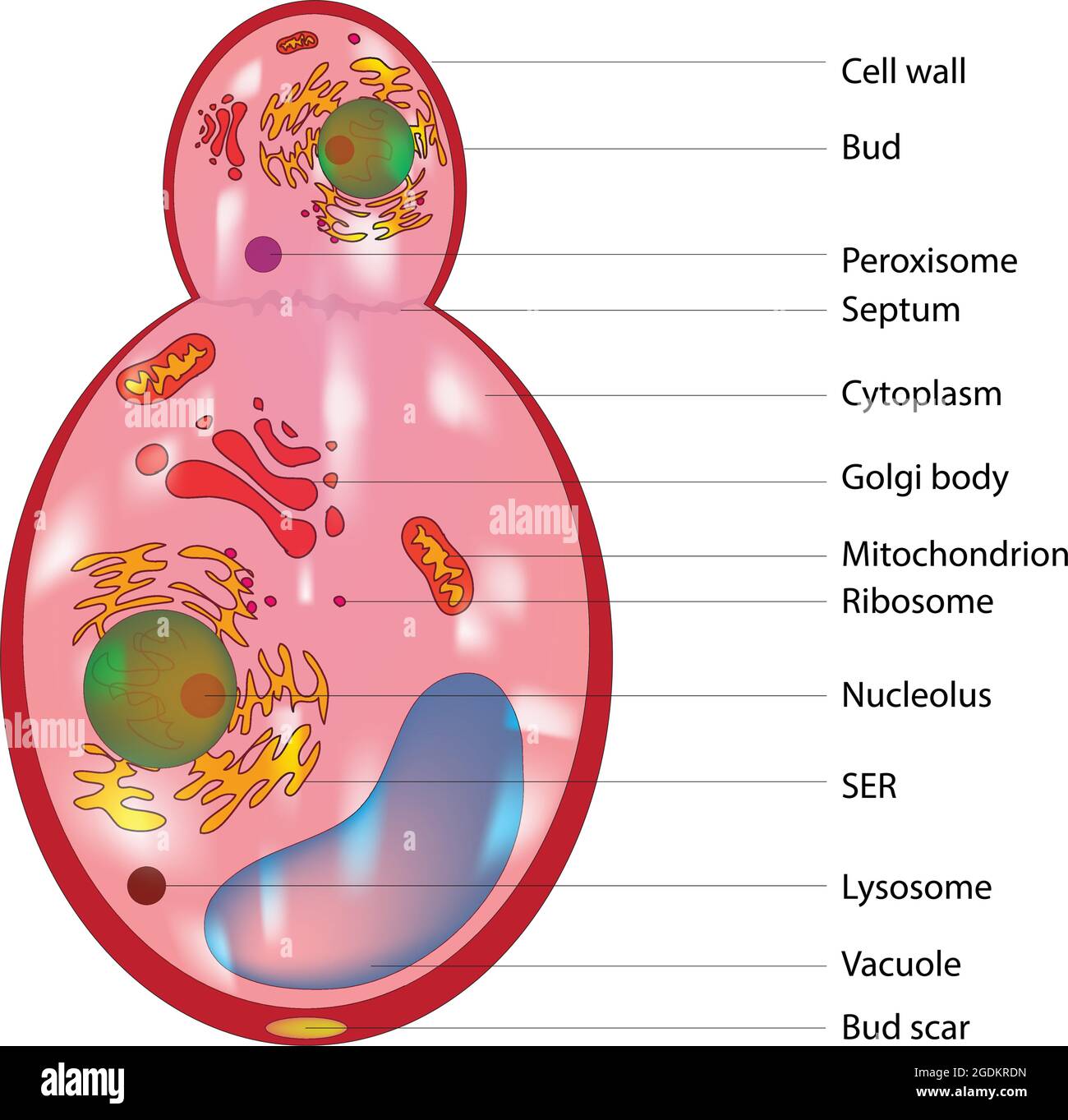
Fungi cell
300
Which tiny organelles assemble proteins and can be found either floating freely in the cytoplasm or attached to the rough endoplasmic reticulum?
Ribosomes.
400
What thing observed Hook in the microscope?
Cork
400
What are the three main tenets (principles) of the Cell Theory?
All living things are composed of one or more cells.
The cell is the basic unit of structure and organization in living organisms.
All cells come from pre-existing cells.
400
Fungal cells have a nucleus and a cell wall, making them look somewhat like plant cells under a microscope. Why can't fungal cells perform photosynthesis like plant cells do?
Fungal cells lack chloroplasts
400
Which organelle acts as the cell's packaging and shipping center by modifying, sorting, and routing proteins and lipids to their destinations?
The Golgi apparatus (or Golgi body).
500
Thanks to the invention of the microscope, which theory was invented?
Cell theory
500
Which three 19th-century scientists are credited with contributing the core principles that form Cell Theory?
Matthias Schleiden (concluded all plants are made of cells in 1838)
Theodor Schwann (concluded all animals are made of cells in 1839)
Rudolf Virchow (proposed that all cells come from pre-existing cells in 1855)
500
What specific organic material makes up the cell wall of a plant cell versus a fungal cell?
Plant cell wall: Made of cellulose.
Fungi cell wall: Made of chitin.
500
Which organelles contain powerful digestive enzymes that act as the cell's recycling and waste removal system by breaking down damaged organelles, foreign invaders, and cellular debris?
Lysosomes.