Stars
The Solar System
Big Bang/Universe
Earth Motions
Eccentricity
100
What process do stars go through to generate energy by combining lighter elements into heavier ones?
nuclear fusion
100
What happens to a planets period of revolution as its distance from the Sun increases?
period of revolution increases
100
Two pieces of evidence to support the Big Bang are
red shift and cosmic background radiation
100
The Foucault pendulum in the diagram below provides evidence that Earth
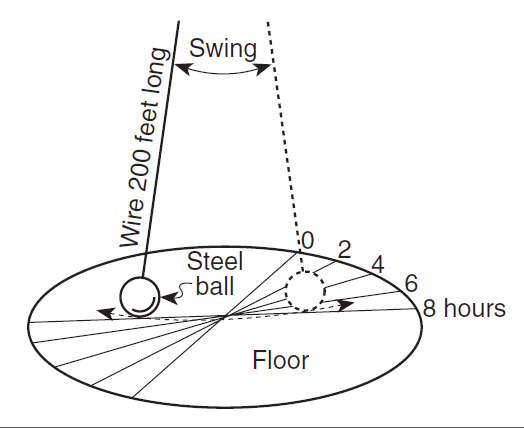
rotates/spins
100
The true shape of a planetary orbit is an
ellipse
200
What groups of stars are small, hot, and in their late stage?
white dwarfs
200
Which solar system model is represented by the diagram below?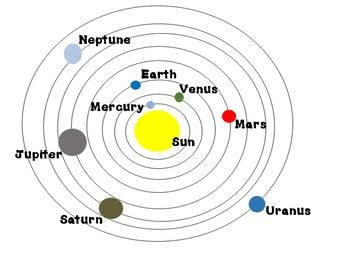
heliocentric
200
The Big Bang occurred approximately _____________ years ago
13.7 or 13.8 BILLION
200
In the northern hemisphere, the Coriolis Effect deflects objects to the ____________ and is caused by Earth's ______________.
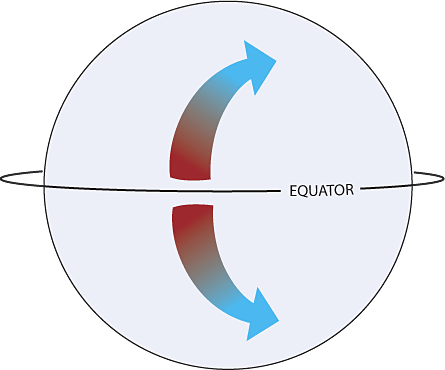
right, rotation
200
Based on the diagram below, which letter does the celestial object have the greatest orbital velocity?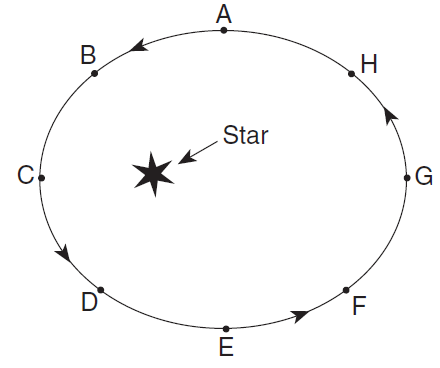
C
300
Compared to the Sun, Betelgeuse has a ______________ temperature and _______________ luminosity.
cooler, greater
300
Jovian planets have a ________ size and __________ density compared to terrestrial
larger, lower
300
What type of shift is represented by the spectral lines below? What does it mean about the distance between the two objects?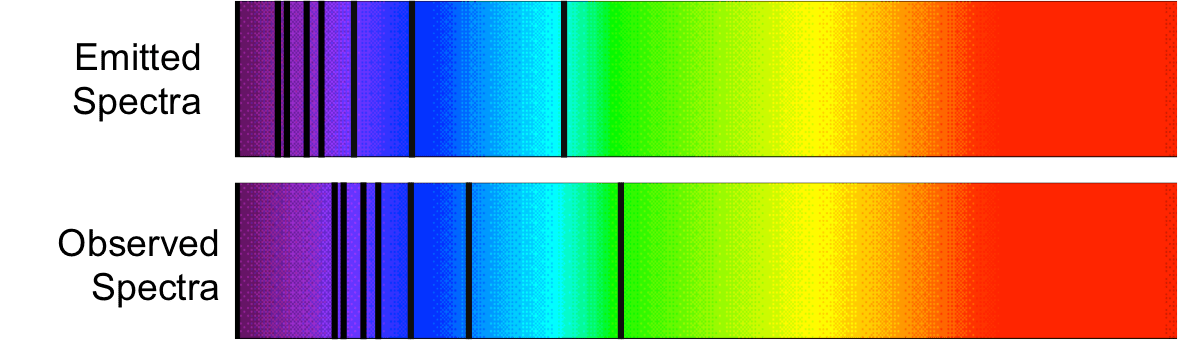
Red shift, they're getting further apart.
300
Different constellations are visible throughout the year due to Earth's 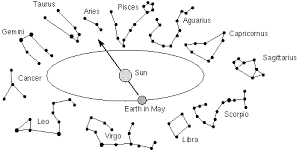
revolution
300
Solve the eccentricity for the data below:
Distance Between Foci: 6.3cm
Length of Major Axis: 11.2cm
E= 0.563
400
Which property determines whether a giant or supergiant will form?
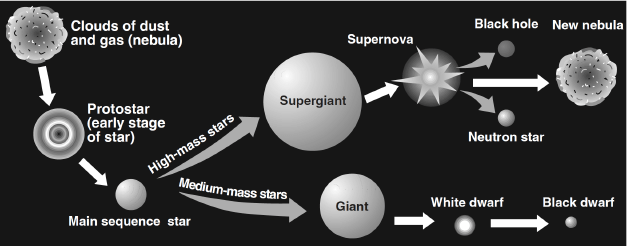
mass
400
Which planet has the shortest day?
Jupiter
400
The three main shapes for galaxies are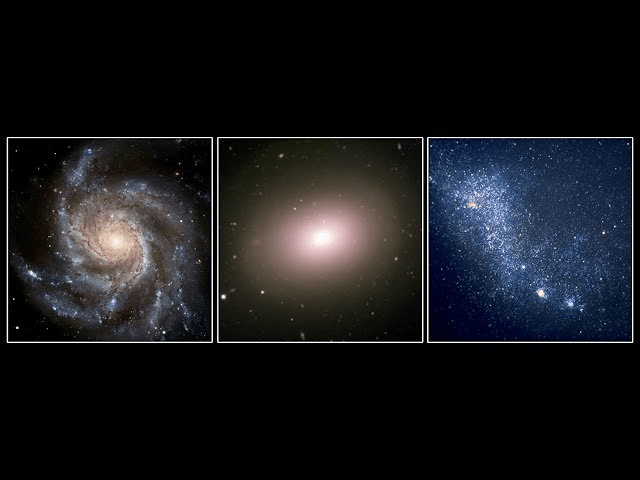
Spiral, Elliptical, Irregular
400
How many hours have passed based on the star trails in the diagram below?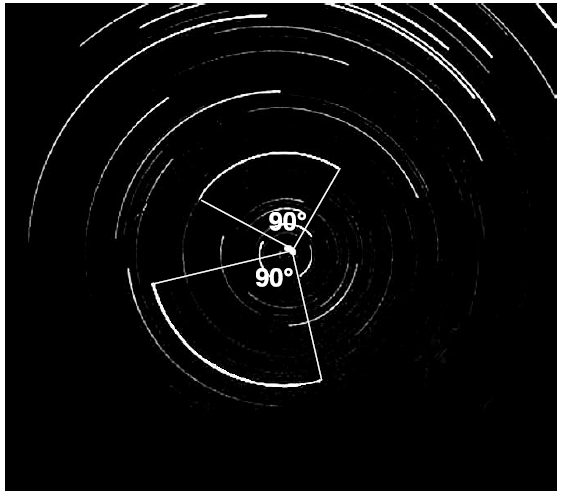
6
400
Which planet in our solar system has an orbit closest to the shape of a perfect circle?
Venus
500
Which star has a temperature closest to Earth's asthenosphere/stiffer mantle interface?
Proxima Centauri
500
Which planet is about 1/10th of the size of Saturn?
Earth
500
This is the most abundant element in the universe.
Hydrogen
500
If Earth rotated three times faster than it does now, how long would one day be?
About 8hrs
500
Which planet in our solar system has the great change in orbital velocity during its revolution around the Sun?
Mercury