Potential and Kinetic Energy
Conservation of Energy
Waves
Seasons
Tides
100
The energy of motion.
Kinetic Energy
100
When energy moves from place to place it is called this.
Energy Transfer
100
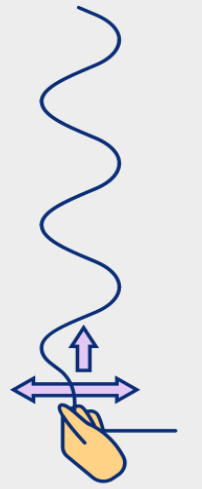
This picture is an example of this type of wave.
Transverse Wave
100
This is the main cause of seasons on Earth.
The Tilt of Earth's Axis
100
This is the main cause of the Earth's tides.
The Moon's Gravity
200
Something that is stretched or compressed would have this type of potential energy.
Elastic Potential Energy
200
When energy changes type it is called this.
Energy Transformation.
200
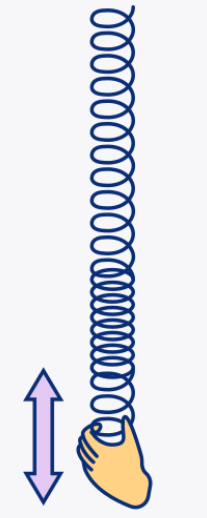
This picture is an example of this type of wave.
Longitudinal Wave
200
If it is Summer in Texas, it will be this season in South America.
Winter
200
These two types of tides happen twice a day about 6 hours apart.
High Tide and Low Tide (Daily Tides)
300
Something that is up high would have a lot of this type of potential energy.
Gravitational Potential Energy
300
Energy that enters into a system is called this.
Input
300
The direction of the disturbance compared to a transverse wave.
Perpendicular
300
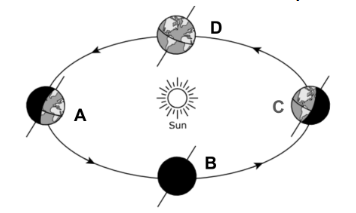
The location that the Southern Hemisphere is experiencing Summer.
C
300
This type of tide happens when the Moon and the Sun's Gravity work against each other.
Neap Tide
400
This type of potential energy is stored in the bonds of atoms and molecules. We get it when we eat.
Chemical Potential Energy
400
The first part of the Law of Conservation of Energy states this.
Energy cannot be created or destroyed.
400
The direction of the disturbance compared to a Longitudinal wave.
Parallel
400
The longest day during Summer, and the shortest day during Winter are when these happen.
Solstice
400
This type of tide has the highest high tide, and the lowest low tide.
Spring Tide
500
This type of Kinetic energy is carried by electromagnetic waves and helps us see.
Radiant Energy
500
The second part of the Law of Conservation of Energy states this.
Energy can only be transformed from one type to another, or transferred from one place to another.
500
What waves move and what they don't.
Energy and Matter
500
When the day is as long as the night, a hemisphere is experiencing one of these which means "equal night".
Equinox
500
The reason for their being two Spring Tides and two Neap Tides a month.
The Moon's revolution around the Earth.