Parts of the Periodic Table
Isotopes
Trends
Metals/Nonmetals
Metalloids
Metalloids
Potpourri
100
The location of the alkali metals on the periodic table.
What is group 1?
100
The subatomic particle that affects the mass of an atom without affecting the identity of the element.
What are neutrons?
100
The smallest atom of the element in the 2nd period that is also considered to be a halogen.
What is fluorine?
100
This type of element has luster, can conduct electricity, and has a high melting point.
What is a metal?
100
A negative ion
What are anions?
200
The most inert group of elements on the periodic table.
What are noble gases?
200
The common ion charge for the elements in the oxygen group.
What is -2?
200
Increasing nuclear charge from left to right across a period creates a larger pull from the protons to the electrons which makes the atoms get _________.
What is smaller?
200
This type of element resides along the stair step on the periodic table.
What is a metalloid?
200
The name of the N3- ion.
What is nitride?
300
The elements in groups 1,2,13-18.
What are the representative elements
300
The correct choice between false and true for the question: changing the number of electrons changes the identity of an element.
What is false?
300
Atoms continuously add what for the trend of atomic radii as you go down a group.
What are energy levels?
300
This element is the "poster child" of a metalloid.
What is silicone
300
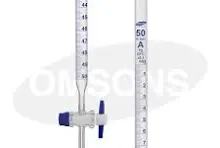
What is a buret?
400
The element in group 13 and the third period.
What is aluminum?
400
14N is an isotope that is missing what in the symbol notation?
What is the atomic number?
400
Electronegativity values tend to do what from top to bottom.
What is decreases?
400
A type of element on the periodic table that is located to the right of the stair step and does not have luster, cannot conduct electricity, and is brittle.
What is a nonmetal?
400
The ion type that is smaller than the neutral atom of an element because it has had electrons removed.
What is the cation?
500
The way the periodic table is arranged today.
What is the atomic number?
500
The mass number from the atom of an element in group 1 period 2 has this as a mass number if there are 4 neutrons in it.
What is 7?
500
The amount of energy needed to remove an electron from an atom.
What is ionization energy?
500
The largest type of element on the periodic table.
What are metals?
500
The state of matter that most metals exist in at room temperature.
What is solid?