Basic Science
Wetlands
Genetics and Heredity
Natural Selection and Adaptations
Force and Motion
Space
100
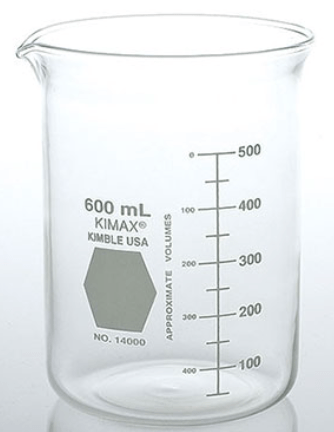 What is this tool?
Beaker
100
Name TWO types of wetlands
Marsh (any sub-category), swamp (any sub-category), bog, fen
100
Name one environmental trait and one inherited trait that humans have
Mrs. Fox discretion
100
Give an example of a beneficial trait that helps an animal reproduce
Mrs. Fox discretion, things like peacock feathers attracting mates or frogs laying lots of eggs to play the odds
100
What is a force?
A push or pull on an object
100
What force keeps the planets in orbit around the Sun?
Gravity
200
How many meters are in a kilometer?
1,000
200
What is the water cycle? Give one vocabulary term associated with it.
The natural cycle of water through the environment. Vocab: precipitation, evaporation, condensation, transpiration, runoff, collection
200
What is the difference between genotype and phenotype?
Genotype is your genetic makeup, phenotype is your observable physical traits
200
Define natural selection
Natural selection is the process by which organisms that are better adapted to their environment are more likely to survive and reproduce than other members of the same species.
200
Which collision will have a greater impact, and WHY? (+100 if you can name which of Newton's Laws this is)
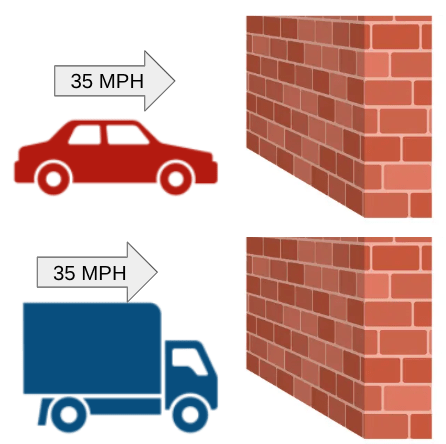
The truck, because it has a greater mass
(+100 Newton's Second Law)
200
Name TWO solar system trends in the inner planets
Rocky, small, short orbit, few to no moons, no rings
300
What is the metric base unit for mass?
Grams
300
Give TWO ways humans are negatively impacting wetlands.
Water pollution, construction, draining for agriculture, [others at Mrs. Fox's discretion]
300
Brown eyes (B) are dominant over blue eyes (b). If a person’s genotype is Bb, what is their phenotype?
Brown eyes
300
Give an example of an adaptation that an animal evolved to fit into its ecological niche.
+100 bonus if you can define ecological niche
Mrs. Fox discretion (something like hummingbird's long beaks to sip nectar)
+100 an ecological niche is the role an organism plays in its environment
300
What is the net force in this diagram?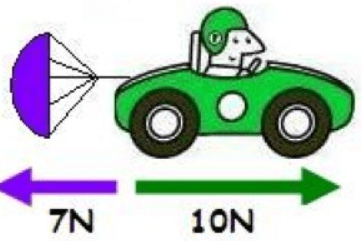
3 N -->
300
What is a nebula?
A cloud of gas and dust in space
400
What is this tool?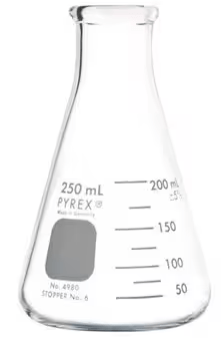
Erlenmeyer flask
400
What is permeability?
(+100 bonus if you can say how it can negatively affect wetlands)
The ability of a material to allow water through
(+100 impermeable surfaces like parking lots cause runoff, which brings trash/pollution into wetlands)
400
What is the probability that the offspring will be homozygous recessive?
50%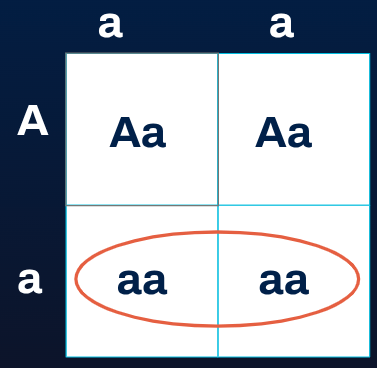
400
If you find a homologous structure in two organisms, what does that indicate?
+100 bonus if you can define homologous structure
They have a common ancestor
+100 homologous structures are similar in form/structure but serve different functions
400
What is inertia? Give an example
The tendency for a moving object to keep moving, or a stationary object to stay at rest.
Examples: person without a seat belt flying from the car during a crash, liquid slopping out of a cup if you stop suddenly, etc.
400
Which has a stronger gravitational pull, AND WHY?
Earth or Jupiter
Jupiter, because it has more mass
500
Convert 5429 milliliters to liters
5.429 L
500
Define "transpiration"
HINT: it has to do with the water cycle
Water vapor evaporating from the leaves of plants into the atmosphere
500
Transcribe the DNA sequence to make mRNA

500
Explain an example of natural selection in action
Mrs. Fox discretion
500
Identify the action-reaction pair in this photograph
Head hits (pushes on) ball, ball pushes back on head
500
Why do the inner planets have few to no moons?
They are too close to the Sun, so its gravity pulled away most potential moons.