Eucharist 1
Eucharist 2
Eucharist 3
Eucharist 4
Eucharist 5
100
Which sacraments of Initiation can you receive repeatedly?
Eucharist only
100
In what chapter of the Bible is the Bread of Life Discourse?
John 6
100
Is Jesus really present in the Eucharist or only a symbol?
Really present...body, blood, soul, and divinity
100
Name the 2 divisions of the Mass
Liturgy of the Word
Liturgy of the Eucharist
100
The restriction of food to strengthen a person’s spiritual life.
fast
200
What kind of sin is it to miss Mass without a sufficient reason?
Mortal sin
200
Name the Sacraments of Initiation
Baptism, Eucharist, and Confirmation
200
We must fast from all ______________________ and _______________________except water and medicine for one ______________(how long?) prior to reception of the Eucharist.
food and drink
1 hour
200
Name the 2 basic divisions of the Mass
1. Liturgy of the Word
2. Liturgy of the Eucharist
200
1. If you cannot get to daily Mass, it is a good practice to receive a “____________ communion” through a prayer asking Jesus to come into your heart.
2. What kind of sin is it to miss Mass without a sufficient reason?
1. spiritual
2. mortal
300
1. After the Mass ends, does the Eucharist turn back into bread and wine?
2. During the Mass, is Christ re-sacrificed again?
3. It is a ______________ to receive the Eucharist while in mortal sin.
1. No
2. No
3. sacrilege
300
1. _______________ was a supernatural bread sent by God to the Israelites in the desert, was a “type” of the Eucharist.
2. What chapter in the Bible does the “Bread of Life” discourse come from? _____________________
3. The event/place where the institution of the Eucharist took place.
1. Manna
2. John 6
3. Last Supper
300
A Catholic Church (building) is a sign of the sacred and therefore our behavior and more must be different when we enter one. What are 3 things we do to show this reality when we enter a Catholic Church?
1. Genuflect or other reverent body language
2. Dress up and with modesty
3. Act differently (not a social gathering)
300
Give 3 reasons why Christ instituted the Eucharist.
as a way of remaining with his people forever
as a memorial of his Death and Resurrection
as the Sacrifice of the New Covenant
300
Pope St. Pius X helped the Church grow in Eucharistic love in 2 ways. Name them:
1. He encouraged frequent, even daily reception of Holy Communion
2. He lowered the age of First Communion.
400
Give the matter, form, and minister of the Eucharist.
1. Matter: bread and wine
2. Form: "This is my body. This is my blood."
3. Minister: priest, bishop, cardinal, pope
400
Give 3 reasons why Christ instituted the Eucharist.
as a way of remaining with his people forever
as a memorial of his Death and Resurrection
as the Sacrifice of the New Covenant
400
1. When the priest pronounces the words of _______________________________________ over the bread and wine, the substance of the bread and wine is changed by the power of the Holy Spirit, acting through Christ, into the real Body and Blood of Christ.
2. Worthy reception of the Eucharist will allow ________________________ sins to be forgiven.
3. What are the 4 verbs used in the Last Supper account, which we find in other passages of Scripture?
4. The rite of having a priest, bishop, or deacon bless us with the Blessed Sacrament which is placed in a monstrance for adoration by the faithful.
1. consecration
2. venial
3. took, blessed, broke, and gave
4. Benediction
400
1. The event/place where the institution of the Eucharist took place.
2. The writings of this saint in the early Church outline the parts of the Mass as we know it today.
3. The rite of having a priest, bishop, or deacon bless us with the Blessed Sacrament which is placed in a monstrance for adoration by the faithful.
4. The change of the substance of bread and wine into the body and blood of Christ is referred to as
1. Last Supper
2. St. Justin Martyr
3. Benediction
4. transubstantiation
400
1. The place where consecrated hosts that have not been consumed are “housed” or kept.
2. “to give thanks”
3. a particular form of the Sacred Liturgy
4. A person’s desire to receive the spiritual benefits of Holy Communion when unable to receive the Sacrament.
1. tabernacle
2.eucharistein
3. Rite
4. Spiritual Communion
500
List the six Holy Days of Obligation:
1. ___________________________on December 25
2. _________________________________on Jan 1
3. __________________________________(40 days after Easter)
4. ____________________________(August 15)
5. ____________________________ (Nov 1)
6. ______________________________ (Dec 8)
1. Christmas
2. Mary as Mother of God
3. Ascension
4. Assumption
5. All Saints Day
6. Immaculate Conception
500
Reception of Holy Communion grants a person many graces and effects. List at least 5-6 of them:
1. Increases:Sanctifying grace
2. Increases virtue
3. Decreases: punishment due to sins already committed, thus decreasing purgatorial debt (less time in purgatory)
4. Decreases Drives of concupiscence (tendency to sin)
5. Decreases Pride and self-centeredness
6. Removes venial sin
7. Strengthens us against temptation via actual grace
8. Strengthens The Mystical Body of Christ
500
1. a particular form of the Sacred Liturgy
2. A person’s desire to receive the spiritual benefits of Holy Communion when unable to receive the Sacrament.
3. The restriction of food to strengthen a person’s spiritual life.
4. The condition of a soul as it should be before receiving the Eucharist (i.e. no mortal sin).
5. The action in which the Body and Blood of Jesus are received during Mass; also the fellowship and union with Christ and other members of the Church.
1. Rite
2. spiritual communion
3. fast
4. state of grace
5. Holy Communion
500
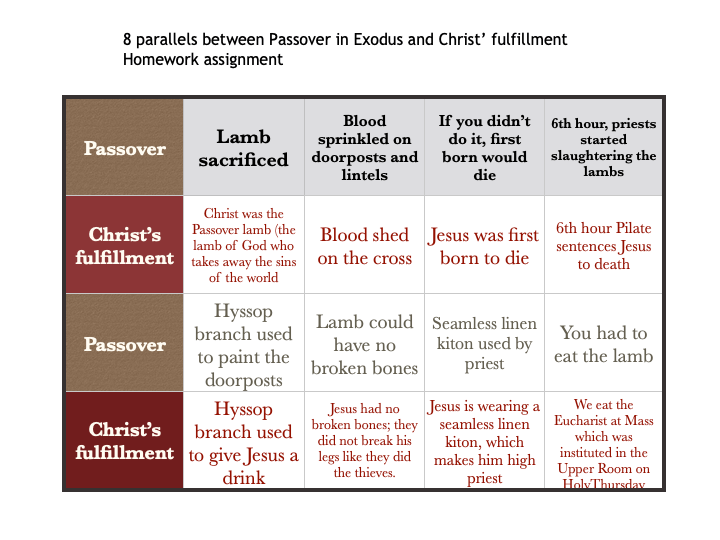
Name 4-5 parallels between Passover in Exodus 12 and Christ's fulfillment
1.
500
Reception of Holy Communion grants a person many graces and effects. List at least 5-6 of them:
1. Increases:Sanctifying grace
2. Increases virtue
3. Decreases: punishment due to sins already committed, thus decreasing purgatorial debt (less time in purgatory)
4. Decreases Drives of concupiscence (tendency to sin)
5. Decreases Pride and self-centeredness
6. Removes venial sin
7. Strengthens us against temptation via actual grace
8. Strengthens The Mystical Body of Christ