Breathe Easy
The Final Strikes Back
According to Policy...
Math Happens
Read Between the Ribs
100
The primary purpose of providing PEEP to infants in respiratory distress.
Recruit lung volume, increase FRC, and prevent atelectasis
100
The purpose of giving betamethasone to women at risk of preterm delivery.
To enhance fetal lung maturation
100
The correct dosing weight for the following patient:
Yesterday's weight: 1.5 kg
Yesterday's dosing weight: 1.5 kg
Today's weight: 1.4 kg
1.5 kg
100
The D10W dose expected for a 2.8 kg infant with hypoglycemia on admission.
5.6 mL
100
Name this complication:
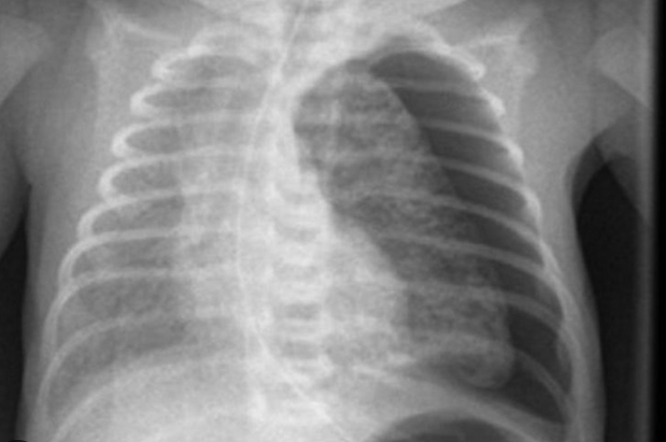
Pneumothorax
200
The appropriate tidal volume range for NICU infants (mL/kg)
4-7 mL/kg*
200
You patient is showing signs of infection and the provider has ordered a septic workup and IV antibiotics. After orders are placed, this is the maximum amount of time that should elapse prior to starting the antibiotic infusion.
1 hr
200
The standard expiration time for intermittent medication tubing.
24 hrs
200
The normal saline bolus volume expected for a 655g infant with hypotension.
6.55 mL
200
Name this finding associated with NEC:

Pneumatosis
300
Blood gas results for your patient on volume guarantee are below. What vent setting do you expect to be lowered by the RCP?
pH: 7.44
CO2: 32
O2: 70
BE: +3
Rate
300
This finding on ROP exam shows abnormal dilation and tortuosity of posterior retinal vessels that require close monitoring and generally require treatment.
Plus disease
300
The minimum flush volume for all medications
1 mL
300
The mL/kg/day received by the infant below:
Dosing Weight: 1.1 kg
UAC fluids @ 1mL/hr
UVC fluids @ 6.5 mL/hr
163.6 mL/kg/day
(164 ok)
300
Name this complication:
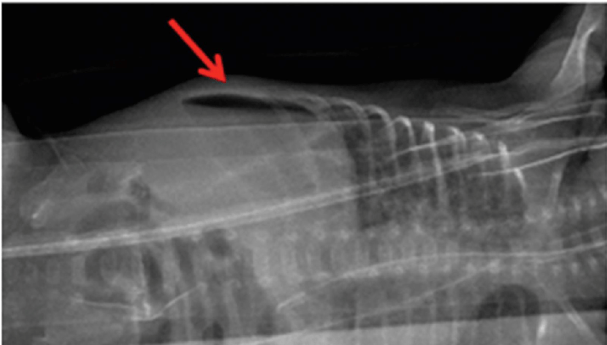
Pneumoperitoneum
400
Your patient is on volume guarantee with increasing PIP requirements to meet target tidal volume. This means lung compliance has improved or worsened?
worsened
400
ALS has placed lines and obtained placement confirmation for both the UAC and UVC. TNA (UVC) and 1/2 NS 1:1 heparin (UAC) are at the beside. This fluid is prioritized to hang first.
TNA (UVC)
400
The hours of life the first TcB reading is obtained, when ordered.
12 hours of life
400
The I/T ratio for the following CBC differential:
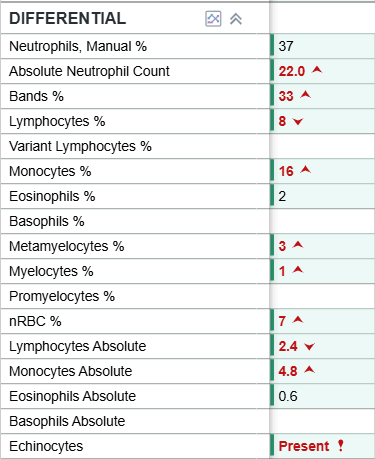
0.5
400
This complication often shows a "sail sign" due to thymus displacement:
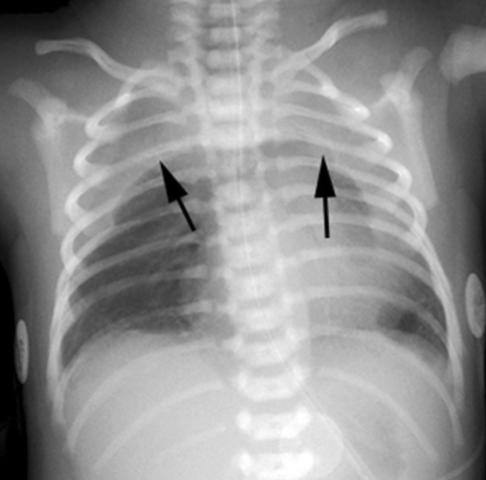
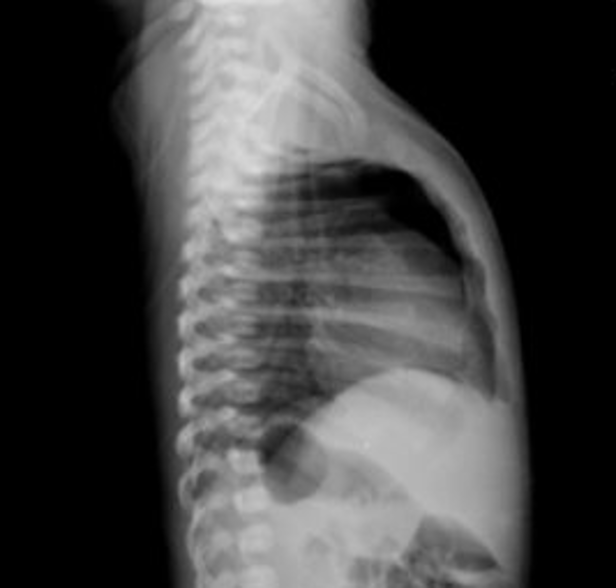
Pneumomediastinum
500
Your patient is on NIV NAVA with a NAVA level of 2. The patient has an increased work of breathing and Edi Peak levels of 15+. You expect the NAVA level to be adjusted in this direction.
up
500
You receive the ABG results shown and determine the infant is experiencing primarily (respiratory/metabolic + acidosis/alkalosis):
ABG Results:
pH: 7.18
PaCO2: 50
PaO2: 65
HCO3-: 16
BE: -8
Metabolic acidosis
500
D13 TNA with an osmolarity of 1100 can infuse through this type of line (central, peripheral, or both)
central
500
Epi Drip! The calculated infusion rate given the information below:
Dosing Weight: 0.77 kg
Epi Concentration: 10 mcg/mL
Dose: 0.05 mcg/kg/min
Drip Calculation:
Dose x weight x 60 min/hr
DIVIDED BY
concentration
0.23 mL/hr
500
Name this complication shown throughout all 4 images:

Atelectasis