Fill in the Blank for Teeth
Fill in the Blank for Teeth and Skin
Random Skin Facts
Multiple Choice
Not Going to Lie, These are Hard :)
100
A film of harmful bacteria on the teeth is called ____.
plaque
100
Halitosis may be caused by ____ growing in the mouth.
bacteria
100
An oily substance produced by the oil glands is ____.
sebum
100
The fatty later of skin that stores energy is the ____.
a. dermis
b. epidermis
c. sebaceous layer
d. subcutaneous layer
d. subcutaneous layer
100
Name one of the signs of infection.
redness, swelling, pus, throbbing pain
200
The disease dental caries is commonly called ____.
cavities
200
An infection of the gums may lead to ____ disease.
periodontal
200
A dark-colored pigment is ____.
melanin
200
The outer layer of skin is the ____.
a. dermis
b. epidermis
c. sebaceous layer
d. subcutaneous layer
b. epidermis
200
Label the parts of the tooth that are indicated.
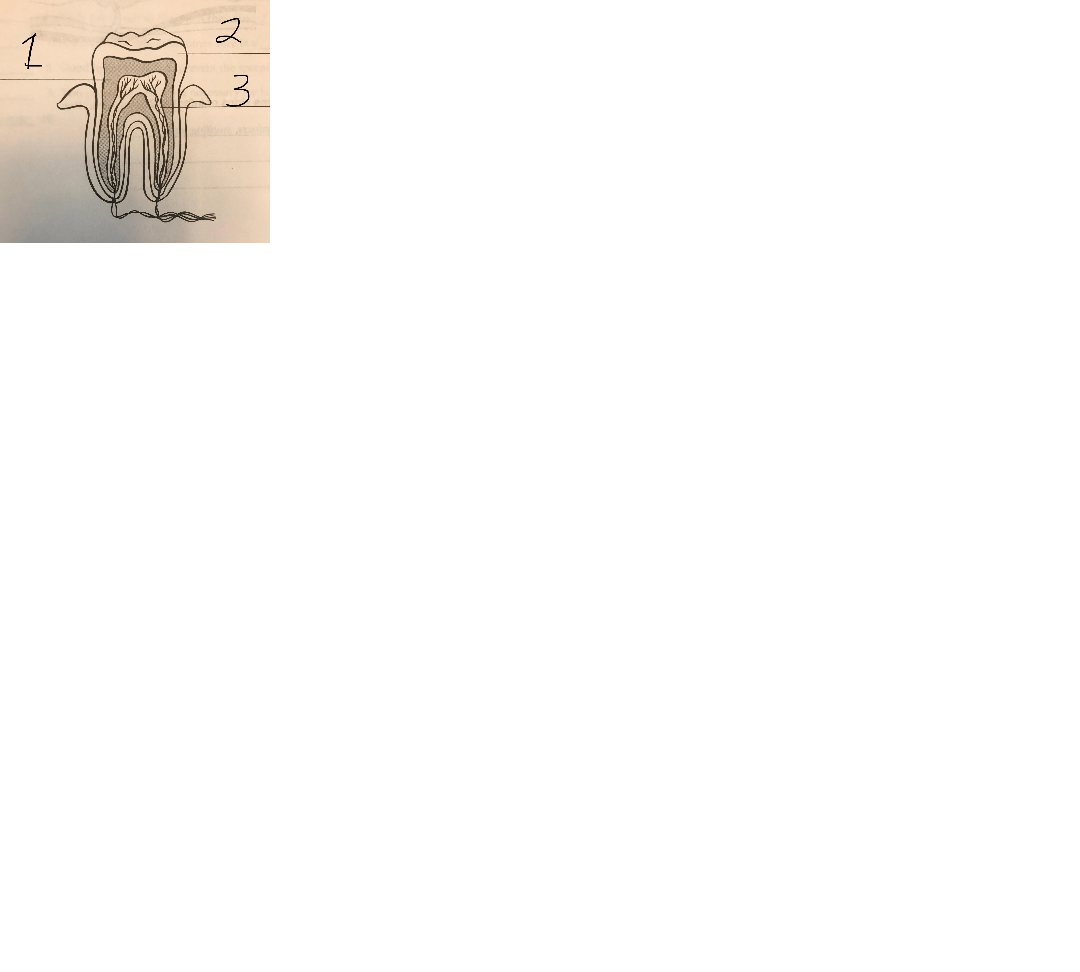
1. dentin
2. enamel
3. pulp
300
The hard, bonelike tissue that forms the tooth is ____.
dentin
300
The improper fitting together of the upper and lower teeth is called ____.
malocclusion
300
True or False
A second-degree burn affects only the dermis.
False
300
A dark-colored pigment that gives the skin a brownish color is ____.
a. melanin
b. sebaceous
c. sebum
d. albino
a. melanin
300
Label the parts of the skin that are indicated.
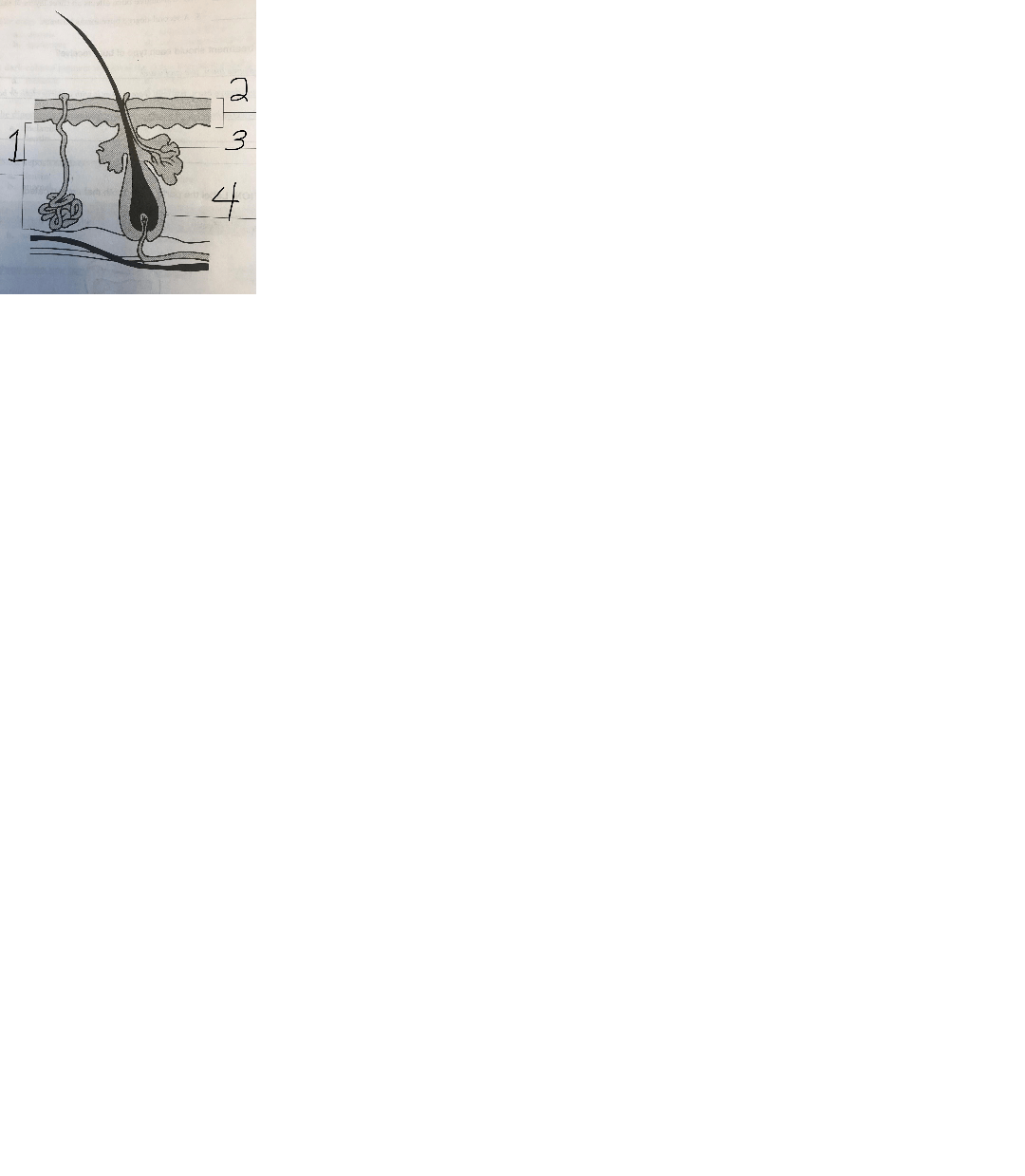
1. dermis
2. epidermis
3. sebaceous gland
4. hair follicle
400
The inner part of a tooth is the ___.
pulp
400
The layer of skin containing the hair follicles, the sweat glands, and the sebaceous glands is the ____.
dermis
400
True or False
A first-degree burn affects all three layers of skin.
False
400
The digestive juice in your mouth is called ____.
a. melanin
b. dentin
c. saliva
d. sebum
c. saliva
400
List three ways you can control plaque buildup.
brush after eating
brush at bedtime
floss daily
eat sweet foods less often
have regular dental checkups
500
Plaque changes the sugar in your mouth to ____.
acid
Daily Double!!!!!
Double the points if you get this correct:
A dentist who specializes in treating crowded, crooked teeth is ____.
500
A cream or lotion which screens out ultraviolet rays is called a ____.
sunscreen
500
True or False
A second-degree burn forms blisters.
True
500
A hard deposit of plaque is called ____.
a. dentin
b. enamel
c. calculus
d. pulp
c. calculus
500
What treatment should each type of burn receive?
First-degree
Second-degree
Third-degree
First-degree: use cool water
Second-degree: use cool water, cover it with a sterile cloth or bandage
Third-degree: get emergency medical treatment