Types of Questions
Test Format
True or False
Real ACT
Passage
Passage
Data Reading
100
This type of question is fairly straightforward and simply requires you to read and interpret the information presented
A. Data Representation
B. Research Summaries
C. Conflicting Viewpoints
Data Representation
100
How many questions are on PreACT 9 Science section?
32
100
True/False: Read the whole passage in full and try to absorb as much information as possible.
False. Use locators to determine the answer.
100
What was the dependent variable used by the researchers?
a. The configurations of the blocks.
b. The starting temperatures of the walls.
c. Heat flow.
d. The block material.
C. The thing that is being measured is the heat flow. That is what the scientists are making predictions about
100
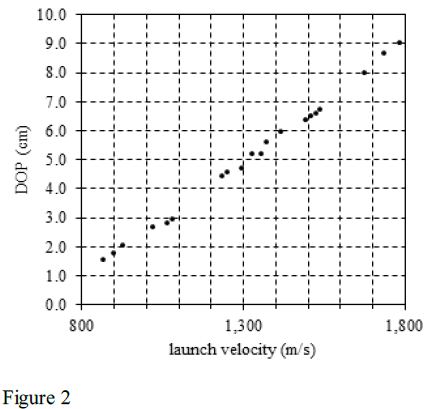
According to Figure 2, approximately what launch velocity was
needed to achieve a DOP of 6.0 cm?
a.1,080 m/s
b. 1,300 m/s
c. 1,420 m/s
d. 1,540 m/s
C. 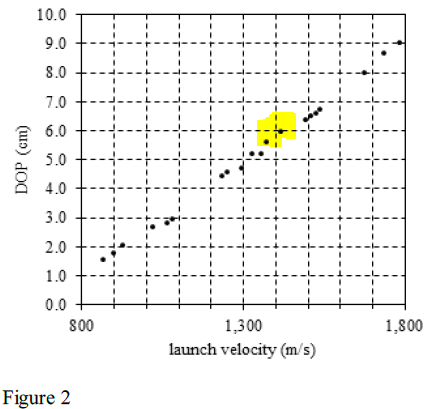
200
This type of question presents a series of different experiments on the same topic. They may ask about the design of the experiment and how a hypothesis is tested, confirmed, or refuted.
A. Data Representation
B. Research Summaries
C. Conflicting Viewpoints
Research Summary
200
How much time do you have to complete the Science section?
35 minutes
200
You will probably need a calculator to answer some of the questions in ACT Science (even though you won't have access to one)
False. Any information you need is on the page or in the passage. Use simple math (round, estimate, and approximate).
200
For how long after the initiation (start) of a trial was the heat flow recorded?
a. 20 seconds
b. 50 seconds
c. 1 minute
d. 1 hour
c. 60 seconds = 1 minute
200
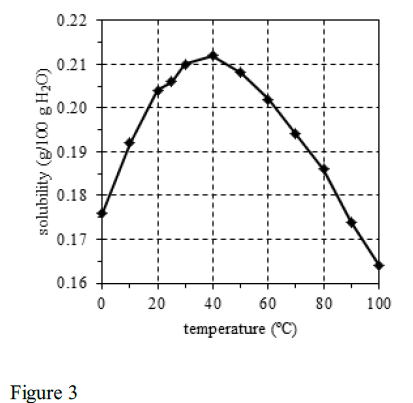
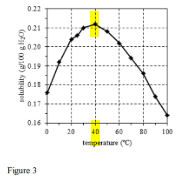
According to Figure 3, CaSO4 had the highest solubility at which of the following temperatures?
a. 0ºC
b. 10ºC
c. 40ºC
d. 100ºC
c. the graph is at its maximum at 40 degrees
300
These types of questions are typically seen as the easiest on ACT Science. Usually reading a graph or table.
A. Data Representation
B. Research Summaries
C. Conflicting Viewpoints
Data Representation
300
ACT Science is made up of how many passages? (range)
6-7 passages
300
True/False: You do not need to know much Science knowledge to do well on this test. 90 percent of the questions are not based on content knowledge.
True! only about 10 percent of ACT Science questions require you to know science knowledge that isn't written on the page. (For example, you may need to know what volume is, or the periodic symbol for iron.)
300
Which of the following statements best supports the viewpoint of Scientist 1?
a. Configuration A will have the largest heat flow recorded.
b. Configuration B will have the largest heat flow recorded.
c. Configuration C will have the largest heat flow recorded.
d. Both configuration A and configuration C will have the largest heat flow recorded.
b. Configuration B will have the largest heat flow recorded.
B is the only design with blocks on top of each other like scientist 1 predicted
300
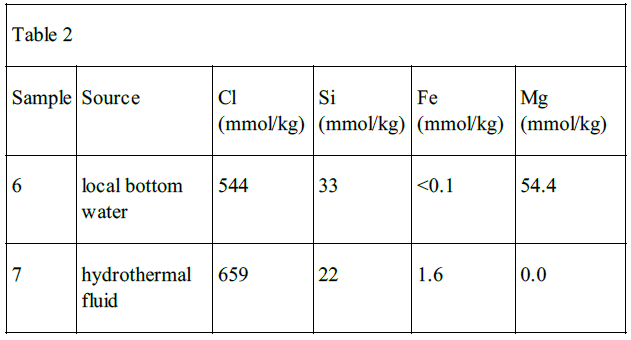
Compared to evolved hydrothermal fluid, local bottom water contains approximately:
a. half as much dissolved Si.
b. the same amount of dissolved Si.
c. 1.5 times as much dissolved Si.
d. 3 times as much dissolved Si.
c. 22 --> 33
33 is about 1.5 times greater than 22
400
These types of questions are typically seen as the most difficult in ACT Science. Often presenting scientists disagreeing
A. Data Representation
B. Research Summaries
C. Conflicting Viewpoints
Conflicting Viewpoints
400
Name 3 of the 4 categories/branches of Science tested on the ACT.
Biology, Chemistry, Physics, Earth/Space Science
400
True/False: If you're having a difficult time getting to all of the passages, you may consider skipping 1 or 2 of them all together and guessing.
True. Skipping one or two passages could give you a little extra time to spend on the other passages. Don't forget to still make guesses on skipped questions!
400
Based on Figure 1 and Table 1, the only difference between the configurations in trial 1 and 3 was:
a. The temperature of the walls.
b. The material of the walls.
c. The distance between the walls.
d. The number of walls.
C. the only difference is that they have different distances between the walls
400

What was the most popular item sold in January?
a. Black hats
b. Black ties only
c. Brown ties only
d. Brown ties and black ties are equal
d. Brown and Black ties both have 12 items sold

500
These questions/passages give several competing hypotheses. You will be asked to understand the hypotheses, both on their own and in relation to each other.
A. Data Representation
B. Research Summaries
C. Conflicting Viewpoints
Conflicting Viewpoints
500
Which question type shows up the MOST on the Science ACT?
A. Data Representation
B. Research Summaries
C. Conflicting Viewpoints
Research Summary questions make up 45%-55% of ACT Science test. (about 18-22 questions)
500
True/False: You should find the Conflicting Viewpoints passage FIRST and complete it at the very beginning of the testing time.
False! Conflicting Viewpoints passages and questions are more difficult and can be time consuming. You should skip the Conflicting Viewpoints passage and save it for last so that you have enough time to answer the easier questions.
500
The researchers relied on all of the following pieces of information EXCEPT:
a. Heat moves from hotter to cooler areas.
b. Heat transfer requires different areas of contact.
c. Different materials allow heat to flow through them at the same rate.
d. Differing the original temperatures of the walls does not affect heat flow.
c. Different materials allow heat to flow through them at the same rate.
This is the only untrue statement in the list
500
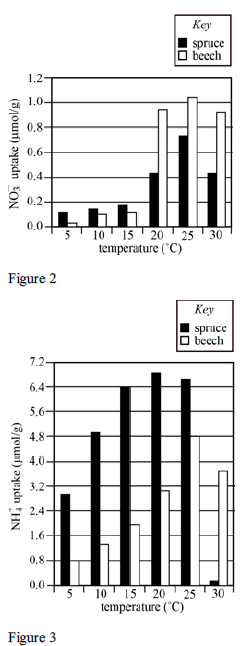
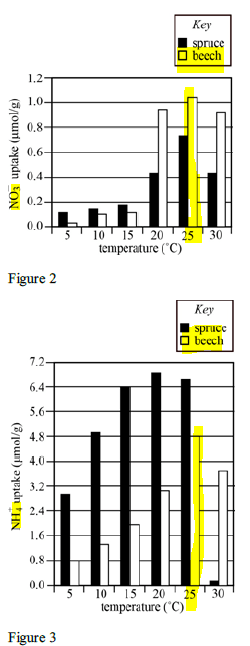
Based on Figure 3 at 25ºC, beech tree roots absorbed approximately:
a. 0.6 μmol/g more NH4+ than NO3–.
b. 0.6 μmol/g less NH4+ than NO3–.
c. 3.7 μmol/g more NH4+ than NO3–.
d. 3.7 μmol/g less NH4+ than NO3–.
C.
1. look at the white bars for beech trees
2. look at the bar above the number 25
3. in figure 2 the white bar is at 1 and in figure 3 the white bar is at 4.8. The difference should be about 3.8
4. NH4+ is higher, so the answer is c