One
Dos
Trois
Vier
100
Identify the parent function of the function graphed below. (1)
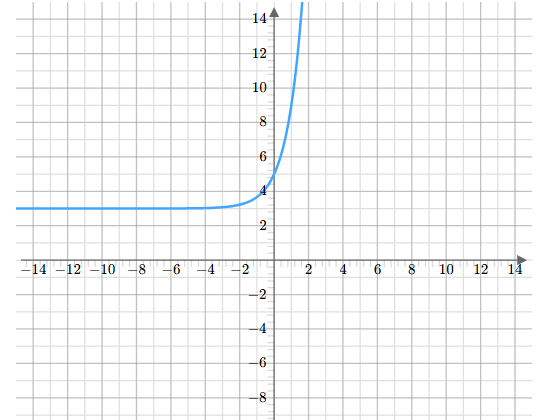
f(x)=b^x
100
Identify the parent function of the function graphed below. (2)
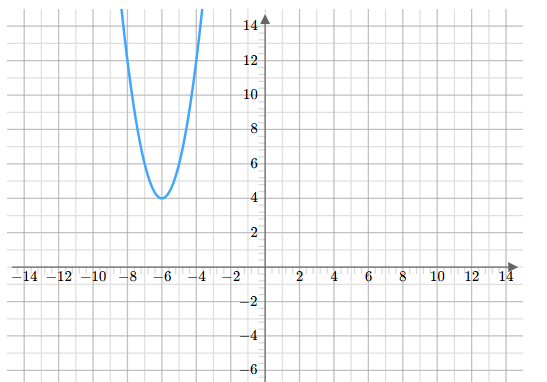
f(x)=x^2
100
Identify the parent function of the function graphed below. (3)
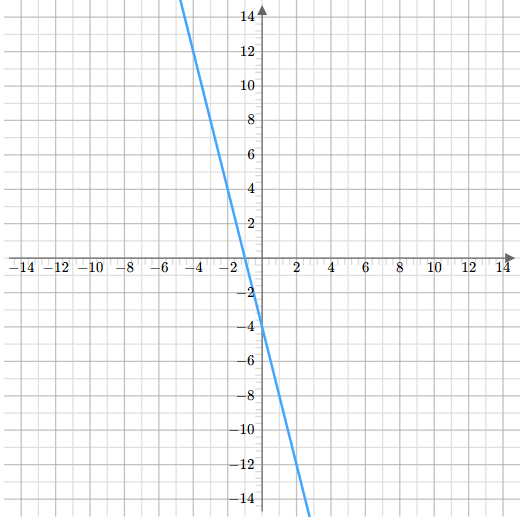
f(x)=x
100
Identify the parent function of the function graphed below. (4)
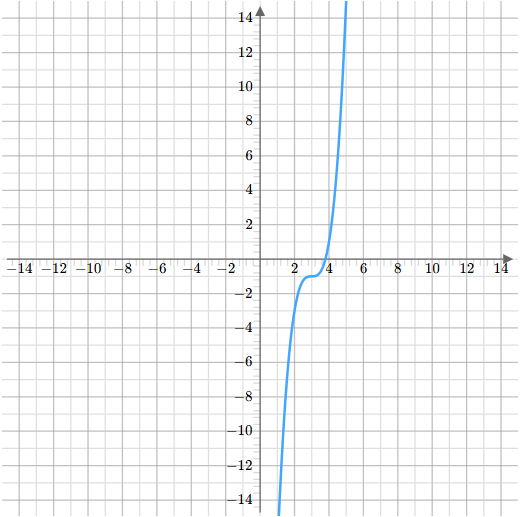
f(x)=x^3
200
Identify the parent function of the function graphed below. (5)
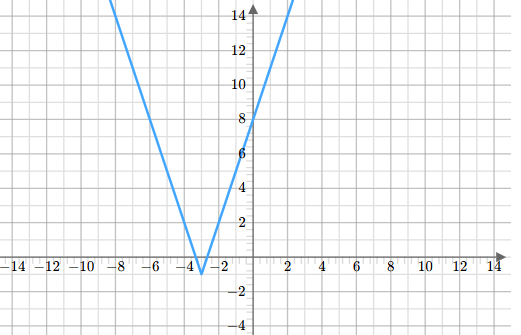
f(x)=|x|
200
Identify the parent function of the function graphed below. (6)
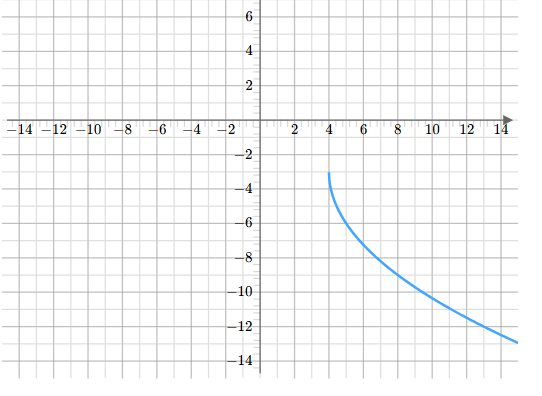
f(x)=sqrtx
200
Let f(x) be represented by the black line on the graph below. Graph the following linear transformation of f(x): (7)
Shift the line 1 units up from f(x).
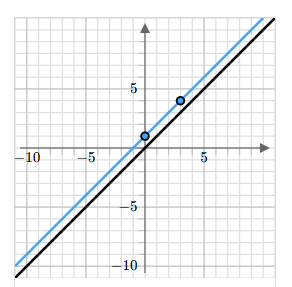
200
Consider the two functions graphed below. Let f(x) represent the black line on the graph, and let g(x) represent the blue line.
If g(x) is a transformation of f(x), what is true about g(x)? (8)
g(x) is less steep than f(x)
The graph of g(x) is shifted down from f(x)
300
Consider the two functions graphed below. Let f(x) represent the black line on the graph, and let g(x) represent the blue line. (9)
If g(x) is a transformation of f(x), what is true about g(x)?
g(x) is less steep than f(x)
The graph of g(x) is shifted up from f(x)
300
Below are graphs of two functions, f(x) in dotted black and g(x) in solid blue. Which transformation describes the relationship from f(x) to g(x)? (10)
g(x)=f(x+2)
300
Below are graphs of two functions, f(x) in dotted black and g(x) in solid blue. Which transformation describes the relationship from f(x) to g(x)? (11)
g(x)=f(x+1)
300
Solve the quadratic equation for m in simplest form.
m^2+18m+81=0
m=-9
400
Solve the quadratic equation for x in simplest form.
x^2+13x+42=0
x=-6
x=-7
400
Solve the quadratic equation for n in simplest form.
-5n^2+5n+10=0
n=-1
n=2
400
Solve the quadratic equation for y in simplest form.
6y=-3y^2+9
y=-3
y=1
400
Find the discriminant of the quadratic equation.
m^2+16m+64=0
D=0
500
Find the discriminant of the quadratic equation.
2k^2+11k+7=0
D=65
500
Determine the number of real solutions to the quadratic equation by finding the discriminant.
w^2+18w+100=0
0 real solutions
500
Determine the number of real solutions to the quadratic equation by finding the discriminant.
n^2-15n+50=0
2 real solutions
D=25
500
Determine the number of real solutions to the quadratic equation by finding the discriminant.
2m^2-2m-7=0
2 real solutions