🏥 OSHA, HIPAA & Safety
👩⚕️ OB/GYN & PRENATAL CARE
🔬 PAP TESTS & WOMEN'S HEALTH
❤️ ECG & CARDIOLOGY
🩺 SURGERY & ASEPSIS
👴🧠 GERIATRICS & MENTAL HEALTH
🦯 MOBILITY & WOUND CARE
100
This federal agency establishes workplace safety standards and employee rights.
OSHA
100
Cervical cancer screening begins at this age.
21 Years Old
100
This newborn assessment evaluates Appearance, Pulse, Grimace, Activity, and Respiration.
APGAR
100
A standard ECG records this many leads.
12 Lead
100
This technique maintains sterility throughout a procedure.
Sterile Asepsis
100
This is the leading cause of injuries in older adults.
Falls
100
This device supports patients who cannot safely use crutches.
Walker
200
Employers must provide this protective equipment when exposure risks exist.
PPE (Personal Protective Equipment)
200
Women ages 21-29 should generally have a Pap test every this many years.
Every 3 Years
200
These two circumferences are measured at well-child visits through approximately 36 months.
head and chest circumference
200
This device is attached to the skin to detect electrical activity of the heart.
Electrode
200
A sterile drape with an opening that exposes the procedure site is called a ______ drape.
fenestrated drape
200
This disorder causes progressive memory loss and cognitive decline.
Dementia
200
A cane should be held in this hand.
The hand opposite the injured or weak leg
300
Leaving patient schedules where visitors can see them is this type of violation.
HIPAA Violation
300
At age 30, the preferred screening includes a Pap test and this virus test.
HPV Testing
300
A child below the third percentile on a growth chart may be diagnosed with this condition.
Failure to thrive
300
Heart muscle contraction occurs during this electrical process.
depolarization
300
Patients with lacerations should be asked about receiving this booster shot.
Tetanus
300
This cognitive screening tool includes a clock drawing test.
Mini-cog
300
Rest, Ice, Compression, Elevation is commonly abbreviated as this.
RICE
400
When dealing with a potentially violent person, you should avoid this action because it may be viewed as provocation.
Touching The Person
400
Using Naegele's Rule, an LMP of January 8 results in this due date.
October 15th
400
Medical assistants should report suspected child abuse or neglect to this person.
The provider
400
Each large square on ECG paper equals this amount of time.
0.20 seconds
400
Most office-based minor surgical procedures use this type of anesthesia.
local anesthesia
400
The inability to control bladder or bowel function is called
Incontenince
400
Abrasions, avulsions, incisions, and lacerations are all examples of these.
Abrasions
500
Health data that cannot be linked to a specific person is not considered this.
PHI (Protected Health Information)
500
This diagnostic imaging study is used early to confirm pregnancy and later to monitor fetal growth.
Ultrasound
500
Patients stand this many feet from a Snellen chart during visual acuity testing.
20 Feet
500
Ten electrodes are used to create this many ECG leads.
12 lead
500
This procedure destroys tissue using liquid nitrogen and extremely cold temperatures.
cryosurgery
500
This condition causes decreased bone density and increased fracture risk.
osteoporosis
500
If a patient becomes too weak to stand, the assistant should do this first
Ease the patient safely to the floor
600
Name three HIPAA violations
Discussing patient information with unauthorized individuals, sending records through unsecured email, leaving schedules visible to others, discussing patients where others can hear, or placing patient records in regular trash.
600
What is the difference between Gravida and Para?
Gravida is the total number of pregnancies; Para is the number of live births.
600
Name all five APGAR categories.
Appearance, Pulse, Grimace, Activity, Respiration.
600
Using the 300 method, what is this heart rate?
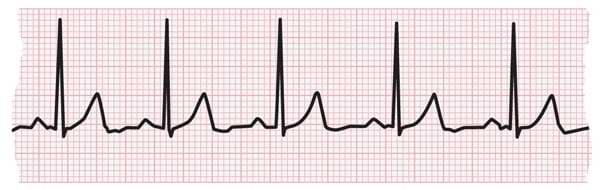
60 Beats Per Minute
600
Give three postoperative instructions commonly provided after minor surgery.
Keep the site clean and dry, avoid stressing the area, get rest, drink plenty of fluids, eat a balanced diet, return for follow-up, and report fever, redness, swelling, drainage, pain, nausea, or bleeding.
600
Which screening tool is used for anxiety, and which is used for depression?
GAD-7 for anxiety and PHQ-9 for depression.
600
A patient returns 5 days after a laceration repair. Identify at least four signs or symptoms of a wound infection that should be reported to the provider immediately.
Redness around the wound, Swelling, Warmth at the site, Pain that is worsening or unusual, Pus or drainage, Bleeding, Fever greater than 100°F (37.7°C), Foul odor from the wound