4.1/4.2 Natural increase as a component of population change
+ Demographic transition
+ Demographic transition
Define birth rate and death rate
Birth rate: Births per 1000
Death rate: Deaths per 1000
Explain the concept of food security
Define migration
Movement to establish a new place of residence
List the four types of internal migration
Rural to urban
Urban to rural
Rural to rural
Urban to Urban
What is a CBD?
Central Business District.
Provide 2 factors that influence these items
Fertility (Birth rates) and Mortality (Death rates)
Many acceptable answers but my prediction is you will take about pro/anti natalist policies and proper healthcare :O
Malthus predicted that humans would reach a point of no return where food production could not keep up with the growing population.
Give 3 reasons why he was wrong.
GMOS
Advancements in farming technology to produce more food and reduce labor required.
Mechanization of farming (think mass chicken farms).
Advancement in preservation technology (You all have a fridge :D!)
Etc. (I will listen and agree in class if it fits but these are the 4 main ones I think of).
Define Push and Pull factors
Push factor - Negatives about place that a potential migrant currently lives (reasons to leave)
Pull factor - Positives about a potential place to go (Reason to go)
When migrants are unhappy with where they migrated to and return to their home country.
What is a counter stream
State three reasons why people would move from rural areas to urban areas
Lack of employment in rural areas
Farming becoming more mechanical (less employment in this field)
Lack of facilities/social structures
Easier ability to travel to city to move
Increased natural hazards.
Etc.
There are 5 stages of the demographic transition model.
Explain what occurs in all 5 stages and identify which stage is not easily observable.
Stage 1 - High Birth rates + High death rates (Early human history)
Stage 2 - High Birth Rates + Low death rates (advancement of modern medication, better nutrition, birth rates stay high due to social norms)
Stage 3 - Birth rates slow down + low death rates (Better education and access to contraception, Changed cultural expectations).
Stage 4 - Both Birth rates and death rates are low (They even out, death rates have slight bump due to aging populations)
Stage 5 -Birth rates fall below death rates (With absence of migration these populations decline).
Stage 5 -
Outline the concept of overpopulation (Must receive 3 marks)
Definition must include 3 of the following:
Population Size (1) Exceeding carrying capacity (2) Within an area (3) and with varying technology (4).
State and define 4 different types of migration
Voluntary Migration
Forced Migration
Step Migration
Chain Migration
Internal Migration
International Migration
Etc.
Explain two reasons for counterurbanisation
cheaper cost of housing
better transport networks connecting cities to rural areas
Easier access to jobs through remote work
Cleaner environments
Etc.
What are the factors a city needs to be classified as an edge city
Former large rural area
More jobs than homes
CBD focused on shopping, leisure, and entertainment
What are some issues for youthful and aging populations. When you buzz in you must give 1 issue for each group relating to one of these categories.
Social
Economic
Environmental
Political
Social
Youthful: Pressure on healthcare, education, and housing, childcare costs
Aging: Fertility decline, Pressure on healthcare systems, Adults have to take care of their parents and their children.
Economic
Youthful: Financial resources need to be allocated, Younger population more likely to be laid off during economic downturn
Aging population: Strain on social security, increase demands for certain products (Medications), Workforce can decline significantly due to an aged out workforce
Environmental:
Youthful: High population growth leads to land usage problems (tearing down greenfield to build houses). Younger individuals are more environmentally aware and active.
Aging: More vulnerable to natural disasters (harder to evacuate), More likely to volunteer their time (No longer working)
Political:
Youthful - Political parties want long term engagement, Youthful populations have higher risk of political instability
Aging - Grey vote become more important in aging populations, Higher political stability.
Explain why an optimum population is difficult to achieve (Must provide 2 reasons)
Populations/resources are not stable
Dynamism (Being able to reference this concept when speaking about the concept above)
Different optimums (Social V Economic)
Different and changing ways of measuring
There are different factors for what influences people to leave an area and go to a new one.
Explain some push and pull factors.
When answering you must give a push and pull factor from 2 of the following
Economic
Cultural
Demographic
Social
Political
Environmental
Economic push - Unemployment, lower pay, fragile economies with high inflation
Economic pull - Better employment, Higher pay
Cultural push - Development of migration culture over years (Step migration across generations)
Cultural pull - exposure to new cultural experiences highlighted in mass media (tiktok/social media showing lives of others)
Demographic push - High population pressure
Demographic pull - Existing ethnic communities in destination
Social Push - Poor housing conditions, sanitation, limited education, limited healthcare, Desire to send money home, high crime rates
Social pull - Better housing, Comprehensive social systems which leads to increased security and safety, higher education, Family reunification (chain migration)
Political Push - International conflicts
Political pull - Promise of more stable/less corrupt political areas
Environmental push - Lack of access to resources, natural disasters, climate change, Health issues due to pollution
Environmental pull - Retiring to warmer climates (Florida snowbirds), Better environmental quality.
Give a pro and con of international migration on the following:
The countries of origin
The countries of destination
On the migrants
Origin Pros: Remittances are a major source of income (Cuba), eases unemployment rates, less pressure on social services, returning migrants can bring skills
Origin cons: Brain-drain effect, aging population when young people leave, agricultural output may drop with less workers, returning migrants start questioning traditional values.
Destination pros: Larger labor pool reduces cost of labor, May bring important skills, increased cultural diversity, new youth reduces rate of aging population
Destination cons: Migrants may be perceived as taking jobs away, larger need for housing and healthcare/education, ethnic shift may cause tension, environmental impacts
Individual pros: Higher wages, More job opportunities, development of skills, Support home country, opportunity to learn new language
Individual cons: High cost of migration, Separation from family, Issues with assimilation, potential exploitation by employers, hazardous journey.
Concentric zone model - CBD at the center and city built in rings outside of CBD, further away you get cheaper the land gets.
Sector model - CBD at the center, city building designed in wedges leading out of the CBD.
Multiple-Nuclei Model - Multiple Centers that focus on specific unique characteristics in each center
Latin American city model - CBD connects to other regions through a central walkway, CBD shares space with the major markets.
What stage of the demographic transition model is this graph on, Explain why.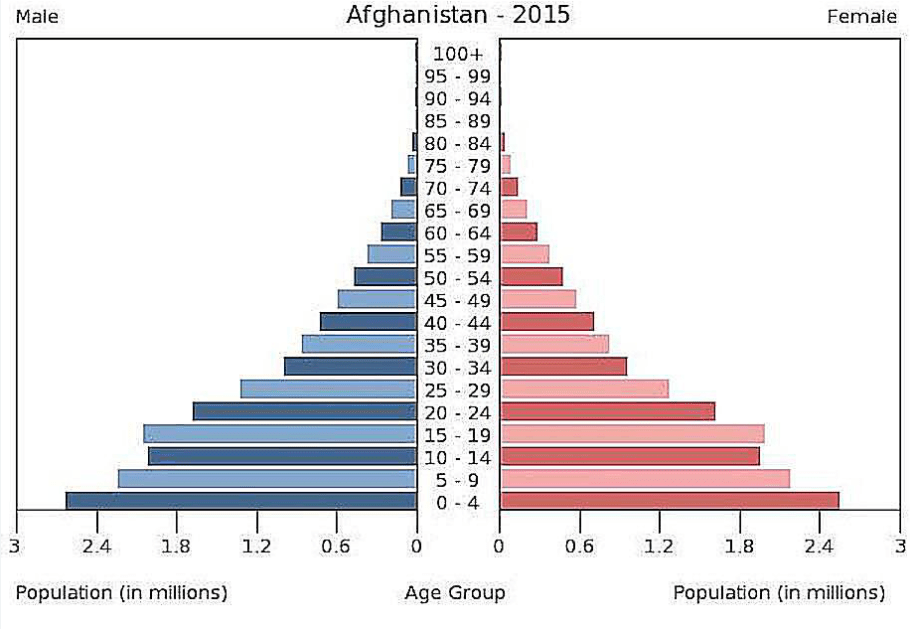
Stage 2 due to a large young population that dies off before they become adults.
(2 different teams can answer this question)
How do declining birth rates affect a nations economy. Each team can argue for a different side. Arguing for negatives must provide 3 negatives, positives only have to bring up one :)! (If team 1 argues it hurts the nations economy, team 2 must talk about how it can be beneficial).
Less spending on education
Less investment into child care
Negatives:
Less taxes and income for the country
Future labor shortages
Less consumers to buy things
Smaller population to support a larger aging population.
ES lee produced a series of principles of migration and said there were 4 classes of factors that influence people to move. What are all 4 of those factors?
Push
Pull
Intervening obstacles
Personal factors
Case study :O
Talk to me about the Mediterranean crossing
One of the worlds most dangerous migration routes across the Mediterranean sea
3k+ killed trying to cross into europe, more than 80% coming from Sub-Saharan Africa.
80% of global migration deaths occurred on this route in 2015.
Case study: :O
Tell me about the village of hilmarton
Rural village in southern england
Peak population of 828 in the 1850s, industrial revolution created jobs in city and caused people to leave
Invention of auto mobile means individuals can travel back and forth
Only social amenity is one primary school.