Relationships
Flow of Energy/Matter
Models
Scientific Investigations
Environmental Factors
100
There are three types of interactions in an ecosystem, they are... (3 answers)
Competition, Predator-Prey, and Symbiosis
100
Describe the differences between a decomposer and a scavenger.
Decomposers break matter down to the molecular level while Scavengers consume the meat of dead animals which leaves bones behind.
100
What's wrong with this food chain? What's the importance? 
The arrows are pointing in the wrong direction which shows the opposite flow of energy.
100
What is the first step a 7th grader takes when they notice a local pond has turned green, serving as the basis for their entire scientific investigation?
Making an observation and/or forming a question
100
In an investigation of a forest, a student observes that a decrease in rainfall led to a 30% drop in acorn production, causing the squirrel population to shrink. This specific type of ____________ is the evidence used to explain the population decline.
Resource
200
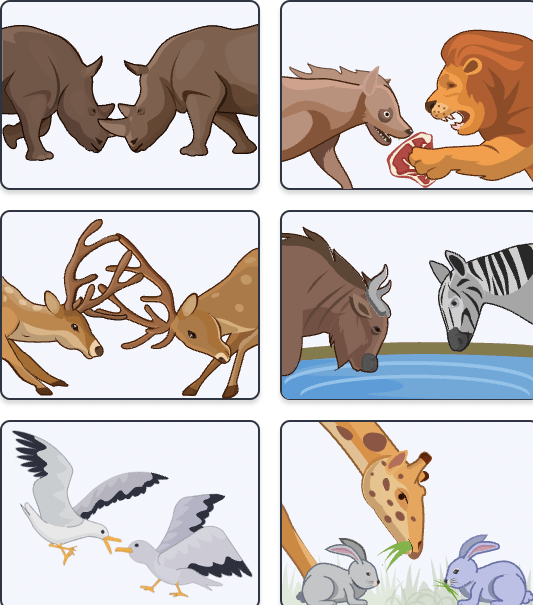 This is an example of... (give name and definition)
Competition, where organisms fight over limited resources.
200
What are the trophic levels, and their type of consumption? There are 5 answers that have multiple parts.
Producers - autotrophs
Primary Consumers - Herbivores - eats only plants
Secondary Consumers - Omnivores - eats plants and animals
Tertiary Consumers - Carnivores - eats only meat
Decomposers - eats dead things
200
Who is missing in this food chain? 
A tertiary consumer / an omnivore / a penguin / a seagull / a carnivore
200
If a student is investigating how different salt levels affect brine shrimp, they must keep the water temperature and light levels the same; these unchanging factors are known as the....
Controlled variables (or constants)
200
When a respiratory virus spreads through a colony of prairie dogs, a scientist argues that the older, weaker individuals are affected more than the healthy adults. What level of biological organization is being discussed in this specific argument?
The Individual level
300
What are the 3 types of symbiotic relationships and their definitions?
Commensalism (+,0) = One benefits while the other isn't helped or harmed.
Mutualism (+, +) = Both organisms benefit
Parasitism (+,-) = One benefits (the parasite) while the other is harmed (the host)
300
Compare a food chain to a food web.
Food chains are a simple model to show who eats who and where energy goes in an ecosystem, while food webs show the interconnectedness /relationships between organisms in an ecosystem.
300
What is this model explaining? Who receives the most energy? Who receives the least? 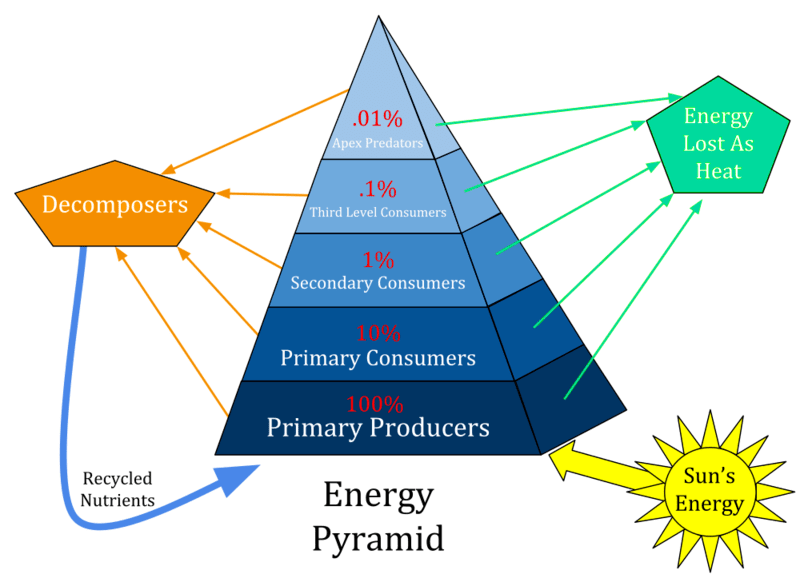
This model shows how energy is lost as you go up the pyramid. Producers receive all the energy from the sun while apex predators receive the least amount of energy from the sun.
300
When planning an investigation to see how soil acidity affects the growth of local ferns, what is the variable that the student must intentionally change.
Independent variable
300
A developer wants to build a shopping mall on a wetland. An environmentalist argues that this will decrease local biodiversity by removing nesting grounds for migratory birds. What specific human action is impacted the birds?
Habitat destruction
400
The flower has evolved a deep, curved shape that hides its nectar. This prevents "nectar robbers" (insects that take nectar without pollinating) from reaching the prize. It also places its pollen-bearing parts in a specific spot that will brush against the bird's head.
Certain hummingbirds, like the Sicklebill, have evolved long, decurved (downward-curving) beaks that match the exact curve of these flowers. This allows them to reach nectar that no other bird or insect can access, reducing competition for food.
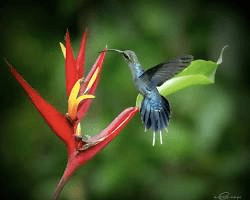
This is an example of...
Coevolution
400
What are the levels of organization starting after organ system?
Organism (Individual), Population, Community, Ecosystem, Biomes (Biospheres)
400
What is this model explaining? Explain what the lines mean and what they're saying. 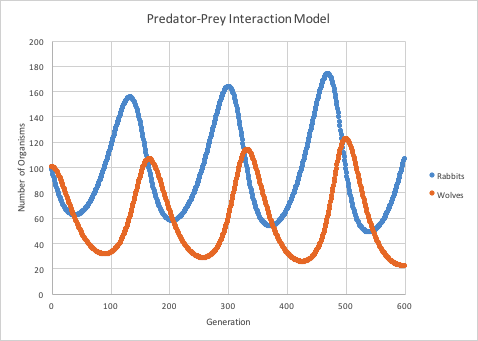
Predators and prey rely on each other for balance within the ecosystem. When there is an increase in the prey population, the predator population will increase soon after. When the predator population increases, then the prey population decreases.
400
A student wants to study how sunlight affects the growth of algae in a pond. What would be the best scientific hypothesis to start their investigation? Underline the independent variable, circle the dependent variable.
If there were an increase in sunlight, then there would be in increase in algae population.
400
A researcher provides a 20-year map showing that a specific species of mountain butterfly is now only found 500 feet higher in elevation than it was in 2006. To argue that climate is the cause, the researcher must link the butterflies' movement to what specific abiotic change?
Increasing temperature (or global warming)
500
_________ have developed adaptations to help them hunt, while __________ have developed adaptations to help them evade (get away). This is called ________.
1.Predators
2.Prey
3. Coevolution
500
What is matter? How does matter flow through an ecosystem? Who helps the most with this system?
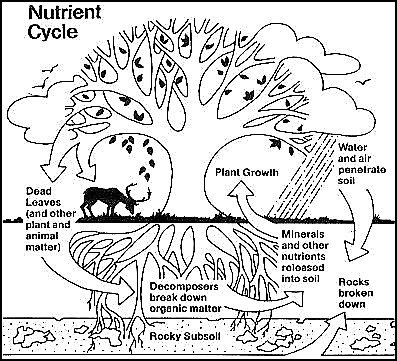
Matter is neither created or destroyed, it is transformed and rearranged. Matter flows through the abiotic and biotic parts of the ecosystem. Decomposers help return the matter back to the soil.
500
What would happen if there was a surplus (large amount) of grasshoppers in this food web? Explain! 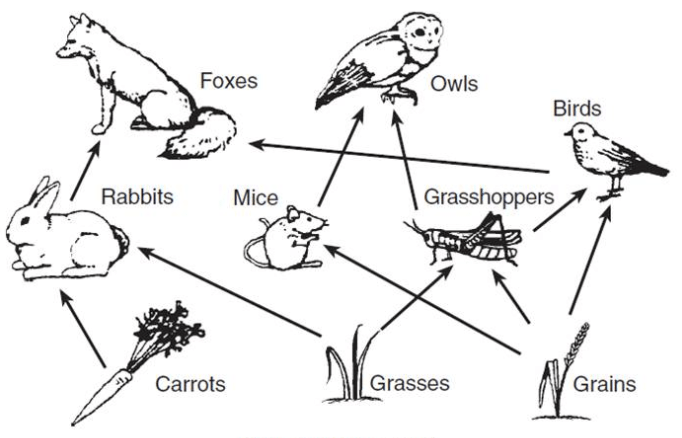
The grasshoppers population would increase, but the grass and grains' population would decline because they are getting consumed quickly. Bird and owl population then increase because they have more food to eat.
500
To ensure an investigation into how drought affects plant growth is "fair" and the results are reliable, a scientist will perform the experiment multiple times, otherwise known as the....
Replicates (or trials)?
500
A researcher provides a 20-year map showing that a specific species of mountain butterfly is now only found 500 feet higher in elevation than it was in 2006. To argue that climate is the cause, the researcher must link the butterflies' movement to what specific abiotic change? Why is global warming the reason for the butterflies moving?
The reasoning is that the butterflies have a specific tolerance range for temperature; as the base of the mountain warms up, they must move higher to stay within their survival zone.