Square Roots
Square Roots
Complete the Square
Complete the Square
100
How many solutions will the equation have?
x^2-6=0
2 solutions.
x^2=6
x=+-sqrt(6)
100
Solve the equation using square roots.
x^2+1=0
no solution
x^2=-1
100
Find the value of c to complete the square.
x^2-22x+c
121
100
Find the value of b that makes x^2+bx+1 a perfect square trinomial.
x^2+2x+1
200
Solve the equation using square roots.
3x^2-12=0
3x^2=12
x^2=4
x=+-2
200
Solve the equation using square roots.
-3x^2+16=-11
-3x^2=-27
x^2=9
x=+-3
200
Complete the square for the expression. Then factor the trinomial.
x^2+7x
x^2+7x+49/4
(x+7/2)^2
200
Complete the square for the expression. Then factor the trinomial.
x^2+24x
x^2+24x+144
(x+12)^2
300
Solve the equation using square roots.
(x+4)^2=49
x+4=+-7
x=3, x=-11
300
Solve using square roots.
(2x+1)^2=25
2x+1=+-5
2x+1=5, 2x+1=-5
2x=4, 2x=-6
x=2, x=-3
300
Solve the equation by the completing the square.
x^2-8x=9
x^2-8x+16=9+16
(x-4)^2=25
x-4=+-5
x=9, -1
300
Solve the equation by the completing the square.
x^2+4x=5
x^2+4x+4=5+4
(x+2)^2=9
x+2=+-3
x=1, -5
400
Solve the equation using square roots.
81x^2-49=-24
81x^2=25
x^2=25/81
x=+-5/9
400
Solve the equation using square roots.
(3x+1)^2=25
3x+1=+-5
3x+1=5, 3x+1=-5
3x=4, 3x=-6
x=4/3, x=-2
400
Solve the equation by the completing the square.
3x^2-12x=18
x^2-4x=6
x^2-4x+4=6+4
(x-2)^2=10
x-2=+-sqrt(10)
x=2+sqrt(10), 2-sqrt(10)
400
Solve the equation by the completing the square.
x^2+10x+8=-9
x^2+10x=-17
x^2+10x+25=-17+25
(x+5)^2=8
x+5=+-2sqrt(2)
x=-5+2sqrt(2), -5-2sqrt(2)
500
Solve the equation using square roots. (Simplified fraction or decimal)
25(x+2)^2=49
(x+2)^2=49/25
x+2=+-7/5
x=-2+-7/5
x=-3/5, -17/5
x=-0.6, -3.4
500
Solve the equation using square roots. (Simplified fraction or decimal)
4(x-10)^2=9
(x-10)^2=9/4
x-10=+-3/2
x=10+-3/2
x=23/2, 17/2
x=11.5, 8.5
500
Find the value of x. (Leave answer as a radical)
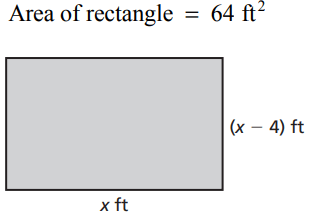
x(x-4)=64
x^2-4x=64
x^2-4x+4=64+4
(x-2)^2=68
x-2=+-2sqrt(17)
x=2+2sqrt(17)
500
Find the value of x.
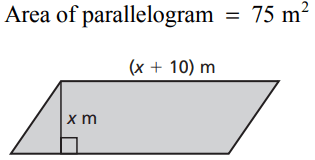
x(x+10)=75
x^2+10x=75
x^2+10x+25=75+25
(x+5)^2=100
x+5=+-10
x=5 or x=-15
x=5 because length cannot be negative