Graphing Polynomials
Division!
Factor Theorem
Graphing Reciprocal Functions
Graphing other functions with asymptotes
100
Using your graphing calculator, approximate the relative minimums/maximums, real zeros, and y-intercept of P(x) = x⁴-x³+x²-3x + 1 to the nearest hundredth.
How many real zeros and how many imaginary zeros are there?
relative minima: (1, -1)
relative maxima: none
zeros: 0.37, 1.43
y-intercept: 1
2 real and 2 imaginary
100
What is the remainder when x⁵ - 2x⁴ + 3x² -1 is divided by x -2?
11
100
Find a polynomial equation with integral coefficients that has 2, -1 and 2/3 as solutions.
3x³ - 5x² - 4x + 4 =0
100
Identify the asymptotes of this graph:
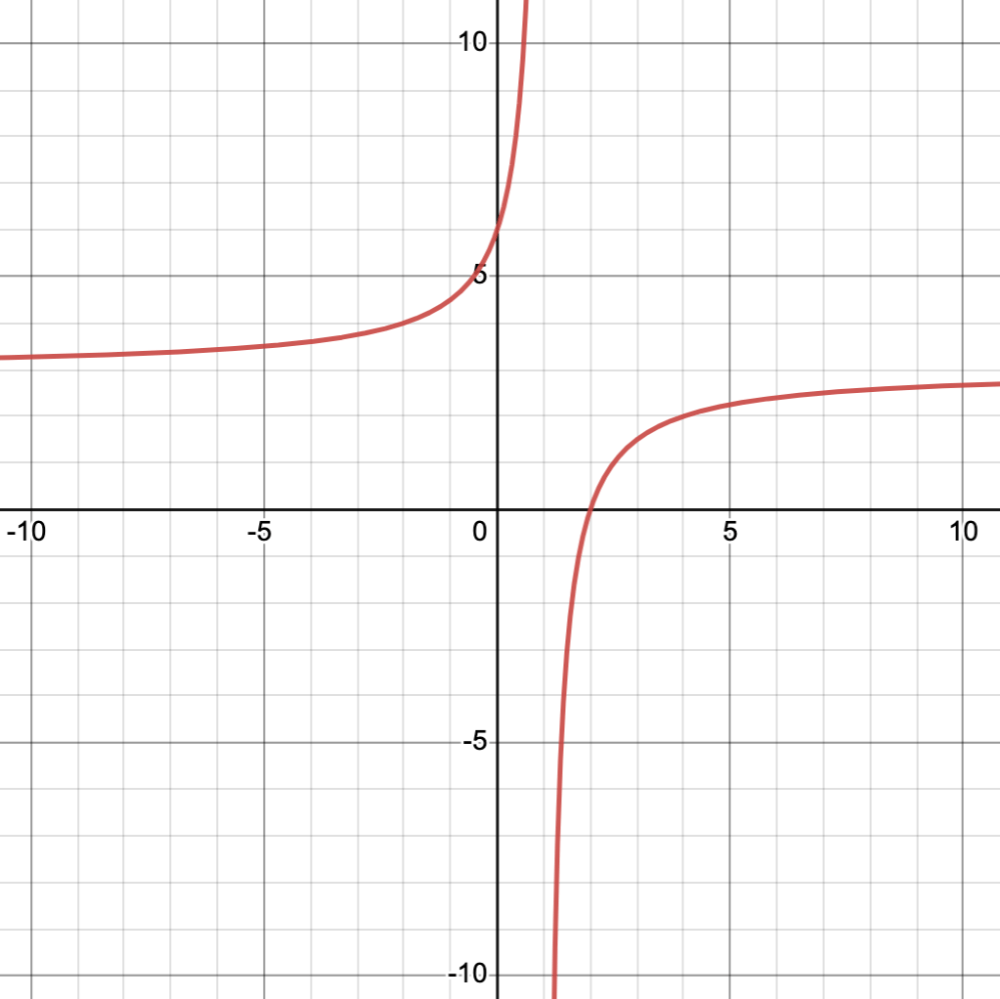
Horizontal Asymptote: x = 1 and
Vertical Asymptote: y = 3
100
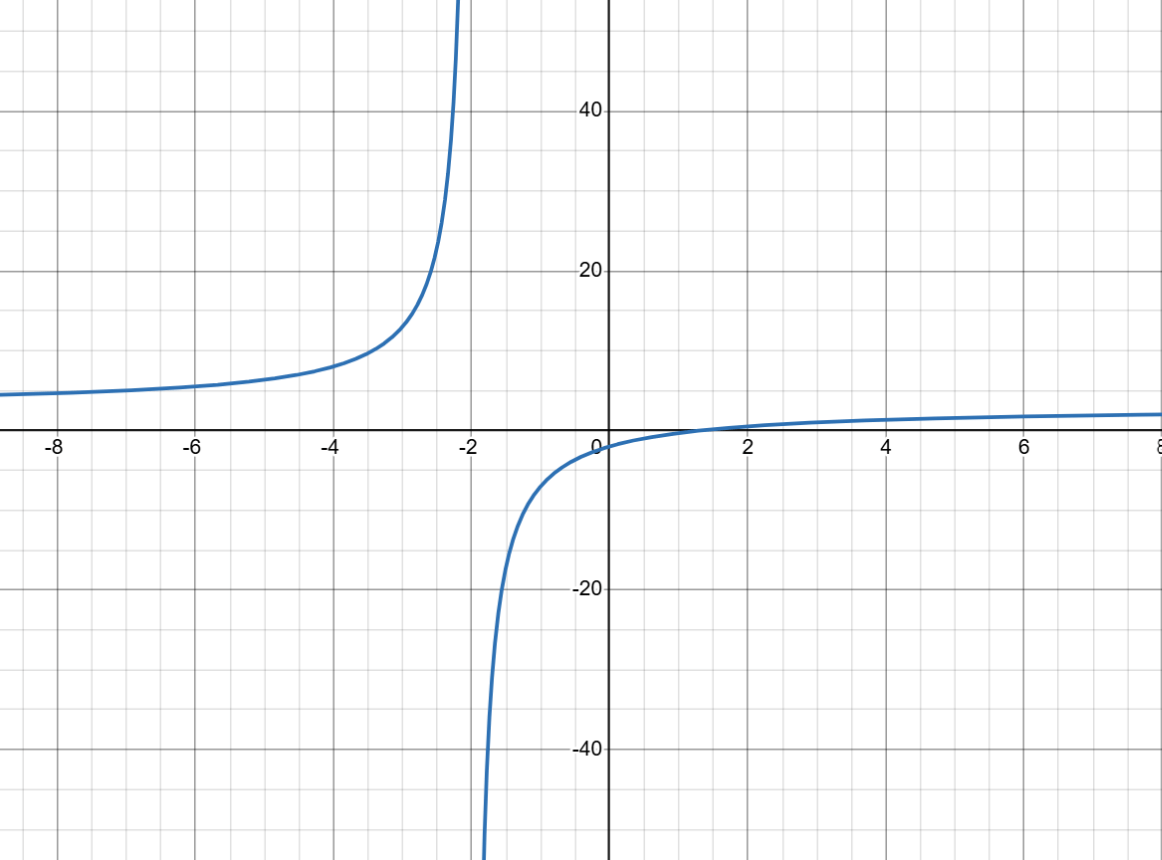
Divide, identify the asymptotes, and graph:
(3x-4)/(x+2)
y=3-10/(x+2), x=-2, y=3
200
Find all the real & imaginary zeros of
x^3-2x-4
hint: Graph the polynomial, find the real zero, then use synthetic division to find the quadratic factor, then solve that.
x=2
x= -1+ i
x= -1 - i
200
Divide x⁴ -3x³ + 6x -5 by x² -2x + 2.
x² - x - 4+ 3/(x² -2x + 2)
200
Solve t3-11t +20 =0 if -4 is a solution.
{-4, 2+i, 2-i}
200
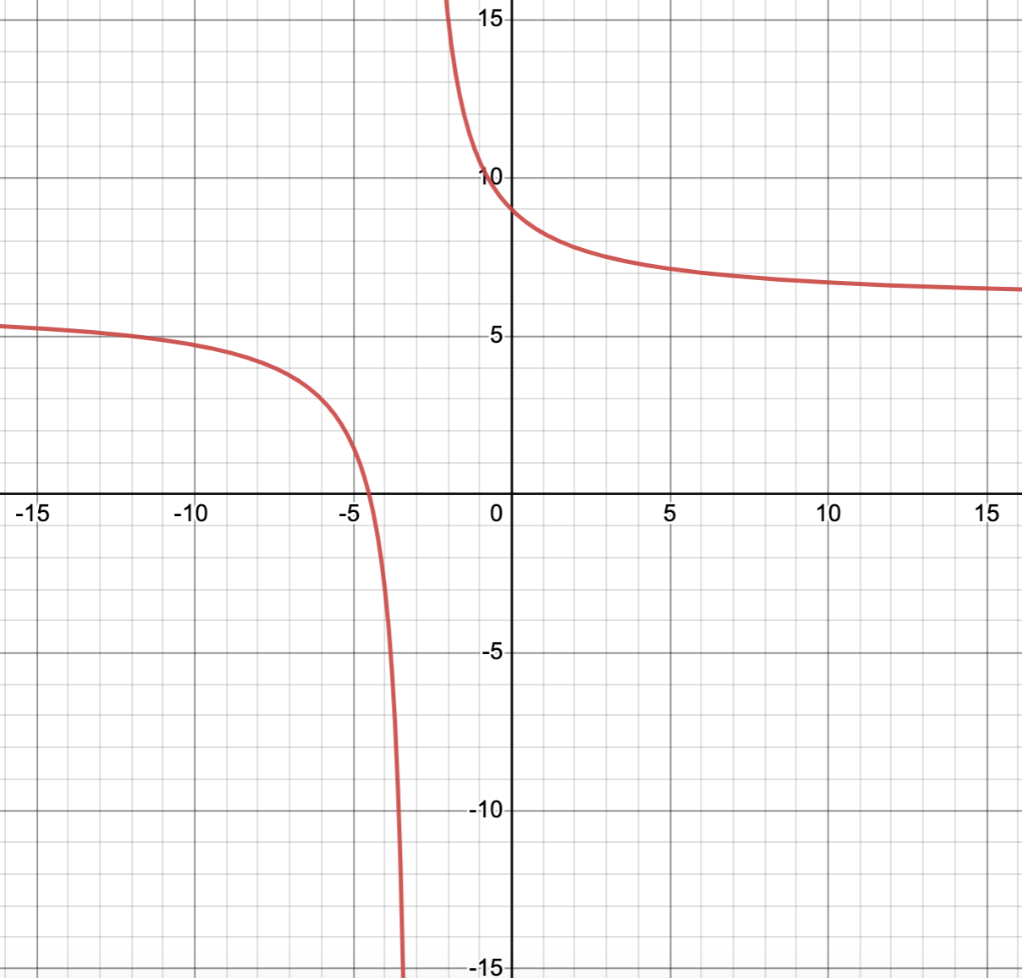
Identify the asymptotes and graph:
y = 9/(x+3) +6
HA: y = 6
VA: x = -3
200
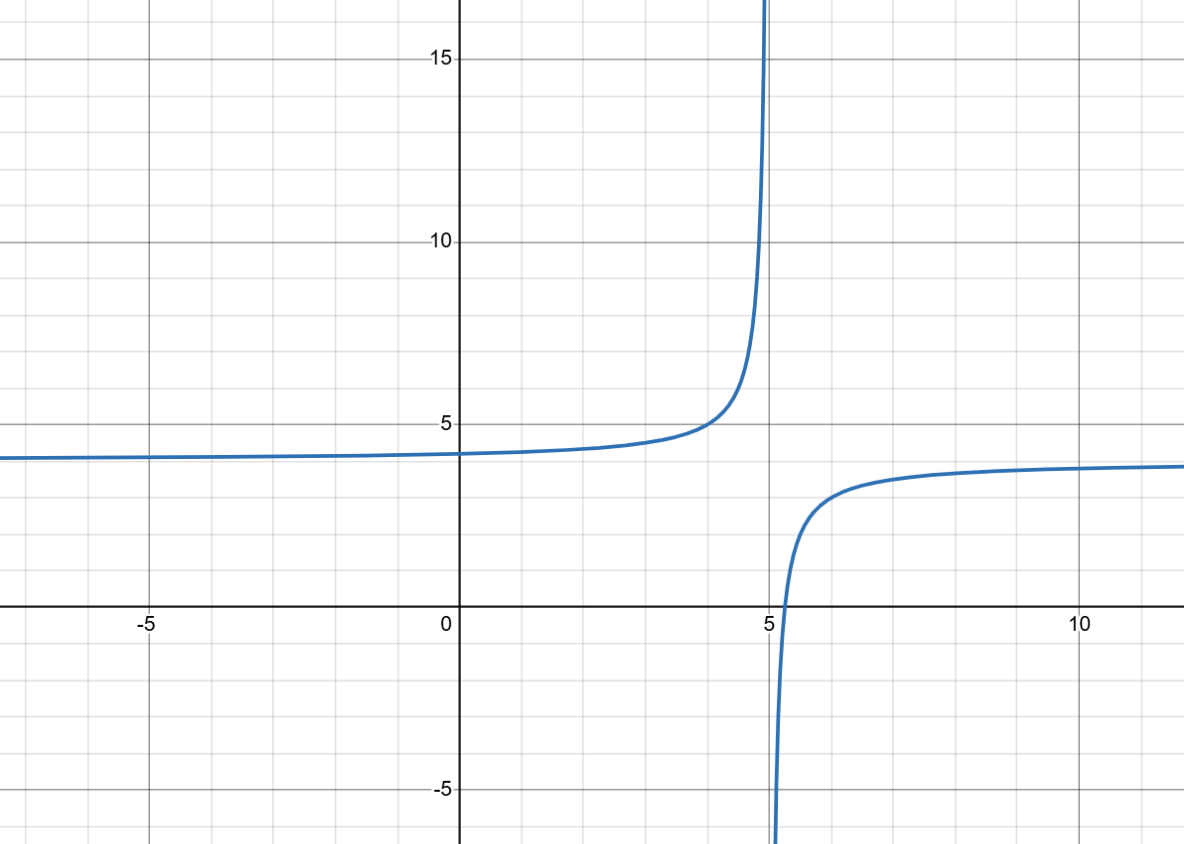
Divide, graph, and identify the asymptotes:
y=(4x-21)/(x-5)
y=4-1/(x-5)
HA: y=4, VA: x=5
300
Use your graphing calculator, approximate the relative extrema, real zeros, and y-intercept of P(x) =x4-3x3+x+5 to the nearest hundredth.
How many real zeros and how many complex zeros are there?
relative minima: (2.20, -1.32), (-0.31, 4.79)
relative maxima: (0.36, 5.24)
zeros: 1.76, 2.54
y-intercept: 5
2 real and 2 imaginary
300
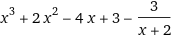
Divide x⁴ + 4x³ -5x + 3 by x + 2
300
Using the factor theorem, determine whether x+1 is a factor of x6-x5-x+1
No
300
The asymptotes of this function:
f(x) = 6/x-3
What are x = 0 and y = -3
400
Make a polynomial function of degree 5 that has a root at x=3, a double root at x=-1, and a root at x=i and x=-i, and a y intercept of -6.
Graph it.
f(x)=2(x-3)(x+1)^2(x^2+1)
f(x)=2x^5-10x^4+16x^3-16x^2+14x-6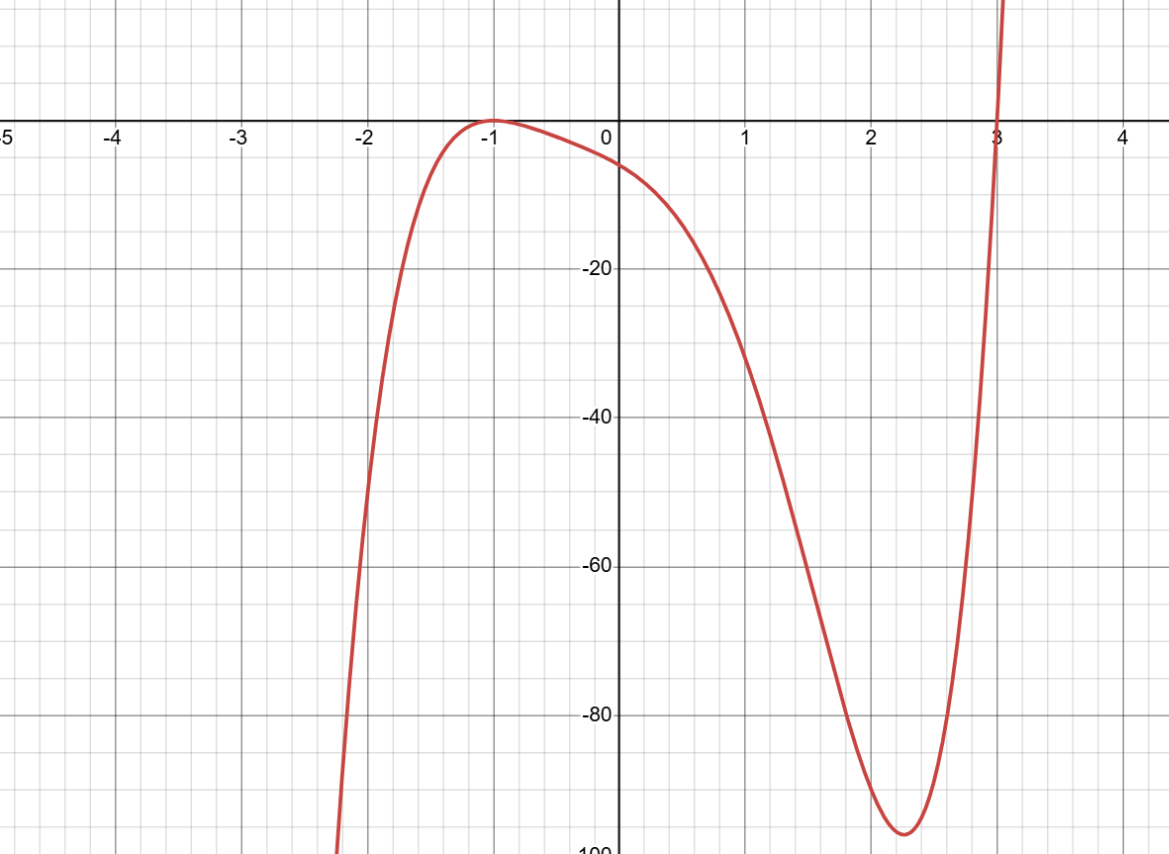
400
Divide: 3x³-x²-4x + 1 by x²-2
3x-1 + (2x-1)/(x²-2)
400
Solve x⁴-4x³+4x² -9 =0 if -1 and 3 are solutions.
{-1, 3, 1 + i√2, 1-i√2}
400
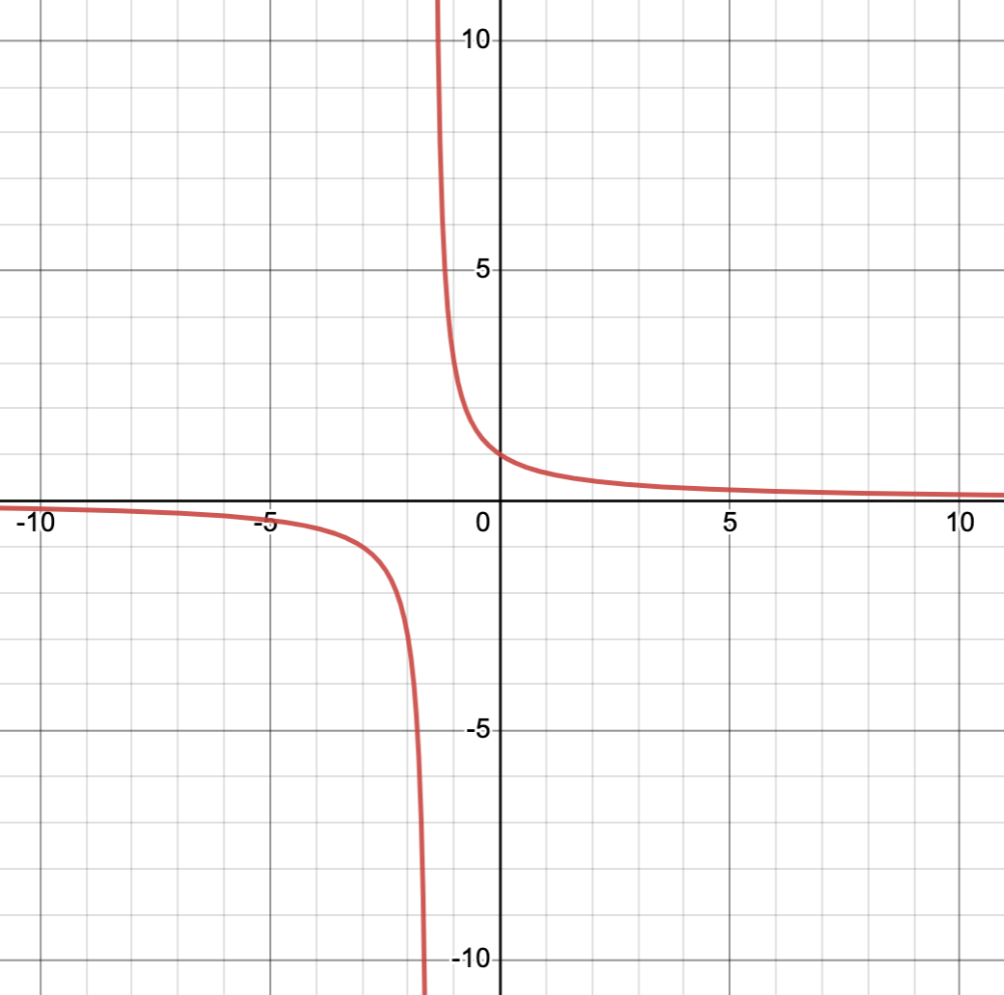
Identify the asymptotes then use them to graph:
y = 3/(2x+3)
H.A.: y = 0
V.A.: x = -3/2
400
Divide, graph, and identify any asymptotes:
(x^2+x-1)/(x+1)
x-1/(x+1)
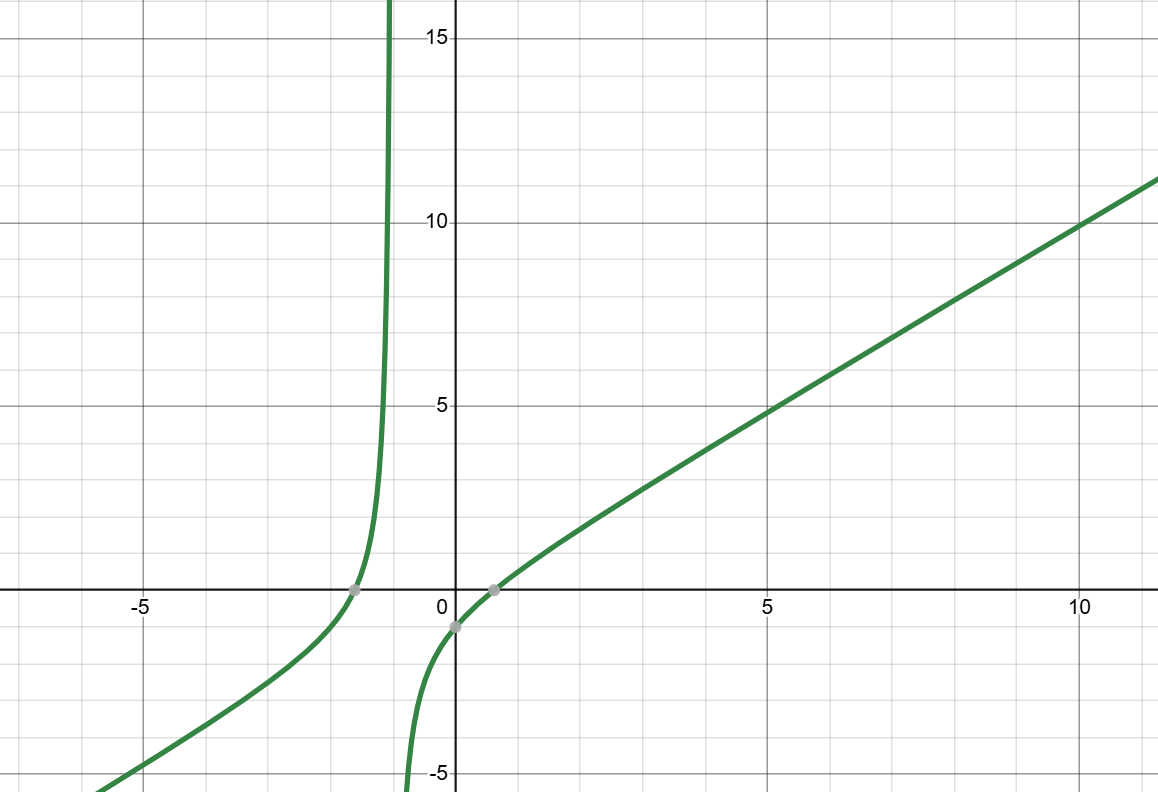
Vertical asymptote:
x=-1
No Horizontal Asymptote.
(Slant asymptote:
y=x
500
Using the graph of the following polynomial, identify all the real and imaginary zeros of
y= x^4+x^3-8x-8
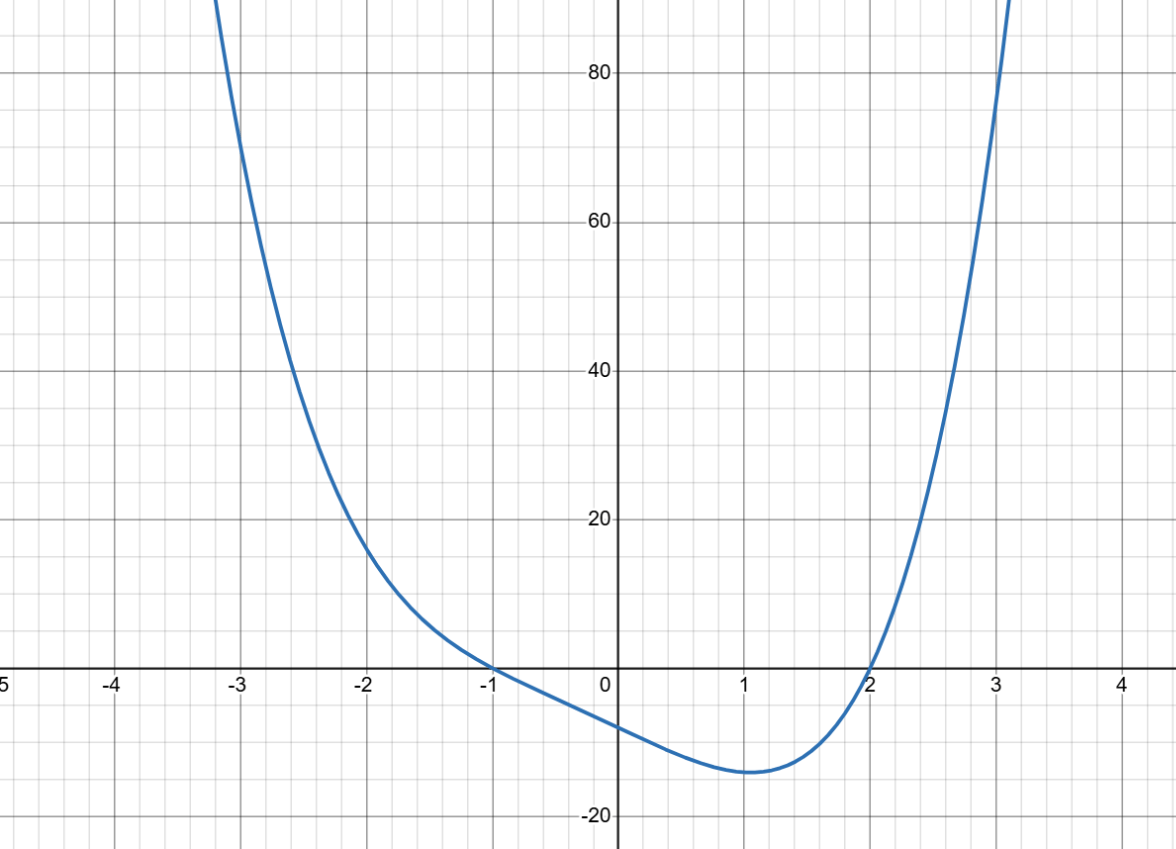
x=-1
x=2
x=-1-i\sqrt(3)
x=-1+i\sqrt(3)
500
Solve 2x⁴ + 3x³-11x² + 2x + 4 =0 completely if 1 and -1/2 are solutions.
{-1/2, 1, -1 + √5, -1 - √5}
500
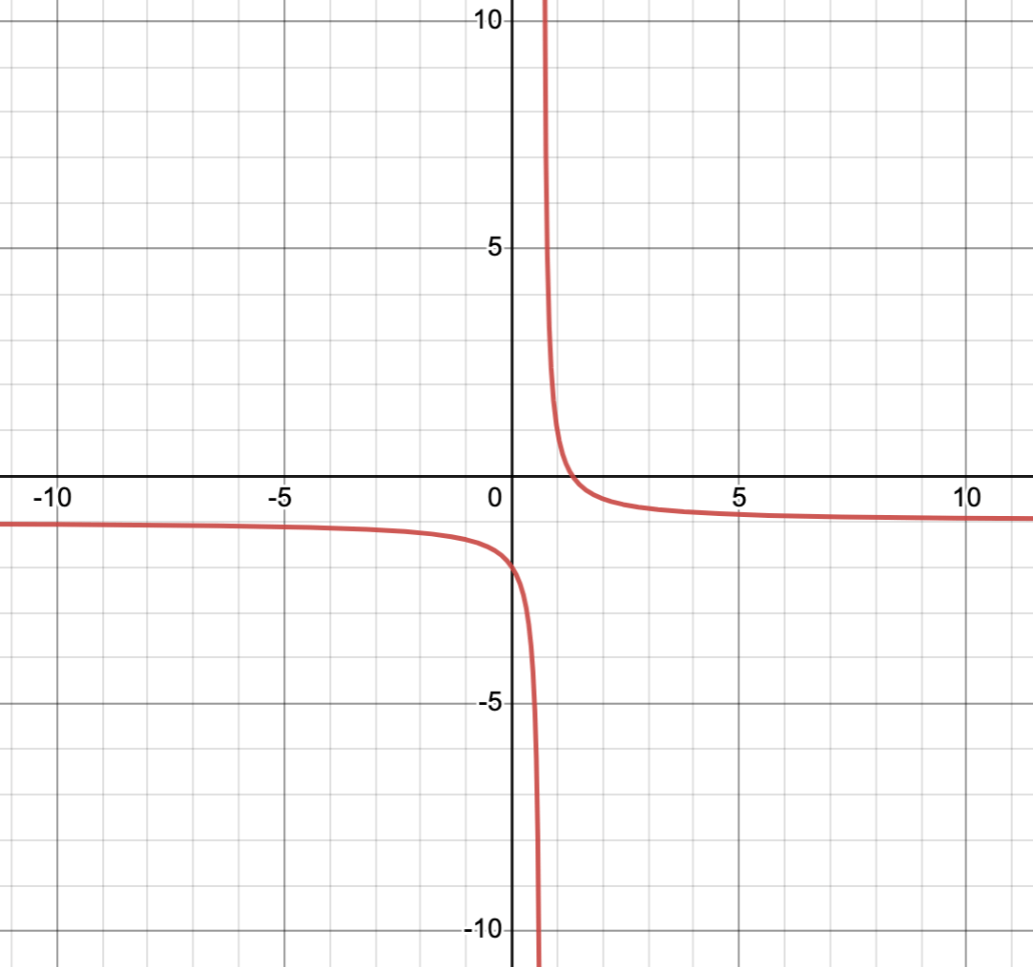
Identify the asymptotes then use them to graph:
y = 2/(3x-2) -1
horizontal: y = -1
vertical: x = 2/3
500
Divide, identify the vertical asymptote, and graph:
(x^3+x^2-10x+9)/(x-2)
x^2+3x-4+1/(x-2)
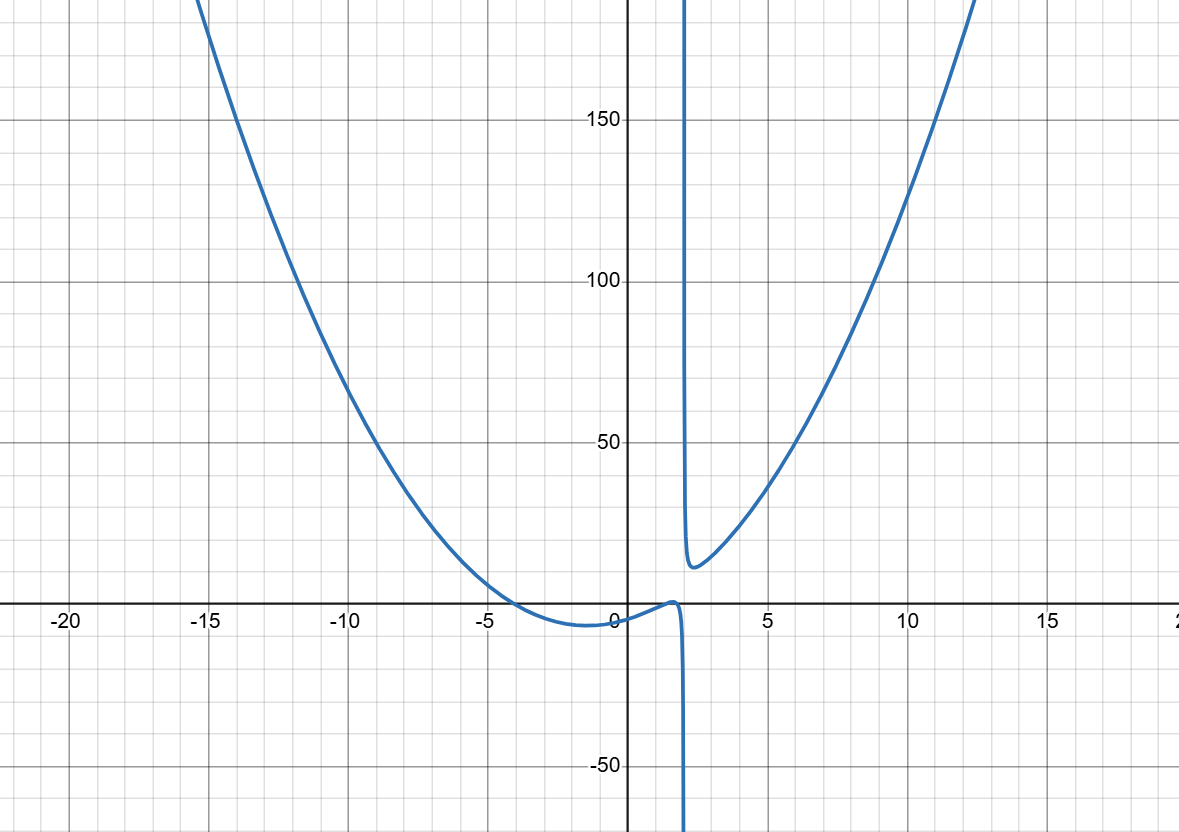
x^2+3x-4+1/(x-2)