Proportions
Percents
Conversions & Unit Rates
Direct Variation
Inverse Variation
Grab Bag
Final Jeopardy
100
Solve the proportion:
m/18 = 35/42
What is m = 15?
100
What number is 32% of 150?
What is 48?
100
How many feet are in 3.5 miles?
(1 mile = 5,280 feet)
What is 18,480 feet?
100
y varies directly with x. When x = 4, y = 14.
Find the constant of variation and write the equation.
What is k = 3.5 and y = 3.5x?
100
y varies inversely with x. When x = 4, y = 9.
Find the constant of variation and write the equation.
What is k = 36 and y = 36/x?
100
Fill in the blanks:
In a direct variation, the __________ y/x is constant.
In an inverse variation, the __________ xy is constant.
What are the ratio (direct) and the product (inverse)?
200
A survey found that 3 out of every 8 students ride the bus to school. The school has 640 students.
Write and solve a proportion to estimate how many students ride the bus.
What is 3/8 = x/640, so about 240 students?
200
Write a proportion for this question, then solve it:
27 is what percent of 60?
What is 27/60 = p/100, so 45%?
200
A 24-oz box of cereal costs $4.32. A 15-oz box costs $2.85.
Which box is the better buy? Use unit rates to prove it.
What is the 24-oz box ($0.18 per ounce vs. $0.19 per ounce)?
200
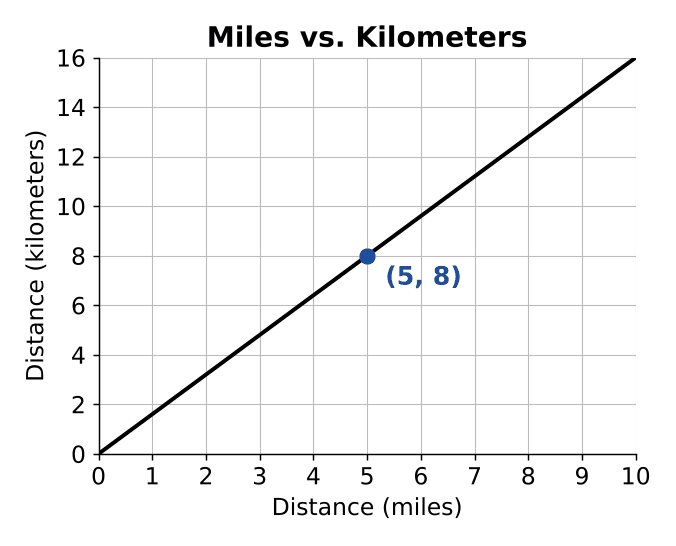
The graph shows a direct variation between miles (x) and kilometers (y). (The point given is (5,8)
Find the constant of variation, write the equation, and convert 30 miles to kilometers.
What is k = 1.6, y = 1.6x, and 48 km?
200
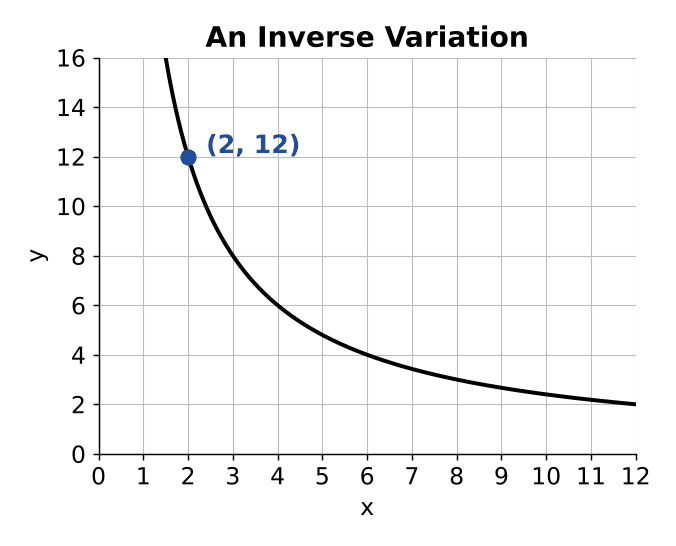
The graph shows an inverse variation.
Write its equation, then find y when x = 8. (the point is (2,12) if you cannot see it)
What is y = 24/x and y = 3?
200
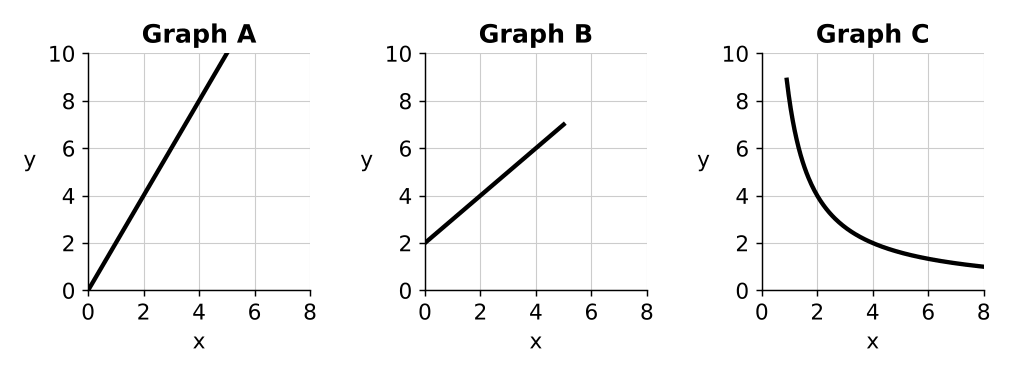
Which graph shows direct variation? Which shows inverse variation? Which shows neither? How can you tell?
What is A: direct (straight line through the origin), C: inverse (a curve that never touches the axes), and B: neither (straight, but it does not go through the origin)?
300
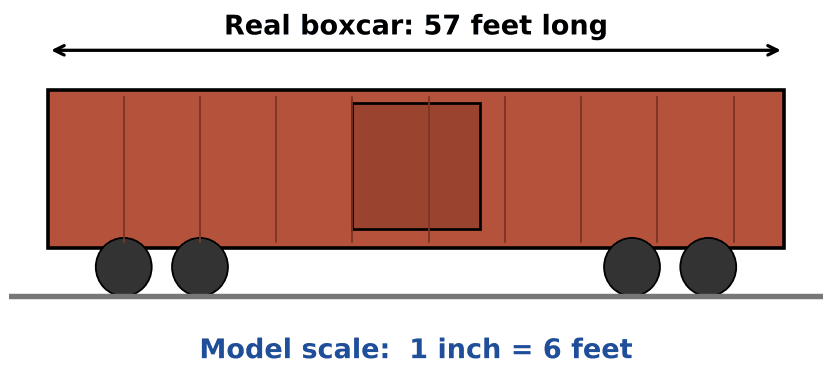
A model train is built so that 1 inch on the model represents 6 feet on the real train. A real boxcar is 57 feet long.
How long is the model boxcar, in inches?
What is 9.5 inches?
300
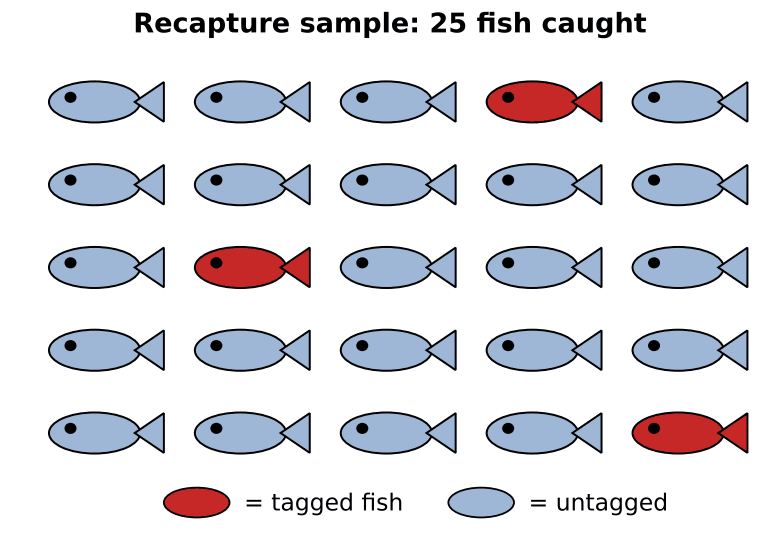
Biologists tagged 120 fish and released them into a lake. A week later they caught the sample shown above.
Estimate the number of fish in the lake.
What is about 1,000 fish?
300
Liam converted 22 feet per second to miles per hour like this:
(22" ft")/(1" s") * (5280" ft")/(1" mi") * (60" s")/(1" min") * (60" min")/(1" h")
Explain his mistake. Then find the correct speed.
What is: his feet-to-miles factor is upside down, so the feet don't cancel (use (1" mi")/(5280" ft")); the correct speed is 15 mi/h?
300
Select all that show direct variation. Justify each choice.
A. y = 7x
B. y = x + 7
C. y/x = 0.25
D. xy = 7
E.
| x | 2 | 5 | 8 |
| y | 3 | 7.5 | 12 |
What are A, C, and E? (Each has a constant ratio y/x. B adds 7, and D is an inverse variation.)
300
Decide whether each table shows direct variation, inverse variation, or neither. Show your evidence.
Table A
| x | 2 | 4 | 6 | 8 |
| y | 30 | 15 | 10 | 7.5 |
Table B
| x | 2 | 4 | 6 | 8 |
| y | 5 | 10 | 15 | 20 |
Table C
| x | 2 | 4 | 6 | 8 |
| y | 11 | 9 | 7 | 5 |
What is A: inverse (every xy = 60), B: direct (every y/x = 2.5), C: neither (the sum is constant, not the product or the ratio)?
300
Explain why multiplying a measurement by a conversion factor does not change its length:
5" ft" * (12" in")/(1" ft") = 60" in"
What is: the conversion factor equals 1, because 12 inches and 1 foot are the same length, so you are only multiplying by 1?
400
Jordan solved 3/x = 12/20 by writing 3 * 12 = 20x and got x = 1.8.
Explain Jordan's mistake, then find the correct value of x.
What is: he multiplied the wrong pair (cross-multiply 3 * 20 = 12x), so x = 5?
400
A jacket is on sale for 35% off. The sale price is $52.
Maya says the original price was $70.20 because 35% of 52 is 18.20, and 52 + 18.20 = 70.20.
Is Maya correct? Explain, then find the original price.
What is: No. $52 is 65% of the original price, not 100% of it, so the original price is $80?
400
A car is traveling at 45 miles per hour.
a. What is that speed in feet per second?
b. The driver looks down at a phone for 3 seconds. How many feet does the car travel while the driver is not watching the road?
What is (a) 66 ft/s and (b) 198 feet?
400
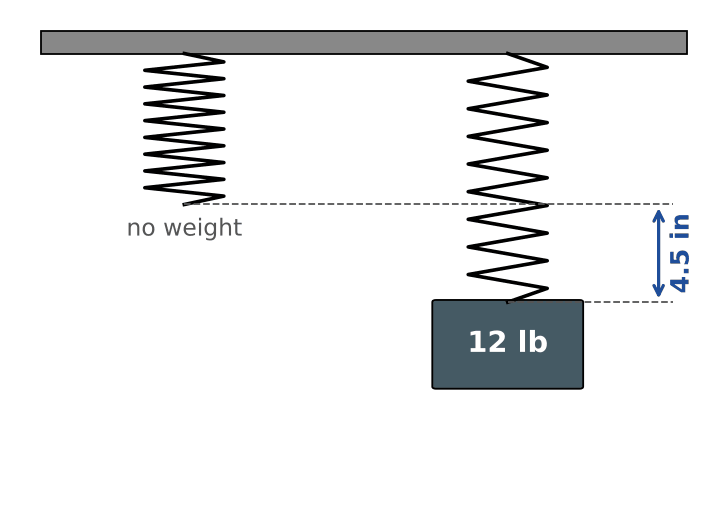
The distance a spring stretches varies directly with the weight hung on it. A 12-lb weight stretches the spring 4.5 inches.
a. How far will a 20-lb weight stretch it?
b. What weight stretches it 6 inches?
What is (a) 7.5 inches and (b) 16 lb?
400
The time it takes to paint a house varies inversely with the number of painters. 6 painters can finish in 15 hours.
a. How long would 9 painters take?
b. How many painters are needed to finish in 5 hours?
What is (a) 10 hours and (b) 18 painters?
400
For each problem, which tool would you use: a proportion (direct variation), conversion factors, or inverse variation? Explain how you decided. (You do not need to solve.)
a. 5 notebooks cost $8.75. What do 12 notebooks cost?
b. How many seconds are in 3 hours?
c. 4 workers take 6 hours to finish a job. How long would 8 workers take?
What is (a) a proportion: more notebooks cost more at the same rate, (b) conversion factors: you are changing units, and (c) inverse variation: more workers means less time?
500
The ratio of boys to girls in the marching band is 3 : 5. There are 12 more girls than boys.
How many students are in the band?
What is 48 students (18 boys and 30 girls)?
500
Park rangers tagged 240 deer. Later they took three samples:
| Sample | Deer caught | Tagged |
| 1 | 40 | 5 |
| 2 | 60 | 7 |
| 3 | 50 | 6 |
Using all three samples together, what percent of the deer were tagged? Estimate the deer population.
What is 12% tagged, so about 2,000 deer?
500
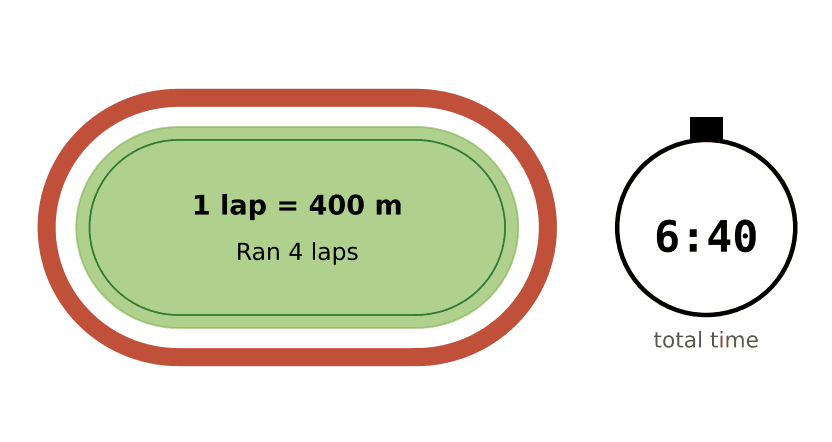
A runner completed 4 laps of a 400-meter track in 6 minutes 40 seconds.
What was her average speed in kilometers per hour?
What is 14.4 km/h?
500
1 U.S. dollar = 18.5 Mexican pesos.
a. Write a direct variation equation that converts dollars (x) to pesos (y).
b. A hotel in Cancún costs 1,850 pesos per night. A hotel in Miami costs $95 per night. Which hotel is cheaper per night, and by how much?
What is (a) y = 18.5x and (b) the Miami hotel, by $5 (1,850 pesos = $100)?
500
Lance's travel time to school varies inversely with his speed. Biking at 12 mi/h, he gets to school in 15 minutes.
| Way to school | Speed (mi/h) | Time (minutes) |
| Bike | 12 | 15 |
| Walk | 4 | ? |
| Car | 30 | ? |
a. Fill in the missing times.
b. How far does Lance live from school?
What is (a) walking takes 45 minutes and the car takes 6 minutes, and (b) 3 miles?
500
Field trip tickets cost $12 each. The $600 bus is split evenly among the students who go. Right now 30 students are going.
If the number of students doubles:
a. What happens to the total cost of the tickets?
b. What happens to each student's share of the bus?
Tell whether each one is a direct or an inverse variation.
What is (a) it doubles, from $360 to $720 (direct variation), and (b) it is cut in half, from $20 to $10 (inverse variation)?
500
A road trip takes 2.5 hours at 60 miles per hour. Travel time varies inversely with speed.
How much time do you save if you drive 75 miles per hour instead?
What is 30 minutes? (At 75 mi/h the trip takes 2 hours.)