1
2
3
4
100
Which statements are examples of civic virtue?
Select TWO correct answers.
A. George Washington led the Continental Army despite many hardships.
B. King George II raised taxes to increase Great Britain’s wealth.
C. Benedict Arnold changed sides to gain money and personal rewards.
D. Samuel Adams encouraged colonists to participate in government.
E. General Cornwallis focused on winning to advance his military career.
A. George Washington led the Continental Army despite many hardships.
D. Samuel Adams encouraged colonists to participate in government.
100
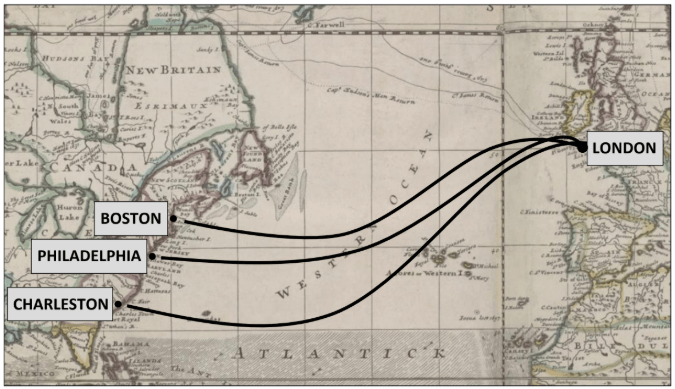
What was a political effect of the geographic locations shown on this map?
A. Colonists participated in British elections and debates.
B. Colonists were governed by Parliament but had no direct representation in it.
C. The colonies easily gained independence due to their distance from Britain.
D. The colonies became allies with France instead of Britain.
B. Colonists were governed by Parliament but had no direct representation in it.
100
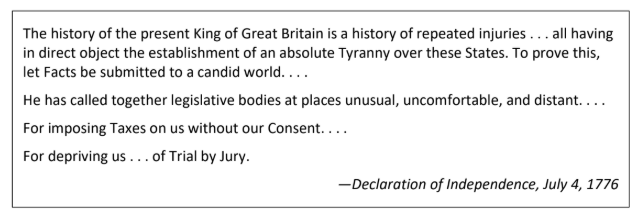
Based on the excerpt, what action led colonists to believe they had no voice in government?
A. Parliament required colonists to serve in the British military.
B. King George III refused to give colonists a fair trial when accused of a crime.
C. King George III imposed martial law over the colonies.
D. Parliament made decisions for the colonies without representation.
D. Parliament made decisions for the colonies without representation.
100
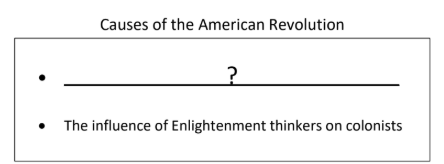
Which of the following best replaces the question mark on this list?
A. The establishment of the Maryland Act of Toleration
B. The abolition of slavery in the Southern colonies
C. The spread of industrialization in the colonies
D. The passage of new British economic polices
D. The passage of new British economic polices
200
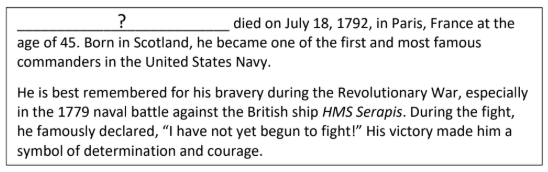
Who is described in the obituary above?
A. Thomas Paine
B. James Armstead
C. John Paul Jones
D. George Washington
C. John Paul Jones
200
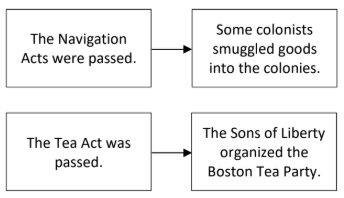
This diagram describes examples of -
A. colonists participating in civil disobedience
B. colonists contributing to the war effort
C. colonists searching for the Northwest Passage
D. colonists establishing self-government
A. colonists participating in civil disobedience
200
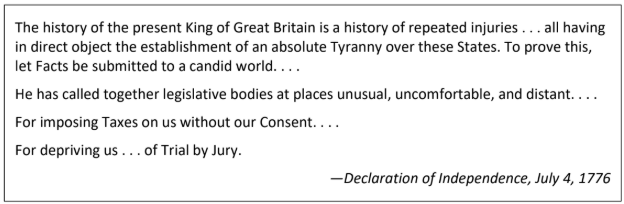
Which phrase from the excerpt provides evidence for the answer to Part A?
A. “. . . let Facts be submitted to a candid world. . . .”
B. “. . . legislative bodies at places unusual, uncomfortable, and distant.”
C. “For imposing Taxes on us without our Consent. . . .”
D. “For depriving us . . . of Trial by Jury.”
C. “For imposing Taxes on us without our Consent. . . .”
200

Which statement correctly replaces the question mark in this cause-and-effect diagram?
A. Great Britain returned the Ohio River Valley to the French.
B. Great Britain taxed colonists to help pay off its war debt.
C. Great Britain formed a new military alliance with France.
D. Great Britain encouraged colonists to settle the Ohio River Valley.
B. Great Britain taxed colonists to help pay off its war debt.
300
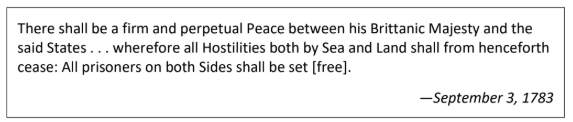
What event led to the creation of this excerpt?
A. The destruction of 342 chests of tea
B. The surrender of General Cornwallis at Yorktown
C. The approval of the Declaration of Independence
D. The passage of the Proclamation of 1763
B. The surrender of General Cornwallis at Yorktown
300
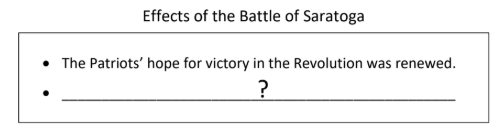
Which phrase correctly replaces the question mark on this list?
A. Great Britain recognized American independence.
B. France agreed to formally support the American Patriots.
C. The Patriots gained control of all British-held territory.
D. The Continental Army captured New York City.
B. France agreed to formally support the American Patriots.
300
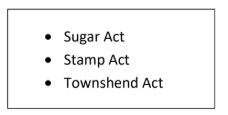
How did the laws in this list contribute to the start of the American Revolution?
A. By violating colonists’ civil liberties
B. By restricting trade with American Indians
C. By outlawing slavery in the thirteen colonies
D. By creating a unified colonial government
A. By violating colonists’ civil liberties
300
What did John Locke say people should do if the government did not protect their rights?
A. They should replace the government.
B. They should move to another country.
C. They should give up their rights.
D. They should obey the government.
A. They should replace the government.
400
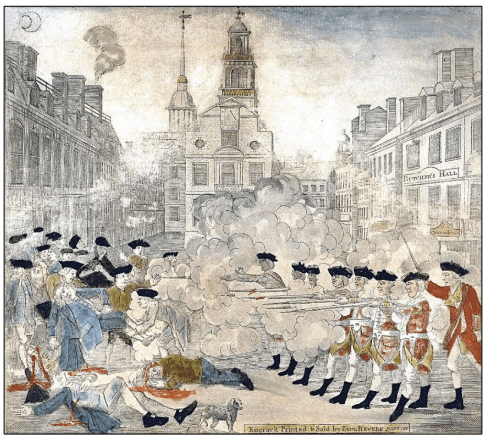
Which individual from the Revolutionary era should be included in this engraving?
A. George Washington
B. King George III
C. Crispus Attucks
D. Wentworth Cheswell
C. Crispus Attucks
400
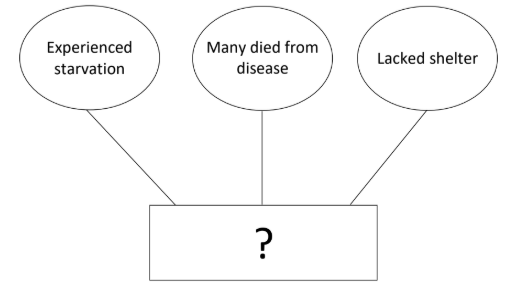
Which event correctly replaces the question mark in this diagram?
A. The Winter at Valley Forge
B. The Battles of Lexington and Concord
C. The First Continental Congress
D. The Treaty of Paris 1783
A. The Winter at Valley Forge
400

Which British policy does this excerpt reference?
A. The Proclamation of 1763
B. The Quartering Act
C. The Tea Act
D. The Navigation Acts
B. The Quartering Act
400
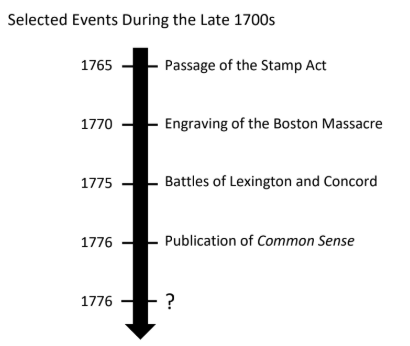
Which event completes this time line?
A. Repeal of the Stamp Act
B. Writing of the Declaration of Independence
C. Battle of Yorktown
D. Signing of the Treaty of Paris
B. Writing of the Declaration of Independence
500
Which geographic feature was designated as the western boundary under the Proclamation of 1763?
A. Boston Harbor
B. Mississippi River
C. Great Lakes
D. Appalachian Mountains
D. Appalachian Mountains
500
Which reason best explains why British leaders supported the Proclamation of 1763?
A. They wanted colonists to explore new lands.
B. They hoped to increase farming in the colonies.
C. They wanted to prevent costly wars with American Indians.
D. They wanted France to give up its land claims in North America.
C. They wanted to prevent costly wars with American Indians.
500
What was one effect of the Battle of Yorktown on the American Revolution?
A. It was the last major battle of the war.
B. It convinced France to support the Patriot cause.
C. It gave Britain control of the Southern colonies.
D. It signaled the start of the American Revolution.
A. It was the last major battle of the war.