Continuous or discontinuous
Extrema/End Behavior
Graphs of Rational Functions
Direct, Inverse, and Joint Variation
100
Name the type of discontinuity show for each one labeled.
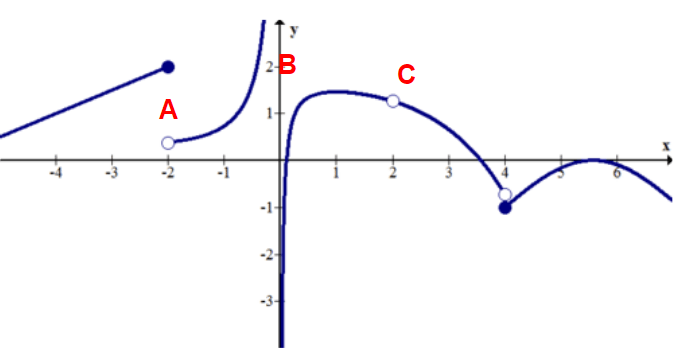
A: Jump
B: Infinite
C: Point
100

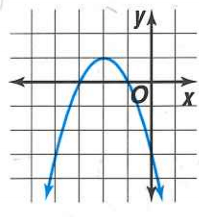
abs. max at (-2,1)
100
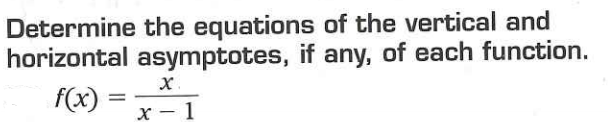
y=1
x=1
100
Direct, inverse, or joint
The graph of the function below is an example of which type of variation?
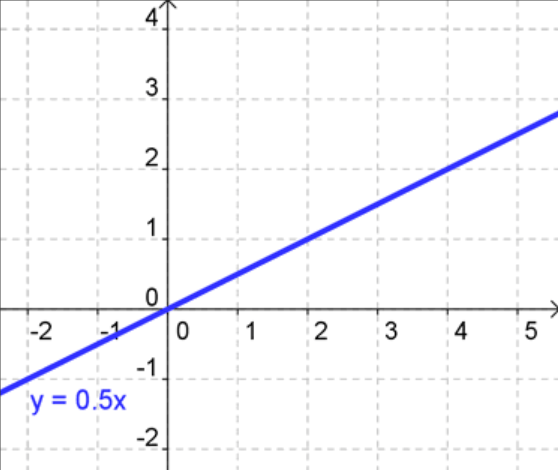
Direct
200

no, discontinuous
200

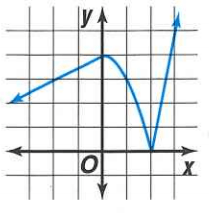
rel. max at (0,4)
rel. min at (2,0)
200

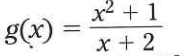
x=-2
200
Direct, inverse, or joint
The graph of the function below is an example of which type of variation?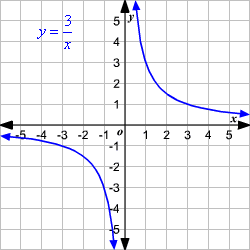
Inverse variation
300
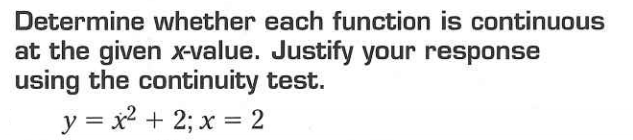
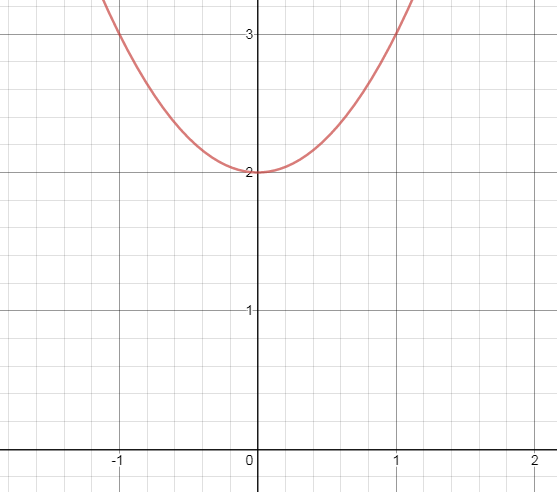
Yes; the function is defined when x=2; the function approaches 6 as x approaches 2 from both sides; and y=6 when x=2
300
Over what interval(s) is the graph increasing?
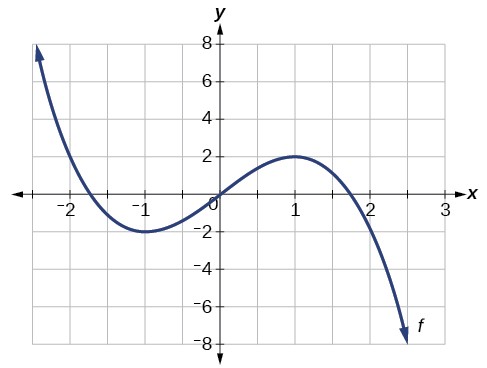
-1<x<1
(-1,1)
300
DAILY DOUBLE!!
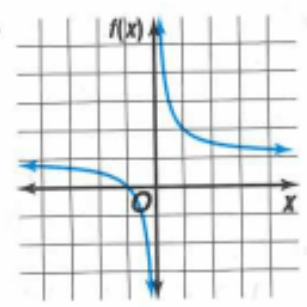
f(x)=1/x+1
300
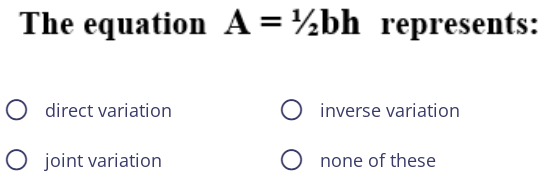
Joint Variation
400

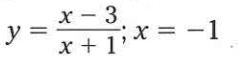
No, the function is undefined at x=-1.
or
No, f(-1) DNE
400

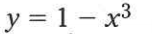
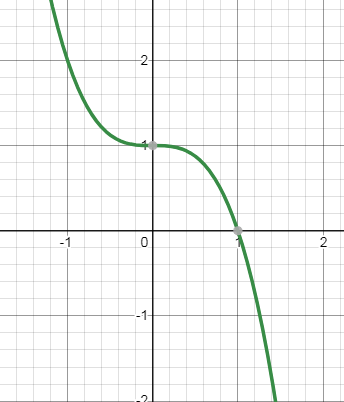

400
If the graph has any holes, list them.

h(x)=(x-3)^2/((x-3)(x+3)
y=1
x=-3
hole at x=3
400

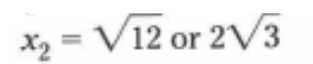
500

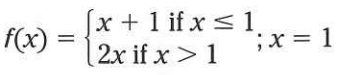
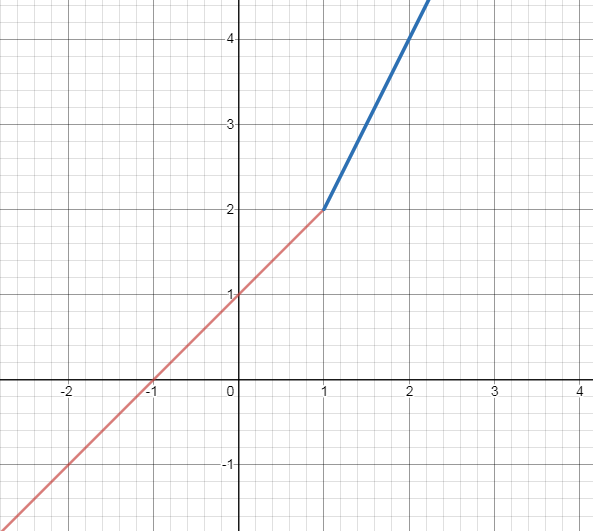
Yes; the function is defined when x=1; the function approaches 2 as x approaches 1 from both sides; and y=6 when x=2
500

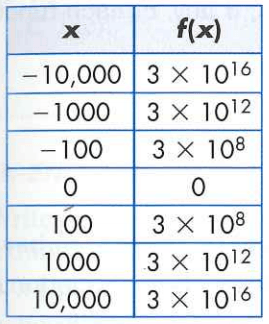
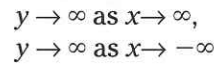
500
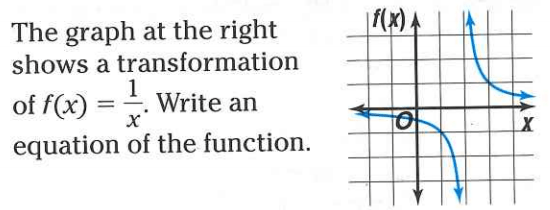
f(x)=1/(x-2)
500


x=196
Constant of Variation: 140
Equation:
y=140/sqrt(x)