Terms
Hunters and Gatherers
Learning to Farm and Raise Animals
The First Communities
Map/Chart Skills
100
The ____________ of grain helped the village to survive during bad times.
a. hunter-gatherer
b. religion
c. surplus
d. community
The surplus of grain helped the village to survive during bad times.
100
What type of people regularly practice migration?
a. artisans
b. farmers
c.nomads
d. villagers
Nomads regularly practice migration
100
Agriculture is _______.
a. raising livestock for food.
b. planting seeds to raise crops.
c. making tools for farming.
d. using plant material for clothing.
Agriculture is planting seeds to raise crops.
100
Surpluses provided ancient people with _______ what they needed to survive.
a. exactly
b. less than
c. more than
d. one-half of
Surpluses provided ancient people with more than what they needed to survive
100
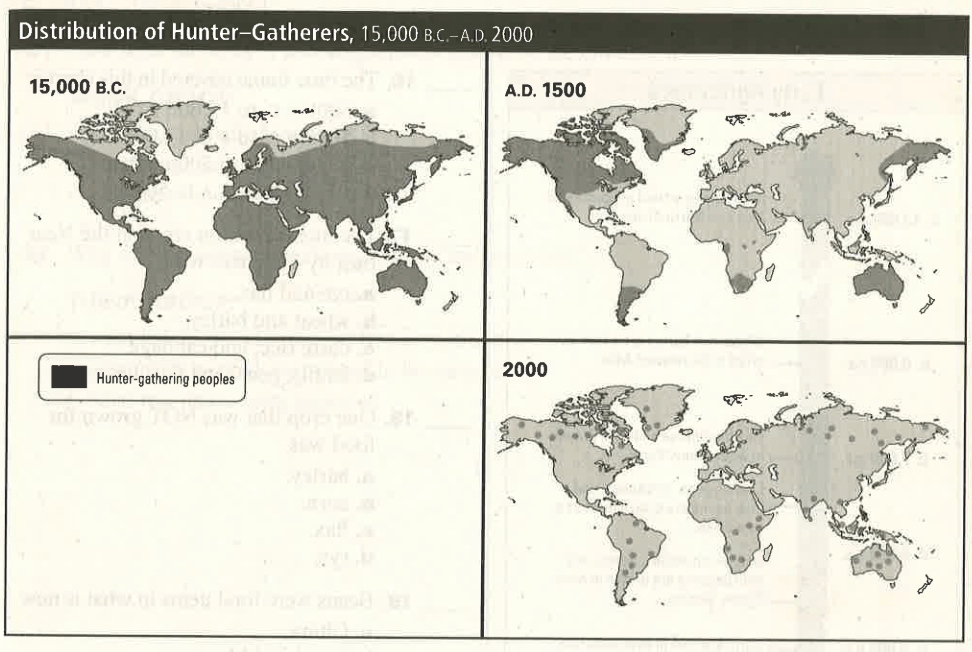
The purpose of this map is to _________.
a. show what the world looked like in 15,000 B.C.
b. show changes in global population.
c. show growth of hunter-gatherer cultures.
d. show the decline in the distribution of hunter-gatherer societies.
The purpose of this map is to show the decline in the distribution of hunter-gatherer societies.
200
Early humans used ___________ to clear the land for farming.
a. specialization
b. government
c. slash-and-burn
d. grazing animals
Early humans used slash-and-burn to clear the land for farming.
200
What is it called when humans moved to new and distant lands?
a. farming
b. gathering
c. hunting
d. migration
Migration is when humans moved to new and distant lands.
200
Irrigation systems are used to ________.
a. find game
b. judge water depth
c. water crops
d. gather wild plants
Irrigation systems are used to water crops.
200
Compared to cities today, most complex villages were ________.
a. advanced
b. empty
c. large
d. small
Compared to cities today, most complex villages were small.
200
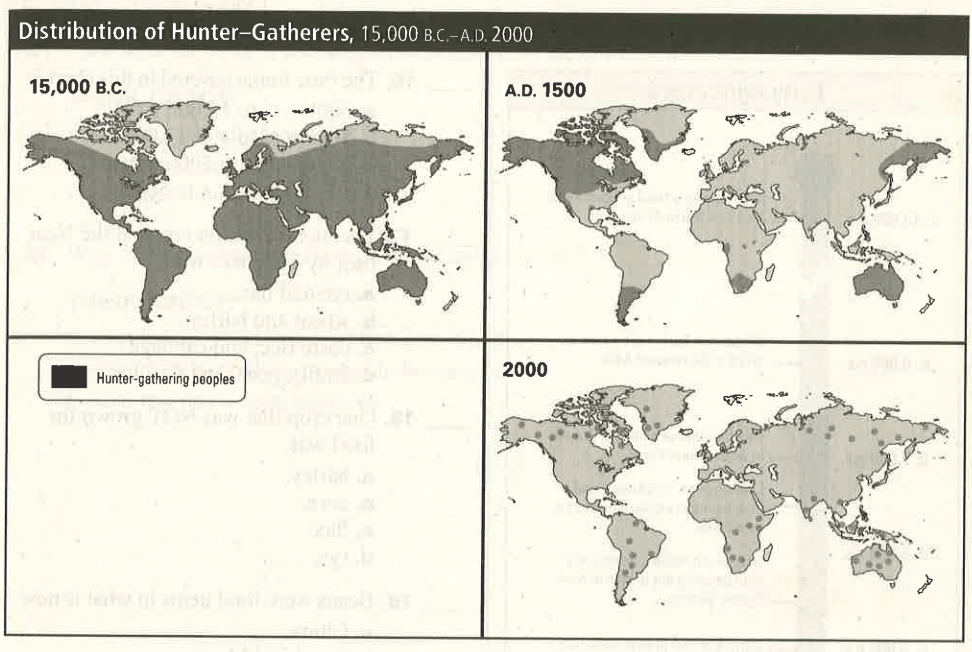
The dark parts of the map represent _________.
a. populations of hunter-gatherers.
b. migration routes of hunter-gatherers
c. settlements of early villages
d. ares where hunter-gatherers find food
The dark parts of the map represent populations of hunter-gatherers
300
Stone tools were some of the first uses of ________.
a. irrigation
b. technology
c. migration
d. agriculture
Stone tools were some of the first uses of technology.
300
Around 500,000 B.C. people learned how to make and control _____________.
a. animals
b. crops
c. fire
d. tools.
Around 500,000 B.C. people learned how to make and control fire.
300
Technology used in ancient irrigation systems included _______.
a. bows and spears
b. dikes and canals
c. plows and carts
d. wheels and pulleys
Technology used in ancient irrigation systems included dikes and canals.
300
A social class is made up of people with _____ customs, background, training, or income.
a. different
b. similar
c. specialized
d. uncommon
A social class is made up of people with similar customs, background, training, or income.
300
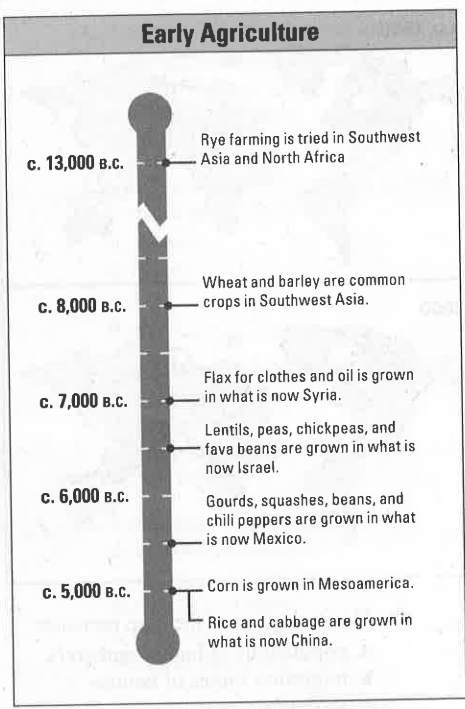
The first crop that people attempted to grow was ______.
a. corn
b. rice
c. rye
d. wheat
The first crop that people attempted to grow was rye.
400
What is a group of people or animals acting together called?
A group of people or animals acting together called a band
400
Why did hunter-gatherers move often?
Hunter-gathers move often in search of food.
400
Name an example of domestication.
(Answers may vary) Domestication is to grow and tend wild plants or animals)
ex: keeping animals like sheep and goats for meat and milk, clothing, bone for tools
400
Give an example of specialized labor.
(Answers may vary) Examples of specialized labor:
potters, weavers, and other craftspeople
400
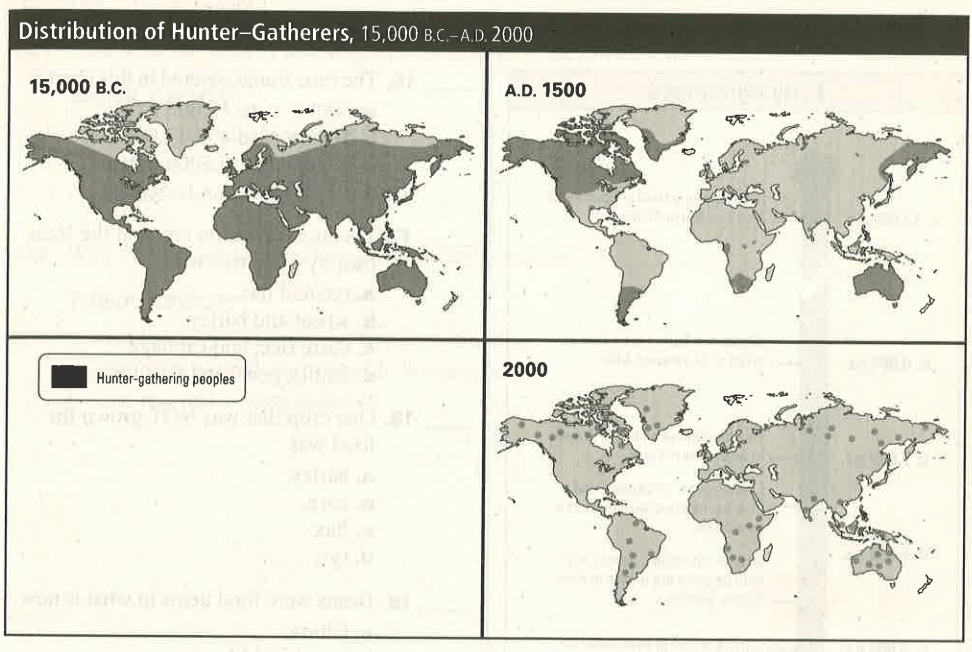
What type of map is this?
This is a thematic map
500
A ________ is a skill in one kind of work.
A specialization is a skill in one kind of work.
500
What three things set humans apart from other creatures?
The three things that set humans apart from other creatures are art, language, and religion.
500
How did farming change the way people lived?
Farming changed the way people lived because they began to settle and live in villages permanently.
500
What were two differences between a complex village and simple village?
Differences between complex and simple villages:
larger population, government, public buildings, specialized workers, more social classes, trading with other villages.
500
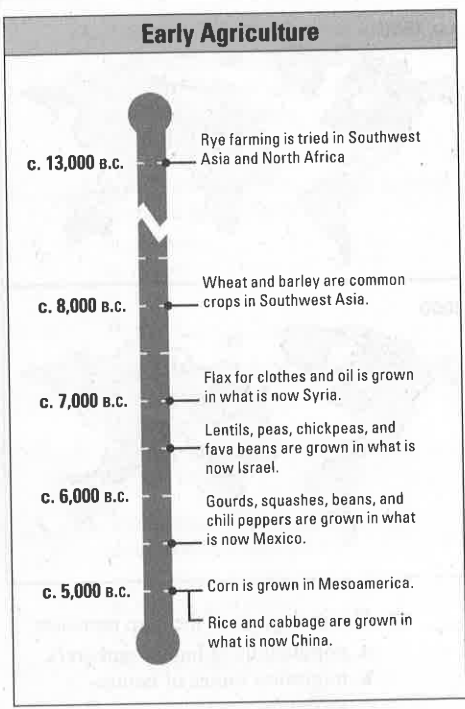
What crop was not grown for food?
flax was not grown for food.