Geography
Polis
Vocabulary
Government
Random
Black History
100
The Greek mainland is located on _____________.
A. a peninsula
B. the island of Pelops
C. Crete
D. Mount Olympus
A. a peninsula
100
How did the Mediterranean Sea influence ancient Greek society?
A. Enabled maritime trade
B. Blocked travel between city-states
C. Led to isolation
D. Reduced the need for navy
A. Enabled maritime trade
100
What does the concept of polis refer to?
A. a ruler
B. an oligarchy
C. the body of citizens
D. a monarchy
C. the body of citizens
100
a government in which a small group has control
What is an Oligarchy
100
first African-American president of the United States of America
Barack Obama
100
first African-American president of the United States of America / Also, where is he from? (geography)
Barack Obama / Honolulu, Hawaii, U.S.
200
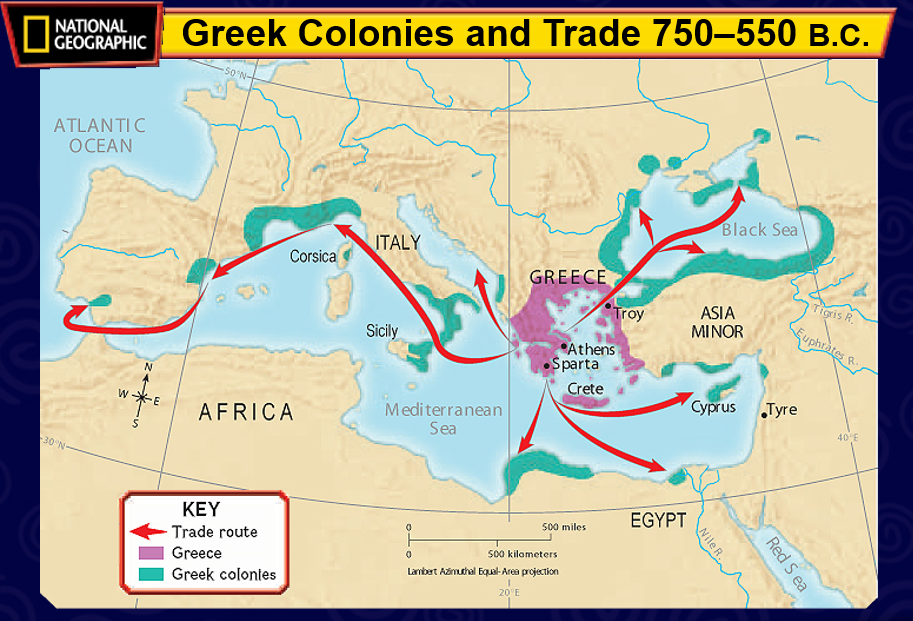
Based on the map, what is similar about all the Greek colonies?
A. They are all located in Africa and Asia.
B. Their locations were so spread out that it made trade difficult.
C. They are all located along the coast.
D. They are all located very close to the Greek peninsulas
C. They are all located along the coast.
200
Sparta was ruled by
A. an oligarchy with a council of elders that consisted of land-owning males
B. a tyrant with a council of merchants
C. democracy with an assembly of land-owning males
D. a military commander with a council of merchants
A. an oligarchy with a council of elders that consisted of land-owning males
200
A piece of land that protrudes out into a larger body of water. Typically surrounded on 3 sides.
a peninsula
200
government in which the citizens vote on policies and laws
What is a Democracy
200
Geography:
Where is Beyonce' from?
Houston, TX
200
EVENTS:
Arguably, one of the most famous events of the Civil Rights Movement took place on August 28, 1963. Hint: one of the most iconic speeches ever was delivered during this event.
March on Washington
300
Which three statements explain how geography influenced the development of the ancient Greek city-states?
A. Long rivers helped to create maritime trade networks between city-states
B. Thick forests limited the amount of available farmland
C. Mountains isolated the city-states and created distinct cultures
D. Location on the peninsula provided numerous natural harbors for trade
E. Access to coastal regions contributed to overseas trade expansion
C. Mountains isolated the city-states and created distinct cultures
D. Location on the peninsula provided numerous natural harbors for trade
E. Access to coastal regions contributed to overseas trade expansion
300
How were Athenian and Spartan governments different?
A. Athens had a Council of Elders, while Sparta had an assembly
B. Athens had a polis, while Sparta had a strategoi
C. Athens had a direct democracy, while Sparta had an oligarchy
D. Athens had two kings, while Sparta had one
C. Athens had a direct democracy, while Sparta had an oligarchy
300
enslaved laborers in the land of Sparta
Helots
300
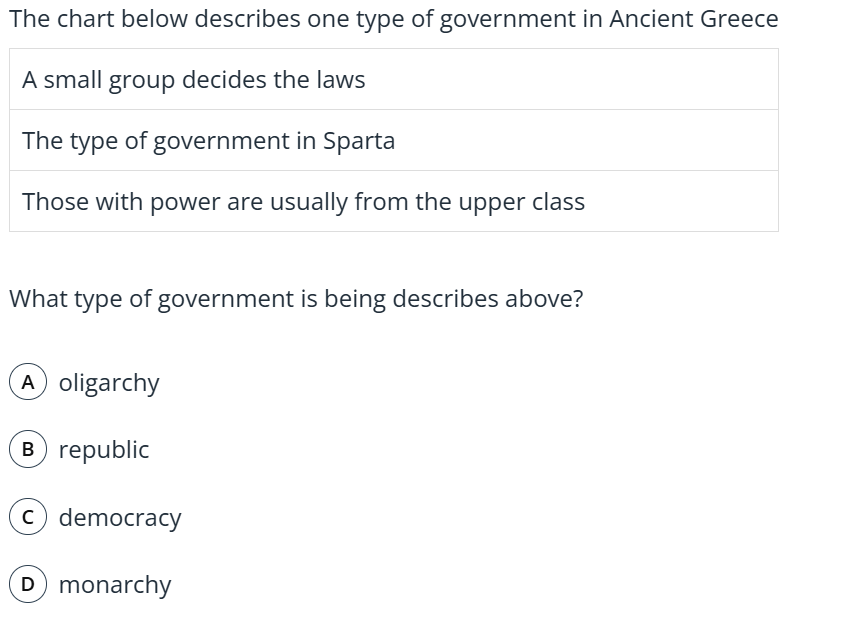
A. Oligarchy
300
What was the American civil war fought primarily fought over?
deep-seated economic, social, and political divisions over slavery.
300
“___ _____” laws were established in the South beginning in the late 19th century. Black people couldn’t use the same public facilities as white people, live in many of the same towns or go to the same schools. Interracial marriage was illegal, and most Black people couldn’t vote because they were unable to pass voter literacy tests.
"Jim Crow" laws
400
How did the geographical features of ancient Greece contribute to the organization of its civilization?
A. The mountainous terrain led to the need for a strong king in Macedonia to control the different areas of Greece
B. The access to the sea led to development of only one city-state because there was not good land for additional ones
C. The access to the sea led to the development of a large empire controlled by a strong king in Sparta
D. The mountainous terrain led to the development of independent city-states
D. The mountainous terrain led to the development of independent city-states
400
The idea that laws passed by the people are more powerful than any one person or ruler is known as....
A. rule of law
B. civic participation
C. citizenship
D. colonization
A. rule of law
400
Pertaining to seagoing activities.
Maritime
400
How did a direct democracy operate in ancient Greece?
A. all citizens voted for representatives who directed the government
B. a few citizens voted for representative who directed the government
C. a few citizens voted for representatives who directed the government
D. all citizens voted on all issues facing the community
D. all citizens voted on all issues facing the community
400
Who's Mr. Wallace's favorite class?
Not Telling

400
When a white man got on the bus and couldn’t find a seat in the white section at the front of the bus, the bus driver instructed ______ and three other Black passengers to give up their seats. _____ refused and was arrested. (Who was the person associated with this famous movement?)
This led to what movement? (The name of the Event this led to)
Rosa Parks
The Montgomery Bus Boycott
500
List the geographic features of Greece:
(There are 6 total) I'll give the points to who can name the most.
• Asia Minor
• Mediterranean Sea
• Athens
• Peloponnesian peninsula
• Macedonia
• Sparta
500
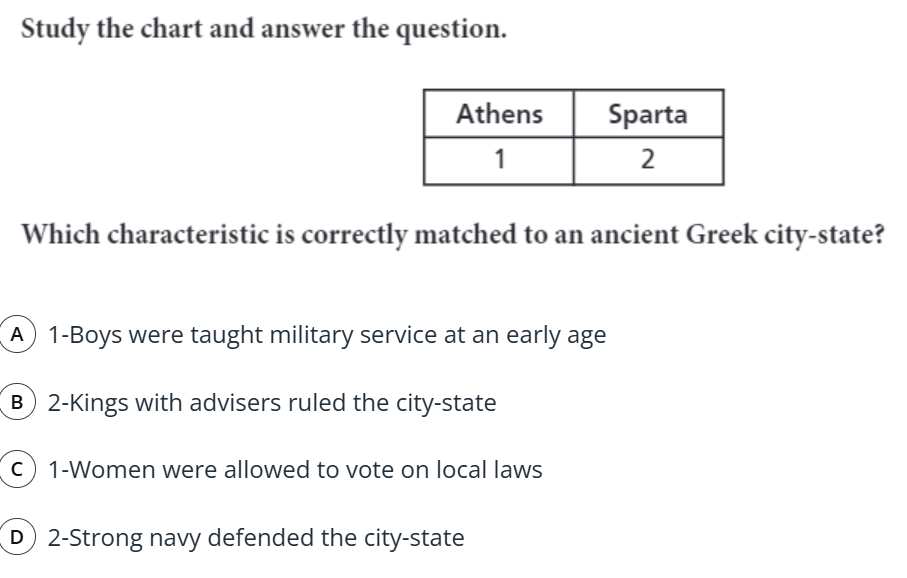
B. 2-Kings with advisors ruled the city-state.
500
a group of non-elected government officials. Typically appointed by a King/Emperor
Bureaucracy
500
List the 4 types of government discussed this year in 6th Social Studies AND How they operate. (DOUBLE Points)
Monarch - King/Queen, power transferred through bloodline
Tyranny - ruler with absolute power (usually cruel)
Oligarchy - a small group of people run the government
Democracy - citizens vote on laws and policies
500
Match all the civilizations we've discussed this year with the continents that they are located on.
Mesopotamia - Asia
Egypt - Africa
Israel - Asia
India - Asia
China - Asia
Greece - Europe
500
a prominent Black nationalist leader, minister, and human rights activist known for advocating Black empowerment, self-defense "by any means necessary," and racial pride during the 1950s and 60s. As a key figure in the Nation of Islam, he challenged the mainstream nonviolent civil rights movement with2026-02-18, a more radical approach to achieving racial justice.
Malcolm X