Cell Structure and Function (I)
Cell Structure & Function (II)
Cell Membrane and Permeability
Cell Transport
Cell Size & Osmoregulation
100
Which organelle contains hydrolytic enzymes, which are important in intracellular digestion?
Lysosomes
100
Which organelle is responsible for detoxification and lipid synthesis?
Smooth ER
100
Plant cells have _______________, which connect adjacent cells and allows for plant cells to communicate.
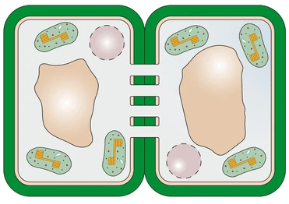
Plasmodesmata
100
Identify one example of passive transport and one example of active transport.
Passive - diffusion, osmosis, facilitated diffusion
Active - pumps, cotransport, endocytosis, excoytosis
100
Which statement(s) below is false?
Water will flow:
(1) Low water potential to areas of high water potential
(2) Low solute to areas of high solute
(3) Low areas of pressure to high areas of pressure.
#1 & #3
200
What are the four structures ALL cells have in common?
Plasma membrane, cytosol (cytoplasm), chromosomes (genetic material), ribosomes
200
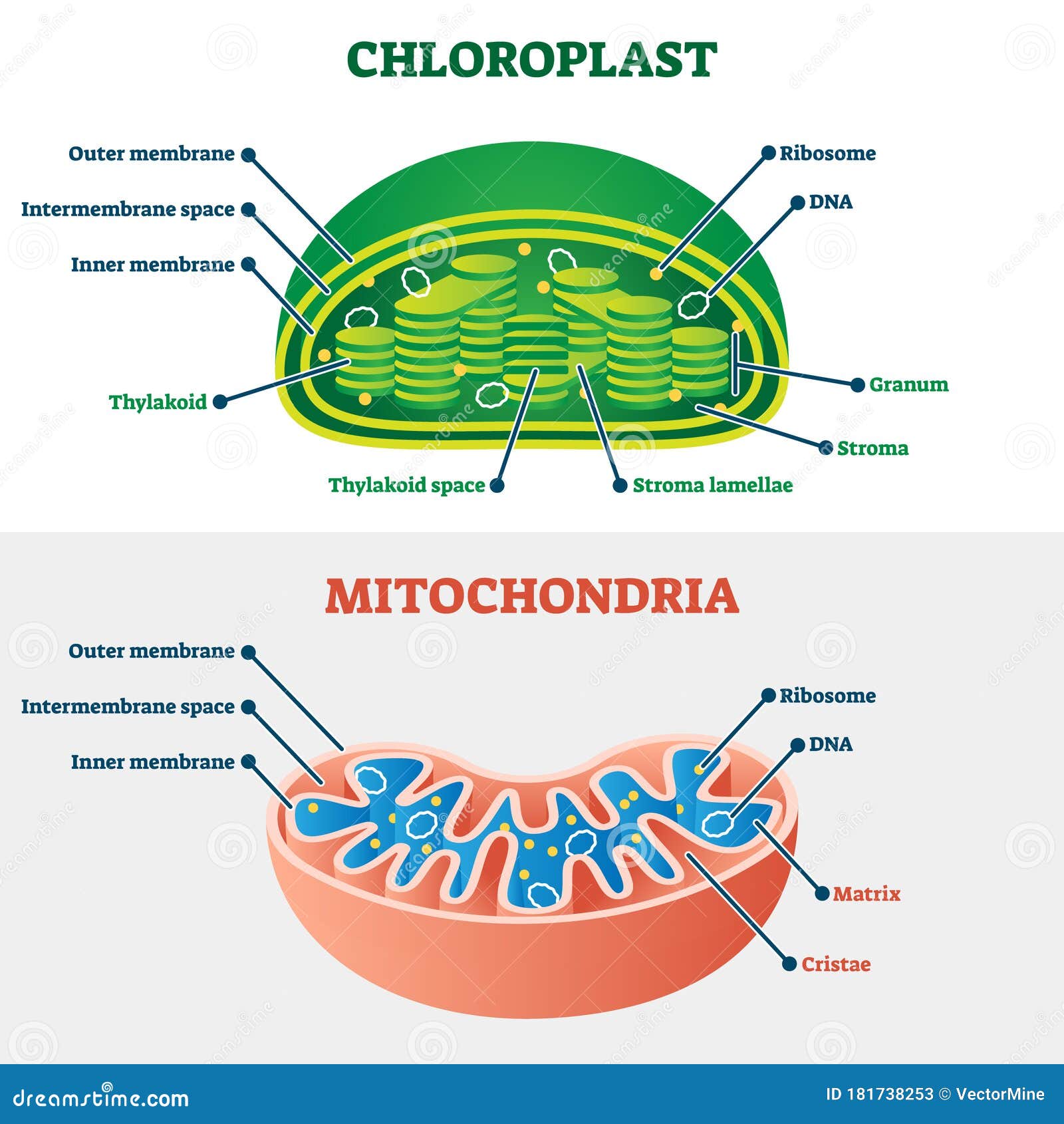
Based on the Endosymbiotic theory, what 2 organelles have double-membranes?
Chloroplasts and mitochondria
200
What type of molecules can pass freely across the plasma membrane without a protein?
Small, uncharged, nonpolar, or hydrophobic molecules.
- Ex: Oxygen (O2), Carbon Dioxide (CO2), or Nitrogen gas (N2).
Why? - Because of their size and polarity, it allows them to diffuse through the hydrophobic core of the phospholipid bilayer without the need for transport proteins.
200
Differentiate between hypotonic, hypertonic, and isotonic.
Hypotonic - water goes in the cell
Hypertonic - water leaves the cell
Isotonic - water enters and leaves the cell
200
Which cell would be the most efficient at exchanging material across its plasma membrane and which would be the least efficient?
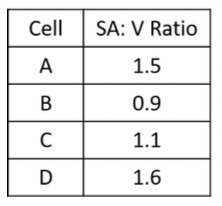
Most efficient - Cell D because 1.6 is the highest SA/V ratio.
Lease efficient - Cell B because 0.9 is the lowest SA/V ratio, which is optimal for storing material.
300
Which of the following does not provide evidence of the endosymbiotic theory AND why?
a. Prokaryotes and eukaryotes are both surrounded by a phospholipid bilayer.
b. Mitochondria and chloroplasts have their own circular DNA, similar to bacterial genomes
c. Energy organelles both have ribosomes similar to those found in prokaryotic cells.
d. Organelles are capable of functioning and reproducing on their own.
A - Prokaryotes and eukaryotes are both surrounded by a phospholipid bilayer.
Why? - The Endosymbiotic theory explains how mitochondria and chloroplasts (energy organelles) came to be. It specifically proposes that these organelles were originally free-living prokaryotes (bacteria) that were engulfed by an ancestral eukaryotic cell.
The phospholipid bilayer (aka the cell membrane) already exists in ALL types of cells. Therefore it's not evidence of the endosymbiotic theory.
300
When a cell is exporting a fully folded protein in mass quantities, what 3 organelles or structures are involved? (they don't have to be in order)
Rough ER, Golgi Body, Vesicle
300
Identify the structure that represents:
(1) An integral protein, (2) Glycoprotein, (3) Hydrophilic Head, (4) Peripheral Protein
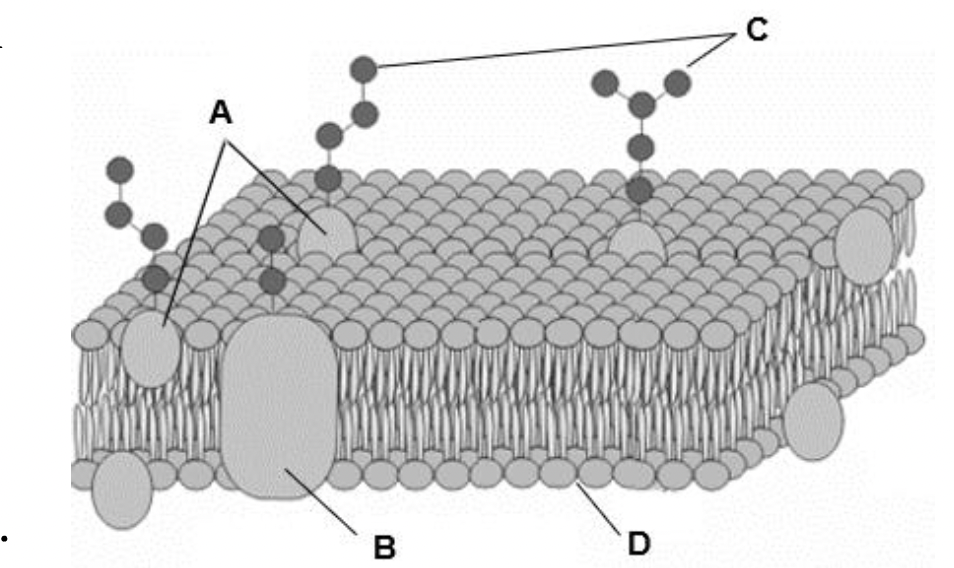
(1) B
(2) C
(3) D
(4) A
300
Aquaporins are proteins that act as water channels in cell membranes, allowing water to pass through cells. Which type of transport would they be a part of?
Osmosis or Facilitated diffusion.
Aquaporins in general are used when larger portions of water need to be transported quickly! Example: Situations where maintaining proper water balance is crucial, like in the kidneys for urine concentration.
300
A dialysis bag containing a 0.1 M NaCl solution is placed in a beaker containing a 0.4 M NaCl solution. The dialysis bag acts as a semipermeable membrane, allowing water to pass but not NaCl. Which way will the water move?
Water will move out of the dialysis bag, causing it to shrink.
400
A scientist observes an organelle surrounded by a double membrane that contains its own DNA and ribosomes. Identify the organelle and the evolutionary theory that explains the origin of this organelle.
Mitochondria or chloroplast
Endosymbiotic theory
400
Identify one organelle in a eukaryotic cell that has a highly folded structure. Explain how this structure and compartmentalization benefits the cell.
Golgi apparatus, Smooth or Rough ER, Mitochondria, Chloroplast
Folding increases the surface area of these organelles, providing more space for chemical reactions and cellular processes. It also allows more structures and proteins to fit within a smaller space, increasing the efficiency of cellular processes.
400
Identify one specific integral membrane protein and describe its primary function(s).
A channel (or carrier) protein is an integral protein that facilitates the movement of large molecules across the plasma membrane.
An aquaporin is an integral membrane protein that facilitates the movement of water across the plasma membrane.
400
Which specific type of endocytosis is shown below?
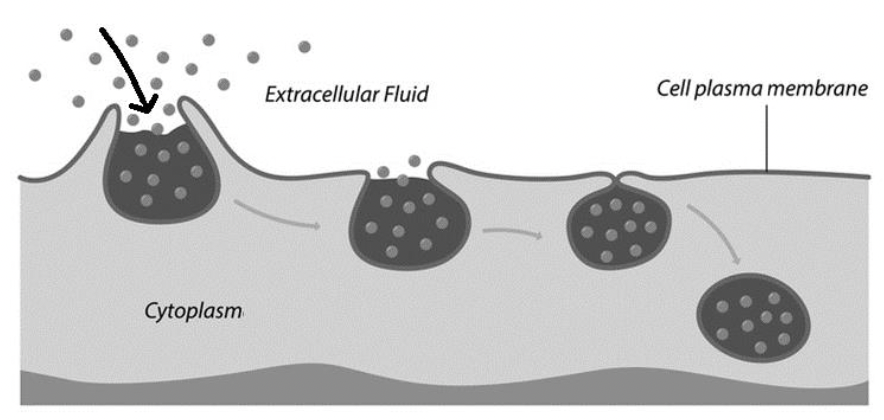
Pinocytosis because it's engulfing a liquid!
400
Explain how does the efficiency of cellular processes differ between small and large cells.
Small cells have a higher surface area to volume ratio so they optimize the exchange of materials at the plasma membrane much more effectively! The cell functions at a more efficient rate too!
Large cells have a lower surface area to volume ratio so they lose efficiency exchanging materials and better at storage. The cellular demand for resources increases since the cell is larger.
500
A researcher removes cholesterol from an animal cell's plasma membrane. Predict how this could affect membrane properties and explain why.
Removing cholesterol could alter membrane fluidity and stability. Cholesterol helps regulate membrane fluidity by preventing phospholipids from packing too closely at low temperatures and limiting excessive movement at higher temperatures.
500
A mutation causes the Golgi apparatus in a eukaryotic cell to stop functioning properly. Predict one cellular processes that would be directly affected and explain why.
Protein secretion would be affected because the Golgi modifies, sorts, and packages proteins into vesicles for transport to the cell membrane.
or
Lysosome formation would be affected because the Golgi processes and packages enzymes that are transported to lysosomes.
500
Describe how the amphipathic nature of phospholipids in the plasma membrane regulates transportation across the membrane.
Phospholipids are amphipathic, meaning they have hydrophilic (polar) heads and hydrophobic (nonpolar) tails. The heads interact with water, while the tails form a hydrophobic barrier that allows small, nonpolar molecules to cross easily but limits large, polar, and charged molecules.
500
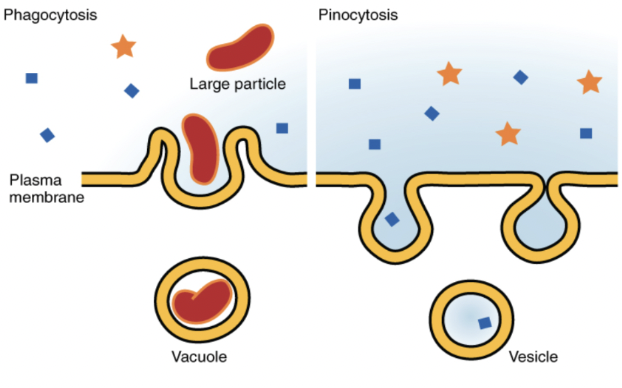
Both phagocytosis and pinocytosis are forms of endocytosis. Identify which process forms a vesicle and which forms a vacuole, and explain why.
Phagocytosis forms a vacuole because it engulfs large particles or cells. Pinocytosis forms smaller vesicles because it takes in fluid and dissolved substances.
500
A U-tube is divided into two compartments by a semipermeable membrane that allows the passage of water but not solutes. The left side of the U-tube contains a 0.2 M glucose solution, and the right side contains a 0.6 M KCl solution. Predict the movement of water and the resulting water level on each side of the U-tube.
Water will move from the left side to the right side, causing the solution level to rise on the right side.