Intermolecular Forces
Chromatography
Molarity
Gasses
Spectroscopy
100
This Intermolecular force is the weakest of the three types
London Dispersion Forces
100
A molecule has this property when it travels very far up chromatography paper
Non-Polar
100
This is the molarity of a solution with 0.5 moles of Uranium Dioxide in 1 liter of water
0.5/1=0.5 M
100
This is how many moles are in a gas with pressure 10atm, volume 6m3, and temperature of 300K
60=nR(300)
60/R(300)=0.02405 moles
100
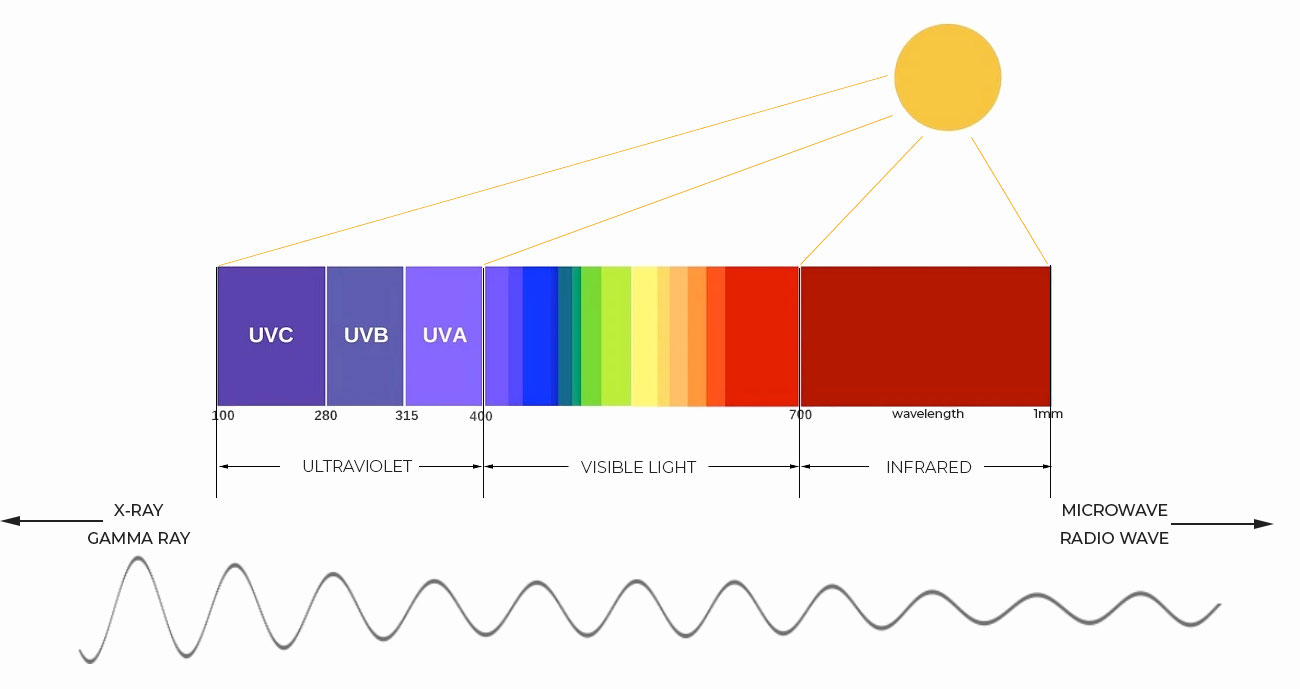
Light with a wavelength below 400mm is ____
Ultraviolet
200
This force is based on the polarity of the molecules
Dipole-Dipole
200
What is the relative Rf value of the purple dot?
0.57
200
This is the molarity of 5 moles of C6H12O6 in 2.6 liters of water
5/2.6=1.92M
200
describe deviations from the ideal gas law and why they occur:
at high pressures and low temperatures because the assumptions that gas particles have no volume and no intermolecular forces are no longer valid
200
Light with a wavelength above 700mm is _______
infared
300
FREE SPACE
LITERALLY ANYTHING
300
This problem with chromatography results from including too much hexane in the base solution
Poor Separation
300
This is the solution of C6 H12 O6 in water with a molarity of 3M
3 moles/1 L
or equivilent
300
do the same thing but for another reason as the above question
Large molecules, because they cannot be compressed as predicted by the ideal gas law.
300
What is the frequency of light with a wavelength of 700mm?
428274.94Hz
400
Water's relatively high boiling point is due to this type of bonding.
Hydrogen Bonding
400
the stationary phase of column chromatography occurs in the ________ of the column
Bottom Half
400
This is the molarity of a solution of 676,767 moles of lemade mix in 67 liters of water
676,767/67 = 10101 M
400
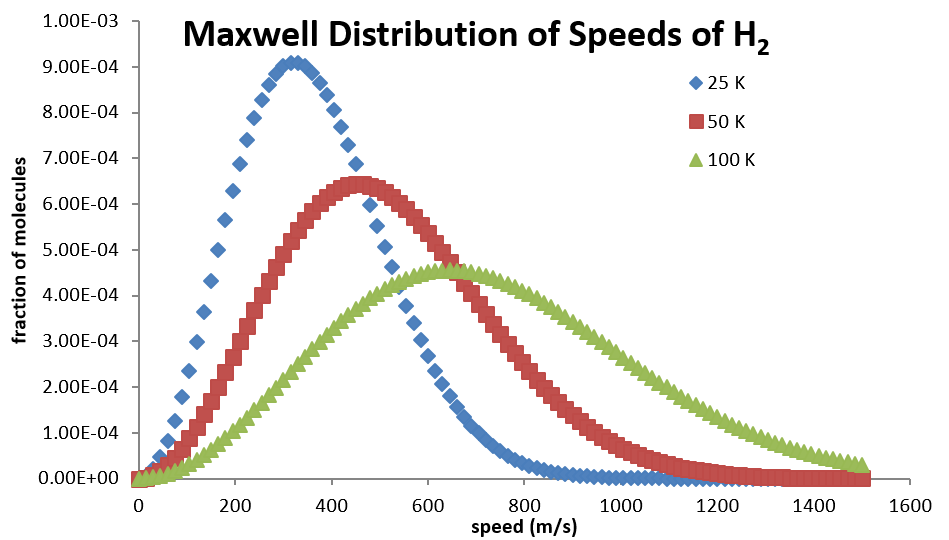
The blue curve carries this difference from the green curve
The average speed is faster
400
this type of light is between infared and ultravilotet
visible 👀
500
This type of bonding is based on a sea of electrons
Metallic Bonding
500
The Mobile Phase of Column Chromatography occurs in the _______ half of the column
top
500
This is the molarity of 6moles of Oxygen in a 7 liter solution with water
6/7=0.857M
500
if a 50 mol gas is heated to 400 Kelvin in 12m3 what is the pressure in atm?
PV=nRT
P=nRT/V
P=50(8.314)(400)/(12)
P=13856.6atm
500
a sample is put into a spectrometer. The initial voltage is 9v. The final voltage is 8.7667v. These are the transmittance and absorbance.
8.7667/9=T=0.9741
-log(T)=A=0.0114