Resting Stage
Depolarizing Stage
Repolarizing Stage
Reset Phase
Those Diagrams from Page 131
Literally Off the Test
Pictures!
100
When a neuron is in a resting state there is more of this ion on the Extracellular Fluid (ECF).
What is Na+?
100
When a neuron is toward the end of the depolarizing stage, this is the approximate voltage of the neuron.
What is +30 mV?
100
This is the term used when a neuron is in the repolarizing stage and the voltage goes past -70mV.
What is an Overshoot?
100
When a neuron is in the Reset Phase this ion is being pumped to the outside of the cell.
How many are being pumped across?
What is Na+?
What is 3?
100
In the picture below, the neuron is displaying:
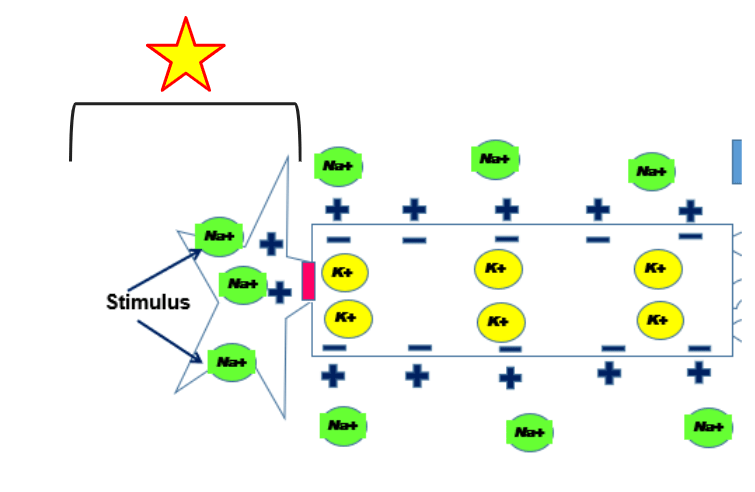
A. Resting Membrane Potential
B. Graded Potential
C. Depolarization of Action Potential
D. Repolarization of Action Potential
A. Resting Membrane Potential
B. Graded Potential
C. Depolarization of Action Potential
D. Repolarization of Action Potential
100
13) Hearing your cell phone ring in an otherwise quiet room is an example of which of the following types of nervous system functions?
A) Sensory function
B) Integrative function
C) Motor function
A!
100
Identify the indicated part of the neuron:
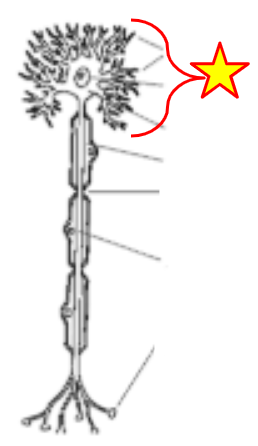
What is the Cell Body?
200
When a neuron is in a resting state there is more of this ion on the Intracellular Fluid (ICF).
What is K+?
200
m This is the voltage that must be reached in order for an action potential to be triggered.
What is -55 mV?
200
When a neuron is in a Repolarizing stage this is the ion that moves out of the cell.
What is K+?
200
When a neuron is in the Reset Phase this ion is being pumped to the inside of the cell.
How many are being pumped across?
What is K+?
What is 2?
200
In the picture below, the neuron is displaying:
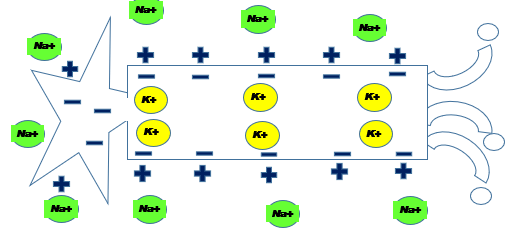
A. Resting Membrane Potential
B. Graded Potential
C. Depolarization of Action Potential
D. Repolarization of Action Potential
A. Resting Membrane Potential
B. Graded Potential
C. Depolarization of Action Potential
D. Repolarization of Action Potential
200
The motor portion of the autonomic nervous system can be divided into:
A) somatic and sympathetic divisions.
B) somatic and parasympathetic divisions.
C) sympathetic and parasympathetic divisions.
D) voluntary and involuntary divisions.
C!
200
Identify the indicated part of the neuron:
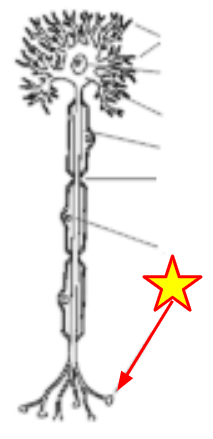
What is the Synaptic End Bulb?
300
When a neuron is in a resting state this is the approximate voltage of the ICF of the neuron.
What is -70 mV?
300
When a neuron is in a Depolarizing stage this is the ion that moves into the cell.
What is Na+?
300
During the Repolarizing Stage describe the net charge in the ECF vs. ICF.
What is the ECF is +/- (neutral) and the ICF is +/- (neutral)?
300
This is the charge of the ECF when the neuron is in the Reset Phase.
What is +?
300
In the picture below, the neuron is displaying:
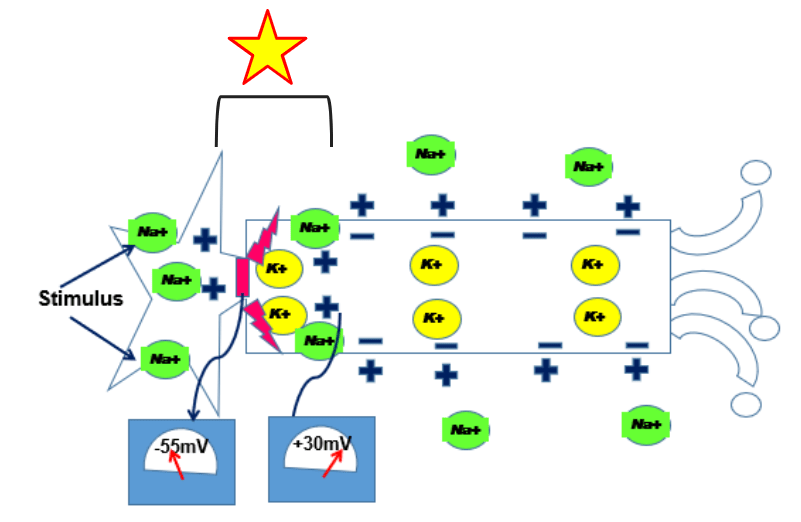
A. Resting Membrane Potential
B. Graded Potential
C. Depolarization of Action Potential
D. Repolarization of Action Potential
A. Resting Membrane Potential
B. Graded Potential
C. Depolarization of Action Potential
D. Repolarization of Action Potential
300
Saltatory Conduction:
A) happens due to an even distribution of voltage-gated Na+ channels
B) encodes only action potentials that are initiated in response to pain.
C) occurs in unmyelinated axons and happens due to even distribution of voltage-gated Na+ channels
D) occurs only in myelinated axons
A!
300
What is the structural classification of the neurons indicated below?
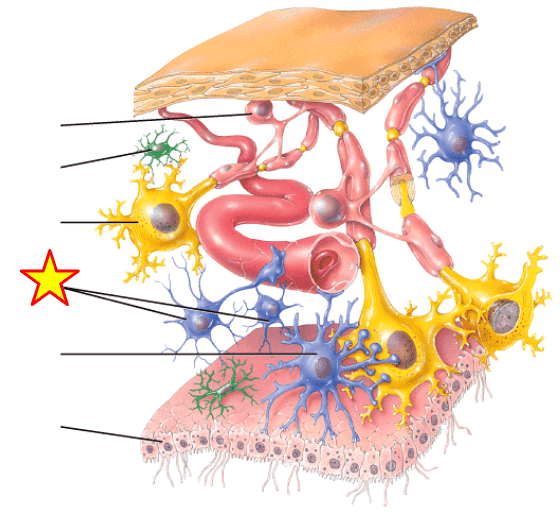
What is Multipolar?
400
During the resting state describe the net charge in the ECF vs. ICF.
What is the ECF is + and the ICF is -?
400
During the Depolarizing Stage describe the net charge in the ECF vs. ICF.
What is the ECF is - and the ICF is +?
400
What would happen if the neuron’s resting membrane potential was never reset? How would this impact the nervous system’s ability to function?
Inability to function.
The neuron would stay in a "stuck" state and would be unable to fire more action potentials to other neurons. (Paralysis and/or loss of sensory perception)
400
This is the charge of the ICF when the neuron is in the Reset Phase.
What is -?
400
In the picture below, the neuron is displaying:
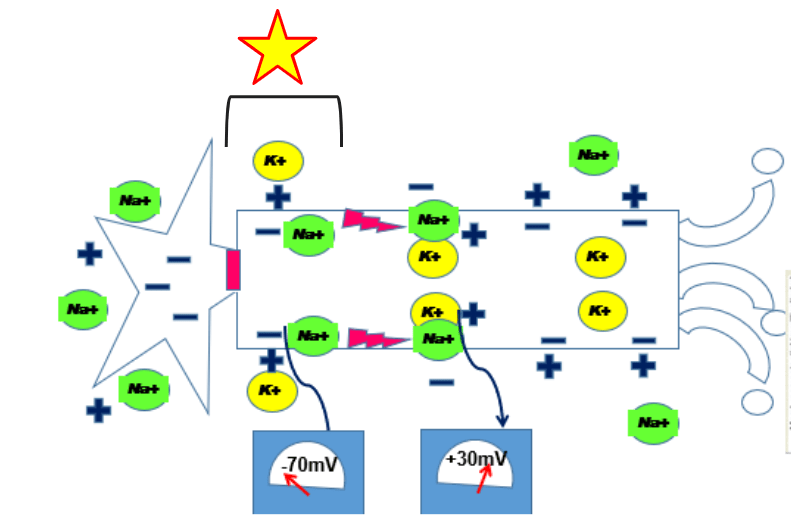
A. Resting Membrane Potential
B. Graded Potential
C. Depolarization of Action Potential
D. Repolarization of Action Potential
A. Resting Membrane Potential
B. Graded Potential
C. Depolarization of Action Potential
D. Repolarization of Action Potential
400
Myelin sheaths on the outsides of many axons in the peripheral nervous system are contributed by:
A) The axon itself
B) Secretory vesicles
C) Schwann cells
D) The cell bodies of the neuron
C!
400
Identify the indicated part of the neuron:
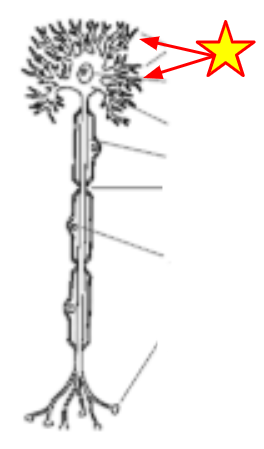
What are Dendrites?
500
This is the charge that the Reset Phase is attempting to return the neuron to.
What is -70 mV?
500
In the picture below, the neuron is displaying:
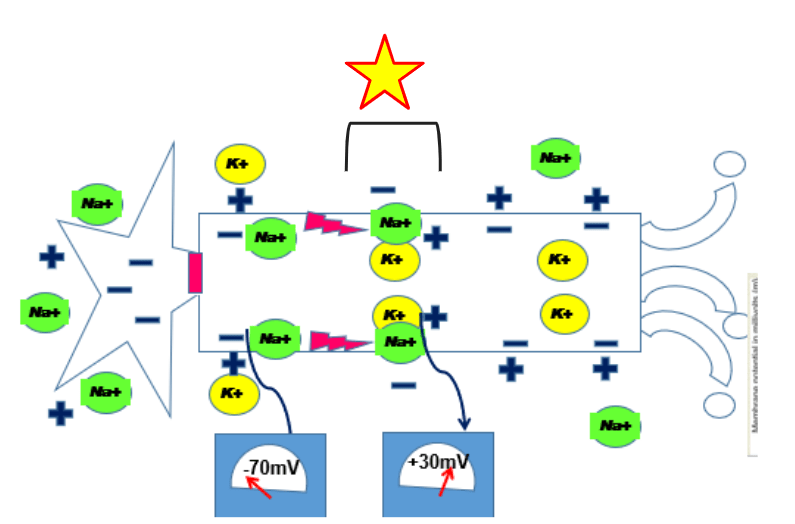
A. Resting Membrane Potential
B. Graded Potential
C. Depolarization of Action Potential
D. Repolarization of Action Potential
A. Resting Membrane Potential
B. Graded Potential
C. Depolarization of Action Potential
D. Repolarization of Action Potential
500
Graded Potentials:
A) Arise when ion movement causes minor change in the resting membrane potential in the cell body
B) Usually propagate down the length of an axon
C) Occur when voltage-gated channels open
D) Are most often observed in axons
E) Are usually associated with ion movement through leakage channels
A!
500
What is the structural classification of the neuron indicated below?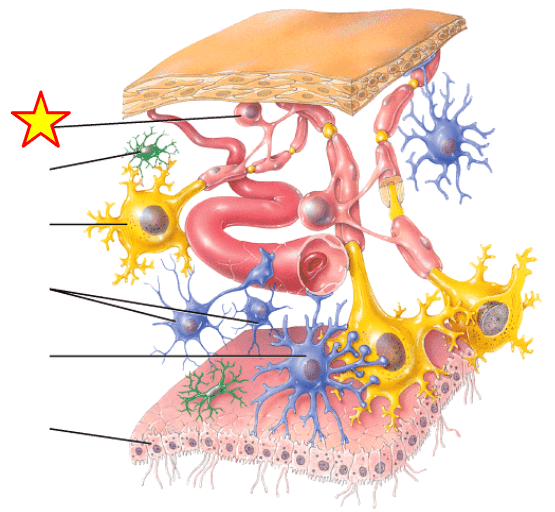
What is Unipolar?