Neuro
Cardio
Neuro/cardio
Cardio
100
The central nervous system houses the _____; the peripheral nervous system houses _______.
brain and spinal cord; everything else
100
The right atrium and ventricle house _____ blood.
Deoxygenated
100
What is cerebrospinal fluid?
A fluid in which that brain sits that helps nourish and protect it.
100
Describe the anatomic position of the valves.
Tricuspid: bet RA and RV
Mitral/bicuspid: bet LA and LV
Aortic: bet LV and aorta
Pulmonary: bet RV and Pul A
200
Your fight or flight system is _______; your rest and digest system is _____
sympathetic; parasympathetic
200
Veins bring blood ______; arteries bring blood ____
back to the heart; away from the heart
200
Label the four lobes
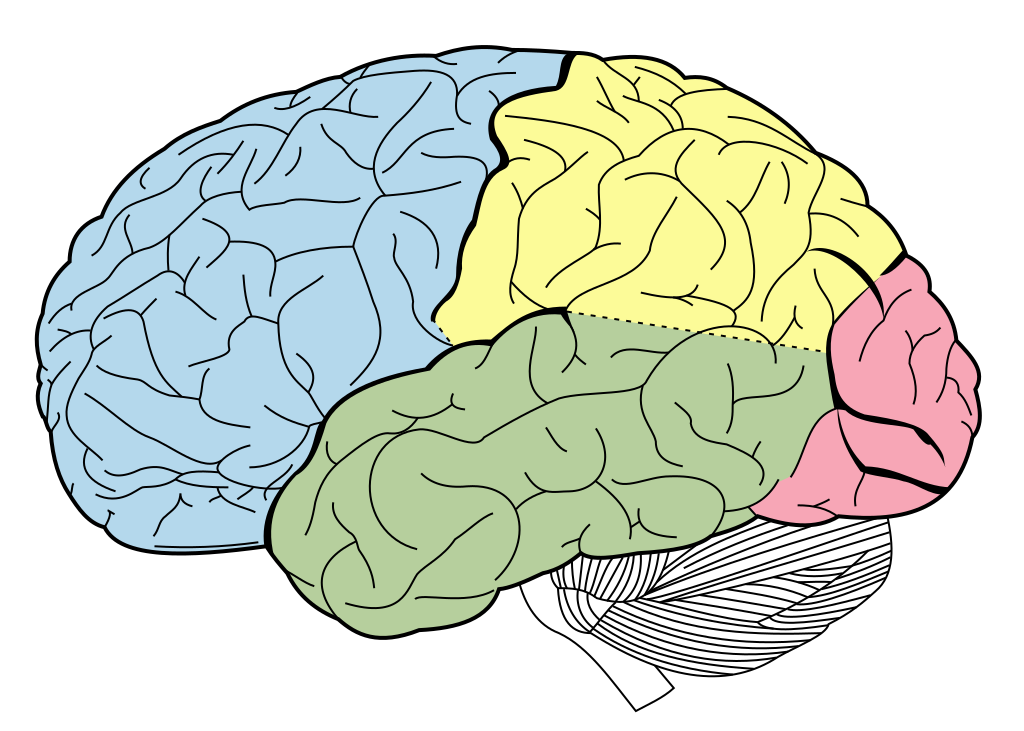
Will display in class / see powerpoint
200
What is heart rate? Where can it be measured?
Your pulse or beats per minute. Can be measured at a few places but the most practical is the radial artery on the anterior lateral side of the wrist.
300
What is the function of the cerebellum?
Motor coordination
300
The "lub dub" sounds heart on a stethoscope are a sign of:
valves closing
300
What does a heart murmur most likely indicate?
Improper valve closure
300
Aortic stenosis could cause what in the long term?
Increases the work your left ventricle has to do. Can lead to left ventricular hypertrophy (not healthy).
400
Describe a function of the following: frontal lobe, parietal lobe, occipital lobe, temporal lobe
Frontal: personality and motor skills
Temporal: memory, emotion, process language
Occipital: vision
Parietal: most of our senses
400
Your heart is about the size of your fist. However, two main reasons exist as to why it can be larger. What are they?
Trained endurance athlete or a condition called hypertrophic cardiomyopathy (unknown cause)
400
What is the role of the pons and medulla oblongata?
Help control heart rate, blood pressure, breathing, and sleep wake cycle.
400
If you had left sided heart failure, where would blood back up?
The lungs
500
Opioids act on neurotransmitters in our body known as endorphins. What is the purpose of endorphins? How do opioids act on endorphins? How do opioids lead to addiction?
Endorphins: naturally occurring neurotransmitter in the body that exists to dampen pain signal from injury
Opioids mimic endorphins by acting on the same receptor they do. However, they flood and overstimulate those receptors. After this, your body becomes dependent as it can no longer receive pleasure from naturally occurring endorphins.
500
Come up to the board. Draw the heart and all relevant arteries and veins. Then, describe the blood flow.
Drawing will be on board. Must mention RA/RV, LA/LV, aorta, pulmonary artery, pulmonary vein, SVC/IVC
500
What are the locations of the following valves:
Tricuspid
bicuspid/mitral
aortic
pulmonary
Tricuspid: bet. RA and RV
bicuspid/mitral: bet. LA and LV
aortic: bet. LV and aorta
pulmonary: bet. RV and pulmonary artery
500
What would cause fluid to back up in the legs?
R sided heart failure