The Enlightenment
Political Revolutions
IR Begins
IR Tech
Society in IR
IR Responses
IR Econ
IR Gov's Role
100
The ideas that (1)human beings possess inherent rights that can be identified through reason and (2)that organized religion was a primary obstacle to human progress were a pillars of ___________
The Enlightenment
100
Which two revolutions directly challenged monarchical governments?
American and French
100
What geographical feature helped to increase Britain's industrialization and global prominence because it enabled transportation of goods and people and connected market?
Waterways and its location on the Atlantic
100
Name the great breakthrough of the 1st industrial revolution that allowed factories to move away from rivers, enabled mass production of goods, and led to improved transportation.
Steam Power
100
What caused urban areas to be filled with soot and black smog during the industrial revolution?
Coal burning
100
Name the economic policy that emphasizes increasing a country's wealth and power through a positive trade balance. Often characterized by: Exploitation of colonies, Trade barriers, Strict Control over Natural Resources, and an Importance of gold and silver
Mercantilism
100
Chartered companies were European joint-stock businesses granted exclusive rights (monopolies) by monarchs or governments to trade, explore, and colonize specific regions. They were crucial in a mercantilism, thus differing from the trend toward free-markets
Name 2
British East India Company, Dutch East India Company, Virginia Company, British South African Company
100
While Western Europe industrialization was fostered by private investors, name the 2 countries that experienced state-sponsored industrialization leading to rapid rises in manufacturing output
Russia & Japan
200
Enlightenment ideas influenced various reform movements that contributed to the expansion of rights. Which of these reform movements was William Wilberforce a leader of?
Abolition of Slavery
200
The French Revolution directly inspired which other revolution?
Haitian Revolution
200
Prior to the invention of the steam engine, and the transition to fossil-fueled economy, economies depended on various types of power.
Name 2
Human-power, Animal-power, Water-Power, wind-power
200
Name one of the greatest innovation of the Industrial Revolution. Heavily used in Northwestern Europe but less so in other parts of Europe, it utilized steam power to hastened the transportation of goods, help foster the development of interior regions, and enabled the easier movement of workers.
Railroad
200
The ___________increased food production efficiency, leading to population growth and a surplus of workers moving to cities with a willingness to take low-wage factory work for owners who made immense profit off of them, thus creating disparities of wealth between the classes
2nd Agricultural revolution
200
The difficult working and living conditions of women and child workers attracted the attention and anger of middle-class social ___________in mid-nineteenth-century Great Britain
Reformers
200
The rapid industrialization in European countries and the U.S. contributed to the increase in these regions' share of global manufacturing, while _________ and ____________ countries experienced a decline
Middle Eastern & Asian
200
In response to losing territory, the Ottoman empire issued the __________reforms with the goal of modernizing to enable competing with the industrialized states of Europe, but the reforms faced significant resistance from Sunni Islamic elites.
Tanzimat
300
Enlightenment ideas influenced various reform movements that contributed to the expansion of rights. Which of these reform movements was Olympe De Gouges a pioneer and leader of?
Feminism
300
Nationalism (the ideology that people sharing a common culture, language, religion, or history should form their own independent, self-governing political unit) led to the unification of 2 European countries. Name them
Germany & Italy
300
In addition to coal, which natural resource in England explains the early industrialization of Britain?
Iron
300
Second Industrial Revolution, also called the Technological Revolution, occurred roughly from 1870 to 1914.
Name 3 of the innovations during the 2nd Industrial revolution
Chemicals, Electricity, Steel (Bessemer process), Communication (telegraph/phone), Internal Combustion Engine
300
Industrial workers included men, women, and children. The broad social reach of factory work created the shared experiences across ages and genders, thus creating new_____________
Social Identities / Class Consciences
300
In response to the negative effects of capitalism, what pamphlet did Karl Marx write that expressed his alternative view of society?
The Communist Manifesto
300
Laissez-faire economists often argued that because the government-chartered joint-stock companies were given _____________ in an area, it gave the companies an unfair advantage over potential competitors because of the exclusive trading rights
Monopoly
300
Following the conclusion of the First Opium War in 1842, Western states forced the Qing empire to sign the _______________ that forced China to grant special trading privileges and make other concessions. These humiliating conditions encouraged many inside the Qing government to advocate for implementing political and economic reforms similar to those attempted in the Ottoman Empire
Unequal Treaties
400
The book The Social Contract informed readers of ideas such as natural rights (life, liberty, property), the consent of the governed, popular sovereignty, and the right to rebel. Who wrote it?
Jean Jacques Rousseau
400
Two part question!
1. What social class led the revolution in France?
2. What social class led the revolution in Haiti?
1. Third Estate
2. Slaves
400
Several environmental & political factors contributed to industrialization begining in Britian.
Name 4
Access to waterways, Natural Resources, Surplus Workers, Urbanization, Stable Politics, Property Right (patent), Excess Wealth
400
Several technological innovations enabled industrialization in Britain. Name 4
Seed Drill, Mechanical Reaper, Cotton Gin, Spinning Jenny, Water Frame, Power Loom, steam engine
400
The Industrial Revolution led to the development of new class identities. Name the 2 names Karl Marx had for the different classes.
Bourgeoisie & proletariat
400
What goal of the Meiji Restoration contributed to the rise of Japan in terms of both economic and political power?
Industrialization & Reform
400
Late-nineteenth-century developments in banking and finance increased the ability of businesses to raise capital and expand their geographic reach.
Name 3 of these developments
Limited-Liability, Stock Exchanges, Commercial Insurance,
400
During the ____________the Qing government sponsored a number of projects designed to bolster the navy. The idea was to adopt Western technology but not the values and philosophies that produced it. Ultimately failing due to internal resistance from elites and ongoing destabilizing developments
Self-Strengthening Movement
500
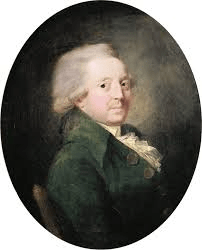 A French Enlightenment thinker, advocate of educational reform, abolitionist, and one of the few men who argued for women’s rights. His enlightenment ideas on human progress and rights directly shaped the early, moderate phase of the French Revolution Name him
Nicolas de Condorcet
500
The Jamaica Letter, written by ___________ to persuade Creoles of the need for Latin American independence, is one of the most significant political documents of the Latin American Revolutions.
Simón Bolívar
500
Identify why each of the following countries was slightly delayed in their industrialization
France
Germany
United States
France-Revolution, Napoleon drama
Germany-Not unified
United States-Civil War
500
Who invented the Water Frame, a water-powered spinning machine that produced strong, durable cotton yarn, enabling the mass production of textiles
Richard Arkwright
500
Because of wages for husbands/fathers were so low, wives and children of working-class families also had to take jobs in factories. The terrible conditions led social reform movements including the passing of a law mandating education for children ages 5 to 10 in the decade___________
1880s
500
What actions did some governments take that tempered socialist and communist feelings in their working class by lessening the negative social effects of capitalism?
Reforms that improved working conditions
500
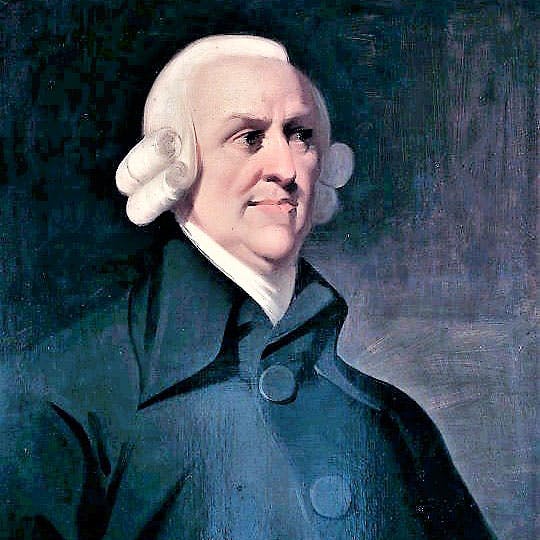
Adam Smith, the father of modern economics, wrote The Wealth of Nations which strongly advocated for principles of __________economics
laissez-faire
500
The Meiji Restoration was prompted by the arrival in Japan of ______________ and his 'black ships', and it led to industrialization, cultural changes, reforms, and more contact with the United States
Commadore Mathew Perry