Freedom
Arts and Culture
Potpourri
Africa
Famous Leaders
100
Some African American freedom seekers (maroons) found refuge among this Native American tribe in Florida and were welcomed as kin.
Seminole tribe
100
Enslaved African Americans combined musical and faith traditions in the form of genre that allowed them to articulate their hardships and hopes.
spirituals (also called sorrow songs and jubilee songs)
100
These early African explorers worked as intermediaries before the predominance of chattel slavery, translating and traveling throughout much of the Americas with Spanish conquistadors.
Ladinos (part of the Atlantic Creole generation)
Also accept Juan Garrido and Esteban/Estevanico the Moor
100
This group of people began migrating throughout the continent around 1500 BCE, spreading their language, foodways, language, and genetics to people in much of west and central Africa.
The Bantu people
100
Queen Idia of Benin became the person to hold this title, functioning as a political advisor to her son, the king.
iyoba (queen mother)
200
This country was the last in the Americas to abolish slavery when it finally did so in 1888.
Brazil
200
Enslaved and free African Americans used quilt-making for what purposes?
Storytelling and memory keeping
200
The largest port of entry for enslaved people of African descent arriving to what became the United States.
Charleston, South Carolina
200
Control over trade routes and gold mines allowed this prominent west African empire to thrive from the 13th to 17th centuries
Mali
200
This ruler led her kingdom in 30 years of guerilla warfare against the Portuguese, taking part in the slave trade while also protecting runaways slaves who escaped the Portuguese:
Queen Njinga of Ndongo and Matamba
300
Name a maroon community from anywhere in the Americas.
Quilombo dos Palmares, Great Dismal Swamp, Fort Mose, John Crow and Blue Mountains in Jamaica
300
Black abolitionists used these photographs to raise money for their cause and to also demonstrate their leadership, dignity, respect, and humanity.
carte-de-visite
300
Name a successful slave revolt on a ship:
The Amistad (1839) led by Sengbe Pieh, who won freedom for everyone in the Supreme Court two years later
The Creole (1841) led by Madison Washington, which sailed successfully to the Bahamas
300
These people were professional musicians, storytellers, and historians in west African societies who helped maintain and share the community’s history, traditions, and cultural practices.
Griots
300
Likely the richest man in human history, this ruler led the kingdom of Mali and undertook the hajj in such lavish fashion that it gained the attention of Europeans, North Africans, and Arabs from hundreds of miles away.
Mansa Musa
400
Runaway freedom seekers in Brazil established free communities in remote areas that were called what?
Quilombos
400
The most photographed person of the 19th century, he escaped slavery as a young man and became a prominent abolitionist and civil rights leader throughout his life.
Frederick Douglass
400
This staggeringly racist Supreme Court ruling from 1857 featured a claim by chief justice Roger Taney that Black people have no rights that White people are bound to respect and could never become citizens, even if free.
Dred Scott v. Sandfort (or Dred Scott freedom suit/ruling/case)
400
DAILY DOUBLE:
This image represents the syncretism of what two religions?
Yoruba Orisa and European Christianity
400
Queen Idia became an iconic, modern, global symbol of Black women's leadership when an ivory mask of her face was adopted as the symbol for what global event held in 1977?
FESTAC (Second World Black Festival of Arts and Culture)
500
Juneteenth, which marks the end of slavery in the last state of rebellion on June 19, 1865, was announced by Major General Gordon Granger in what city and state?
Galveston, Texas
500
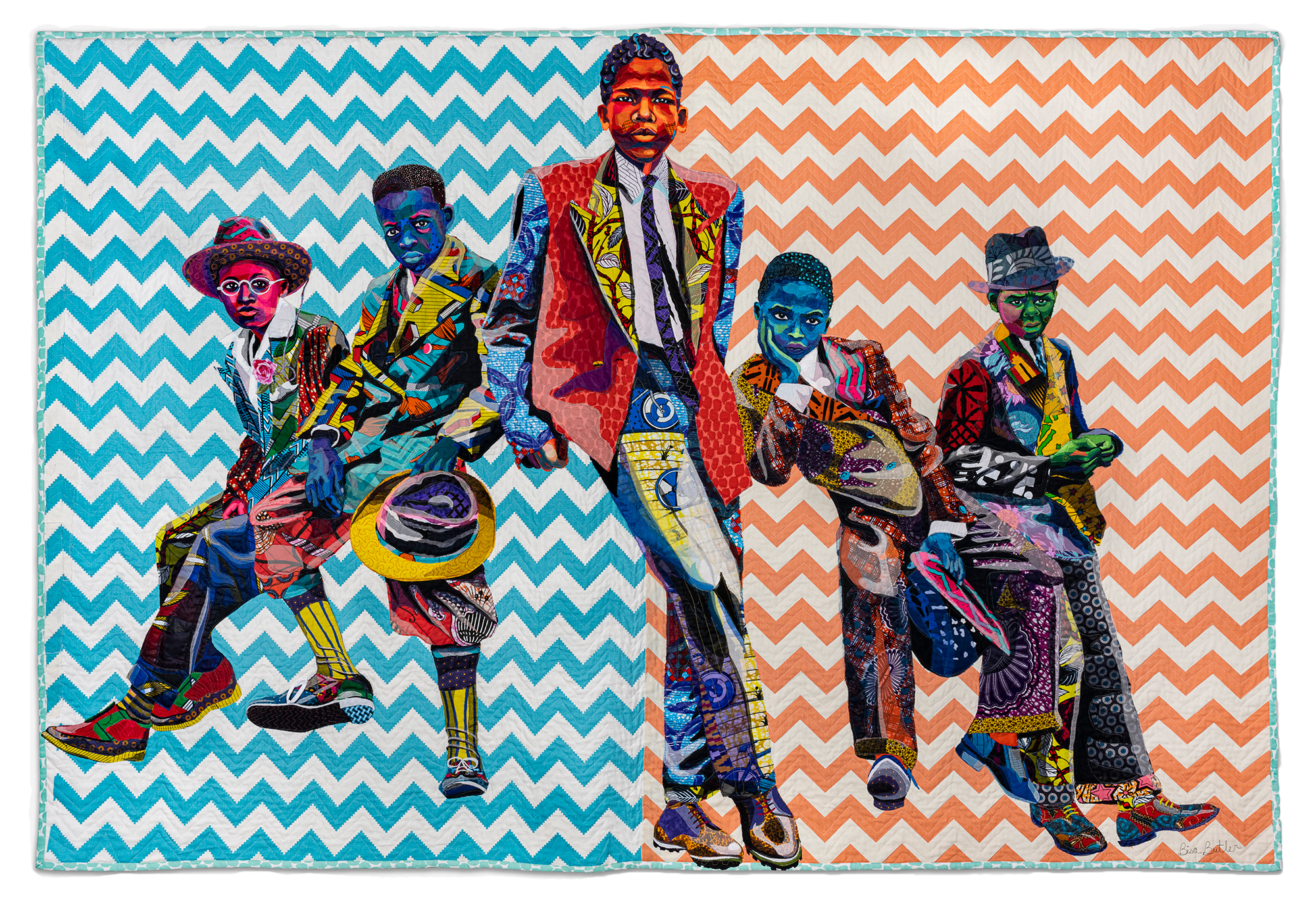 This contemporary African American artist builds on Black aesthetic traditions to preserve the legacy of Black people's bravery and resistance throughout history. She uses quilts as her medium and applies vibrant African colors (the "Kool-aid" colors) taught to her by her art professors at Howard University who were part of the AfriCOBRA and Black Arts Movement.
Bisa Butler
500
Name the top FIVE enslaving nations involved in the transatlantic slave trade.
Portugal, Great Britain, France, Spain, Netherlands
500
King Nzinga a Nkuwu (João I) and his son Nzinga Mbemba (Afonso I) voluntarily converted which powerful West Central African kingdom to Christianity in 1491?
Kongo
500
This man led the Haitian Revolution, helping to defeat the powerful French military and set up Haiti to become the first free Black republic in the Western Hemisphere.
Toussaint L'ouverture
600
This man wrote "An Address to the Slaves of the United States, making the religiously-inspired and radical call for immediate freedom for enslaved people by any means necessary, beginning with a request and culminating, if needed, in violent uprising.
Henry Highland Garnet
600
Name THREE examples of syncretic religions
Candomble, Vodou, Voodoo, Kingdom of Kongo Christianity, Regla de Ocha-Ifa (Santeria), Obeah, Myal
600
This law defined a child's legal status based on the status of their mother and ultimately led to both the "one-drop rule" and complete impunity for White men seeking to sexually exploit/assault Black women.
partus sequitur ventrem
600
Name THREE regions/countries from Africa where large numbers of enslaved people were forcibly taken and sent to the Americas via the transatlantic slave trade.
Senegambia, Sierra Leone, Liberia, Côte d’Ivoire, Ghana, Benin, Nigeria, Angola, and Mozambique.
600
This man was a formerly enslaved Senegambian who fought against the English in the Yamasee War and found refuge in St. Augustine before becoming the leader of Fort Mose in 1738.
Francisco Menéndez