Intro Info
Other info
Porifera
Cnidaria
Rando
Eww Worms
Wormys & Things
100
This type of animal possess a backbone
What is a Vertebrate?
100
The type of symmetry of a sponge
What is asymmetrical?
100
These provide structure and framework for the sponge and are made of lime or silica.
What are Spicules?
100
This form of cnidaria is sessile and has a tubular body with a mouth and tentacles.
What is a Polyp?
100
Sponges gain nutrition by this method of feeding.
What is Filter Feeding?
100
This is the sheath of tissue that encloses the vital organs of mollusks and secretes its shell.
What is the Mantle?
100
Clams, oysters, snails, and octoupuses are in this phlyum.
What is Mollusca?
200
This animal lacks a backbone
What is an invertebrate?
200
The anatomical region of an organism that contains the head. (posterior or anterior)
What is anterior?
200
This provides structure to a sponge and is a tough web of protein. Sponges with this feel soft.
What is Spongin?
200
This form of cnidaria is free-swimming with a bell-shaped body and tentacles.
What is Medusa?
200
The sea anemone has a mutualistic relationship with the _____________.
What is Clownfish?
200
This is the ability to regrow damaged or missing parts. Asexual reproduction in planarians
What is Regeneration?
200
This organ aids in the movement of mollusks.
What is a Foot?
300
This type of symmetry creates identical halves (left and right) with a longitudinal cut through the center. e.g. Butterfly
What is bilateral?
300
The anatomical region of an organism that contains the tail. (posterior or anterior)
What is posterior?
300
These flagellated cells in a sponge push water through in order to collect food.
What are Collar cells or Choanocytes?
300
Small capsules that contain toxin that is injected into prey.
What are Nematocysts?
300
Hydra and jellyfish are in this phylum.
What is Cnidaria?
300
This is the body type of a nematode.
What is round?
300
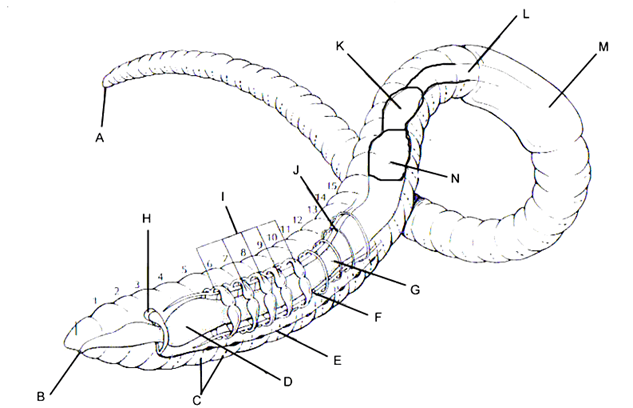 Letter I
What are Aortic Arches?
400
This type of symmetry creates identical halves with any cut through the center. e.g. volvox
What is spherical?
400
This is the percentage of animals that are invertabrates.
What is 95%?
400
These cells in sponges take care of digestion and move with pseudopods.
What are Amoebocytes?
400
the jellylike substance found between the epithelial cells.
What is Mesoglea?
400
Sponges are in this phylum.
What is Porifera?
400
This is a tongue-like scraping structure of mollusks.
What is the Radula?
400
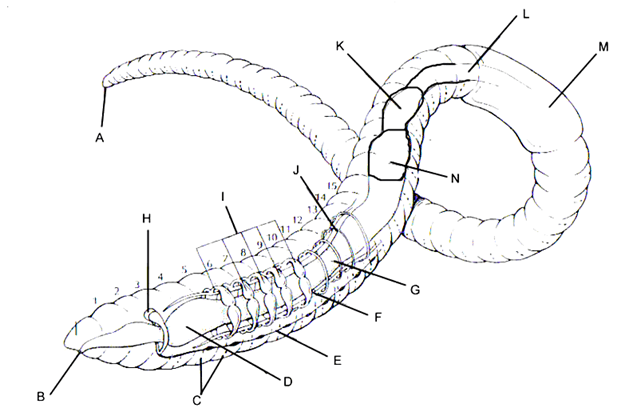 letter K
What is the Gizzard?
500
This type of symmetry creates identical halves by any longitudinal cut through the center. e.g. starfish
What is radial?
500
These are the 4 main characteristics of the Animal Kingdom.
What are Heterotrophic, Multicellular, Lack cell walls, and Eukaryotic
500
These cells are encased in a hard shell which aids in survival during inclement weather.
What are Gemmules?
500
Jellyfish are recognized in this form.
What is Medusa?
500
A jellyfish that reproduces asexually is in this form.
What is Polyp?
500
Planarians are in this phylum.
What is Platyhelminthes?
500
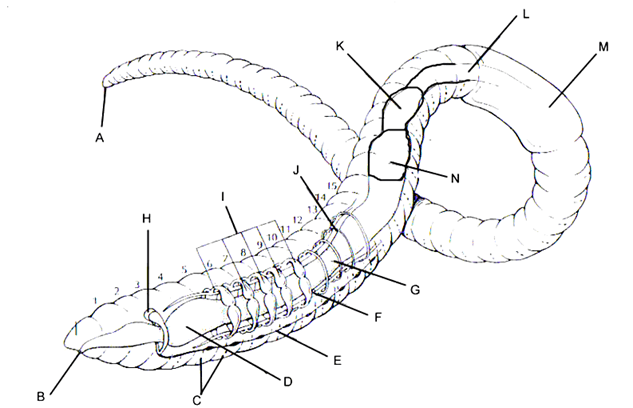 Letter M
What is Clitellum?
600
This is an organism that possess both male and female reproductive organs.
What is Hermaphroditic?
600
The _____________ allows and aids in the exchange oxygen and carbon dioxide in earthworms.
What is the Cuticle?
600
Reproduction from a gemmule is this type of reproduction
What is Asexual?
600
Scientists thought this organism was the evolutionary link between plants and animals.
What is the Hydra?
600
This parasitic organism is in the phylum Annelida.
What is Leech?
600
Roundworms like ascaris, trichinella spiralis, and hookworm are in this phylum.
What is Nematoda?
600
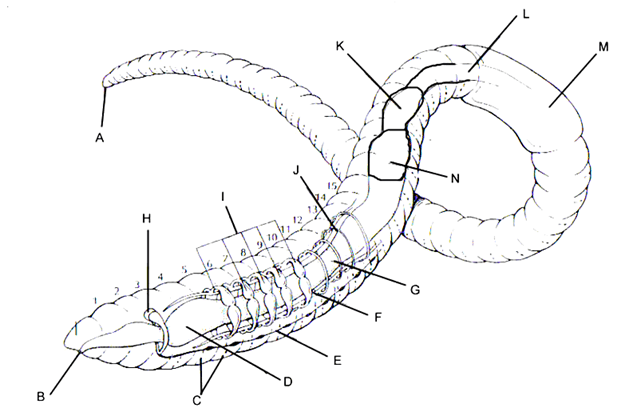
Letter N
What is Crop?