Cardiology & Trials
Salty Electrolytes
Tumoral Spring
Critical Care Issues
Policy and Pregnancy
100
In severe aortic stenosis, which physical exam finding suggests paradoxical low-flow, low-gradient AS?
Soft murmur despite severe disease + low stroke volume
100
Most common cause of hyponatremia in hospitalized patients?
SIADH
100
Which malignancy is most associated with tumor lysis syndrome spontaneously (before treatment)?
Burkitt lymphoma
100
Peritoneal fluid sample with a SAAG ≥1.1 and low total protein suggests what?
Portal hypertension
100
A 35-year-old man presents with cyanosis and shortness of breath after using topical anesthetic spray. Pulse oximetry reads 85% despite normal PaO₂ on ABG. Chest X-ray is normal.
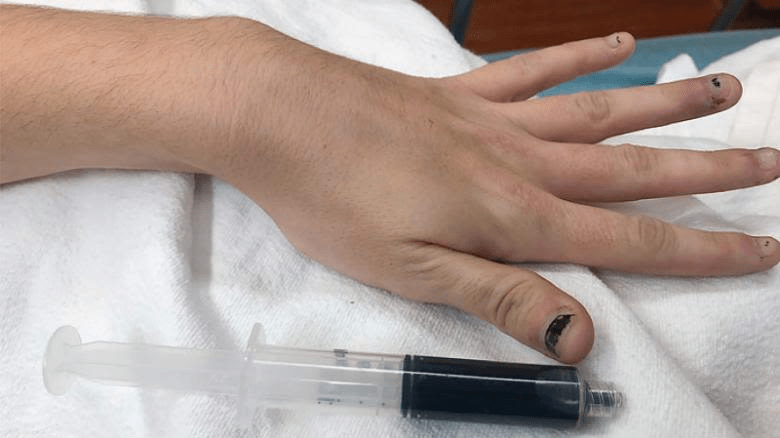
What is the most likely diagnosis?
Methemoglobinemia
200
Which recent trial showed that semaglutide reduced CV events in obese patients WITHOUT diabetes?
SELECT trial
200
A patient with high ostomy output develops hyponatremia and metabolic acidosis.How do you expect to be the urinary sodium and urine osmolality?
UNa <20 and elevated UOsm >280 Mosm
200
A 64-year-old man with metastatic melanoma is started on nivolumab. Two weeks later, he presents with fatigue, hypotension, nausea, and hyponatremia. Labs reveal low cortisol and low ACTH. What is the most likely diagnosis?
Immune checkpoint inhibitor–induced hypophysitis (secondary adrenal insufficiency)
200
A 42-year-old woman presents with fever, tachycardia, agitation, and diarrhea. She is confused and has a history of untreated hyperthyroidism. Labs show suppressed TSH, elevated free T4, and mild transaminitis. No clear source of infection is found.
What is the most appropriate initial treatment?
Beta-blocker + PTU + iodine + steroids (thyroid storm management sequence)
200
A 32-year-old woman at 28 weeks of pregnancy presents with acute onset dyspnea and pleuritic chest pain. She is tachycardic but normotensive. CT pulmonary angiography shows this findings. She has no prior history of thrombosis and normal renal function.
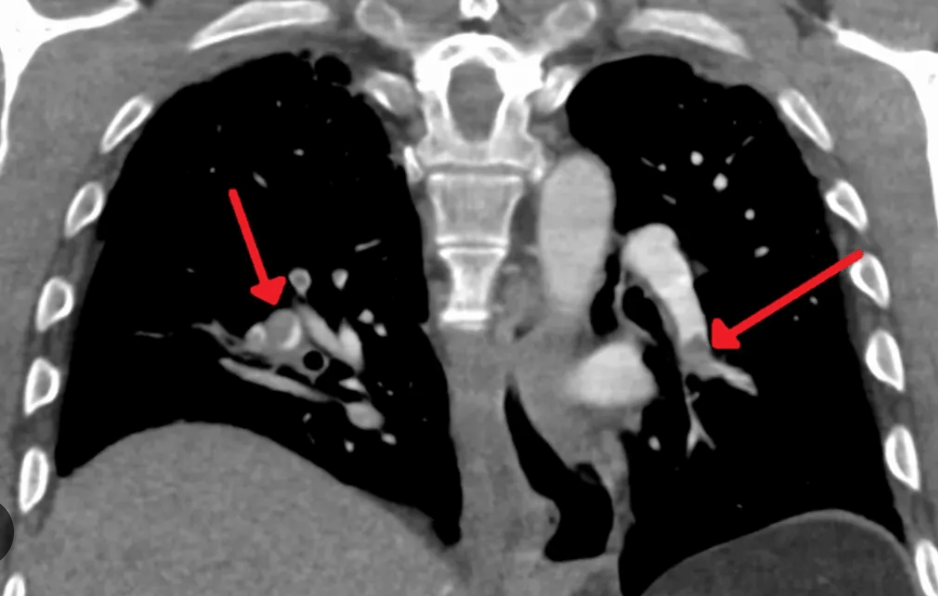
What is the most appropriate treatment?
Therapeutic low molecular weight heparin (enoxaparin 1 mg/kg subcutaneously every 12 hour
Pregnancy = special population
- DOACs → CONTRAINDICATED ❌
- Warfarin → CONTRAINDICATED ❌ (teratogenic)
- LMWH → FIRST LINE ✅
300
A patient with AF and stable CAD (>1 year post PCI) is on apixaban + aspirin. What is recommended per guidelines?
Stop aspirin → continue DOAC alone
300
Which electrolyte abnormality is most associated with cisplatin toxicity?
Hypomagnesemia
300
A 68-year-old man with a 50-pack-year smoking history presents with confusion, constipation, and weakness. Labs show calcium 14.2 mg/dL, low PTH, low vitamin D, and elevated PTHrP. Chest imaging reveals a central lung mass.
What is the most likely underlying malignancy?
Squamous cell carcinoma of the lung
300
A 58-year-old man with poorly controlled hypertension presents with sudden onset tearing chest pain radiating to the back. He is diaphoretic. Blood pressure is 190/100 mmHg. CTA chest imaging shown below:
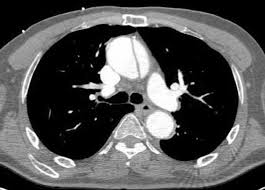
what is the most appropriate initial management?
Initiate IV beta-blocker (e.g., esmolol) for aortic dissection. Call thoracic surgery.
300
54-year-old woman with iron deficiency anemia due to chronic menorrhagia is treated with intravenous ferric carboxymaltose after failing oral iron therapy. Two weeks later, she presents with worsening fatigue, diffuse bone pain, and proximal muscle weakness.
Laboratory studies show:
- Hemoglobin improved
- Phosphate: 1.4 mg/dL (low)
- Calcium: normal
- PTH: mildly elevated
- Vitamin D: normal
- Creatinine: normal
What is the most likely mechanism of her symptoms?
Ferric carboxymaltose–induced increase in FGF23 → renal phosphate wasting → hypophosphatemia
400
A patient with HFrEF is started on quadruple therapy. Which class has the strongest mortality benefit and should be prioritized early?
ARNI (sacubitril/valsartan)
400
A patient with resistant hypertension, hypokalemia, low renin, high aldosterone. Best next test?
Aldosterone-renin ratio → confirm with salt suppression test
400
A 58-year-old woman with a history of Roux-en-Y gastric bypass presents with progressive fatigue and exertional dyspnea. Laboratory studies show hemoglobin 9.2 g/dL, MCV 72 fL, ferritin 8 ng/mL, serum iron low, and transferrin saturation (TSAT) 9%. She was started on oral ferrous sulfate 3 months ago but reports persistent symptoms despite adherence. She denies ongoing blood loss.
Which of the following is the most appropriate next step in management?
Initiate intravenous iron therapy due to functional iron deficiency (low TSAT despite normal/elevated ferritin)
Indications for IV iron (must know):
- Malabsorption (e.g., gastric bypass, celiac disease)
- Failure of oral iron after adequate trial
- Chronic kidney disease (especially on ESA)
- Ongoing blood loss exceeding oral replacement
- Inflammatory states (functional iron deficiency)
- Intolerance to oral iron
400
A patient develops rising peak inspiratory pressures (PIP), but plateau pressures remain unchanged. Flow waveform shows scooped expiratory pattern.
What is the most likely cause?
Increased airway resistance (e.g., bronchospasm, mucus plug)
400
A 58-year-old man with type 2 diabetes, obesity, and hypertension is evaluated for elevated liver enzymes. He denies alcohol use. Labs show AST 68 U/L, ALT 54 U/L, and platelets 130,000/µL. He has no signs of cirrhosis on exam.
His FIB-4 score is calculated at 2.1.
What is the most appropriate next step in management?
Order transient elastography (e.g., FibroScan) for further fibrosis risk stratification.
- <1.3 → low risk → no further testing
- 1.3–2.67 → intermediate risk → further evaluation (elastography)
- >2.67 → high risk → refer to hepatology
500
Which trial showed benefit of finerenone in diabetic CKD patients already on ACE/ARB?
FIGARO-DKD (and FIDELIO-DKD)
500
A 48-year-old woman presents with 3 days of progressive fatigue and proximal muscle weakness. She has a history of hypertension and recurrent nephrolithiasis but denies vomiting, diarrhea, or laxative use. Her medications include amlodipine only. On examination, vital signs are normal, and she appears euvolemic. Laboratory studies reveal sodium 138 mEq/L, potassium 2.8 mEq/L, chloride 112 mEq/L, bicarbonate 16 mEq/L, and normal creatinine. Arterial blood gas shows a pH of 7.30. Further evaluation demonstrates urine sodium 40 mEq/L, urine potassium 25 mEq/L, urine chloride 38 mEq/L, and a urine pH of 6.2.
What is the main differential diagnosis?
Distal (Type 1) Renal Tubular Acidosis
500
A 61-year-old man presents with fatigue, bruising, and leukocytosis. Bone marrow biopsy confirms acute myeloid leukemia. Molecular testing reveals an IDH1 mutation. He is not a candidate for intensive chemotherapy due to comorbidities.
Which targeted therapy is most appropriate?
Ivosidenib (IDH1 inhibitor)
500
A patient with ARDS is on volume control ventilation. The pressure-time waveform shows two consecutive breaths with minimal expiratory phase between them. Tidal volumes appear doubled intermittently.
What is the cause and best next step?
Double triggering due to high patient drive → increase sedation or adjust inspiratory time/flow
500
A 26-year-old woman at 10 weeks of pregnancy presents with severe nausea and vomiting for the past 3 weeks. She reports inability to tolerate oral intake and has lost 6 kg. On exam, she appears dehydrated.
Laboratory studies show:
- Na: 132 mEq/L
- K: 3.0 mEq/L
- HCO₃⁻: 34 mEq/L
- AST/ALT mildly elevated
- Urinalysis: ketonuria
She is started on IV fluids with dextrose. Within 24 hours, she develops confusion, ataxia, and nystagmus.
What is the most likely cause of her neurologic symptoms?
Wernicke encephalopathy due to thiamine deficiency precipitated by glucose administration