Matter & Energy
Force, Motion, & Energy
Earth & Space
Organisms & Environments
Random Surprise
100
A student groups the following materials together:
- copper wire
- brick
- wood
- rubber
Which property did the student most likely use to group the materials?
A. Ability to float in water
B. Physical state
C. Flexibility
D. Electrical conductivity
B. Physical state
100
A student is helping a teacher move a bookcase. The student pushes on the bookcase, but the bookcase does not move.
Which action should the student take in order to move the bookcase?
A. Apply more force to one side of the bookcase
B. Apply more downward force to the bookcase
C. Apply less force to the bookcase
D. Apply equal force to all sides of the bookcase
A. Apply more force to one side of the bookcase
100
A teacher places a lamp on a small table. After the lamp is turned on, an office chair is moved near the table. The diagram shows the setup.
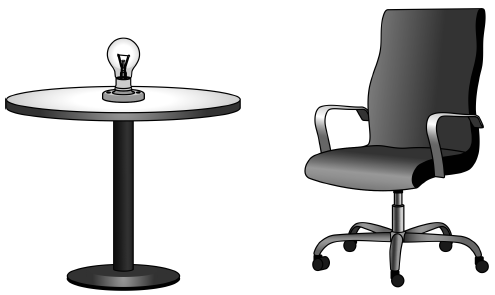
How could a student help the teacher demonstrate the day-night cycle of Earth?
A. The student could sit in the chair and make the chair move around the table.
B. The student could sit in the chair and cause the chair to make one complete spin.
C. The student could sit in the chair and then the teacher could move the lamp around the chair.
D. The student could sit in the chair and then the teacher could walk between the student and the table.
B. The student could sit in the chair and cause the chair to make one complete spin.
100
The Egyptian plover and the Nile crocodile can both be found along the Nile River. The Egyptian plover is a bird that cleans the Nile crocodile’s teeth by picking out and eating meat that is stuck between the crocodile’s teeth. The Nile crocodile does not eat the Egyptian plover.
Which statement describes a relationship between a living and a nonliving component of this scenario?
A. The Nile crocodile lives along the Nile River.
B. The Nile crocodile is a carnivore.
C. The Egyptian plover preys on the Nile crocodile.
D. The Egyptian plover lands on the Nile crocodile.
A. The Nile crocodile lives along the Nile River.
100
A student uses three sediments to make a cementation model. She layers the sediments in a container as shown.
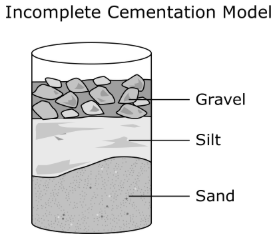
What should the student do next to complete the model of cementation?
A. Mix food coloring with each sediment
B. Add a heat source above the container
C. Shake the container until materials mix
D. Add enough glue to fill gaps in materials
D. Add enough glue to fill gaps in materials
200
A student mixed lemon juice and sugar with warm water. Which property of both the lemon juice and the sugar stayed the same when they were mixed with the water?
A. Density
B. Color
C. Shape
D. Mass
D. Mass
200
Students place a toy elephant on the floor in a room without windows. The students turn the room’s light on and off and record their observations in the table.
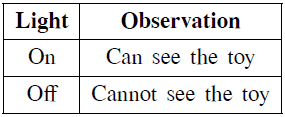
Which statement describes the conditions that allow the students to see the toy?
A. Light rays reflect off the toy and travel to the lightbulb.
B. Light rays reflect off the toy and travel to the students’ eyes.
C. Light rays refract off the toy and travel to the lightbulb.
D. Light rays refract off the toy and travel to the students’ eyes.
B. Light rays reflect off the toy and travel to the students’ eyes.
200
A teacher used an electric kettle filled with water to demonstrate the water cycle to students. The image shows the setup for this demonstration.
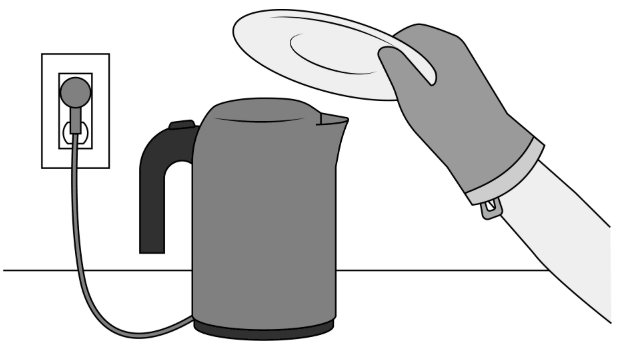
Which of these identifies how a stage of the water cycle is represented in the demonstration?
A. Runoff: Water droplets appeared on the plate.
B. Condensation: Water droplets fell from the plate.
C. Evaporation: The amount of water in the kettle decreased.
D. Precipitation: The water in the kettle began to boil.
C. Evaporation: The amount of water in the kettle decreased.
200
Which statement describes one way trees are dependent on nonliving parts of the environment?
A. Many birds build nests in trees.
B. Different organisms rely on trees to provide food.
C. Some trees need fire to release their seeds.
D. Trees provide shade for plants that grow near them.
C. Some trees need fire to release their seeds.
200
This drawing shows fossils in different layers of soil.
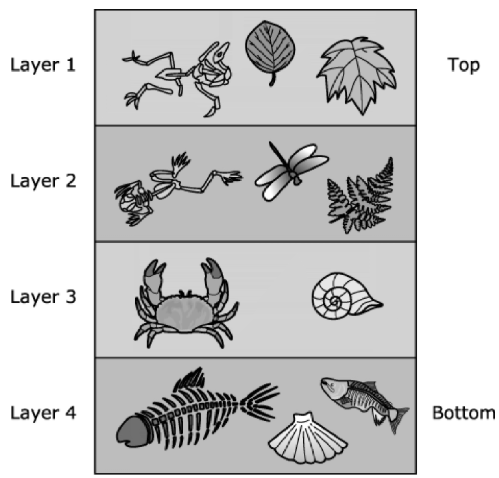
Based on the fossils, which statement best describes one of the layers?
A. Layer 1 was a desert.
B. Layer 2 was an Arctic tundra.
C. Layer 3 was an ocean.
D. Layer 4 was a forest.
C. Layer 3 was an ocean.
300
Students conduct an investigation to determine how water changes state when it is heated and cooled. They complete the steps shown in the table.
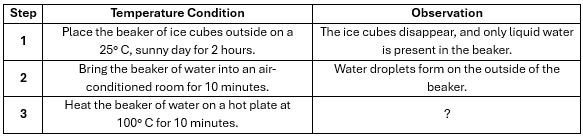
Which observation will the students most likely make in Step 3?
A. Water vapor forms from outside of the beaker, and the amount of water in the beaker decreases.
B. The water in the beaker begins to form a layer of ice on top.
C. The water in the beaker begins bubbling, and the amount of water decreases.
D. Water droplets begin to form on the inside of the beaker.
C. The water in the beaker begins bubbling, and the amount of water decreases.
300
Students design an investigation to test the strength of different magnets. They use three magnets and steel paper clips. Each magnet is placed at a different distance from the steel paper clips. The table they will use to record their data is shown.
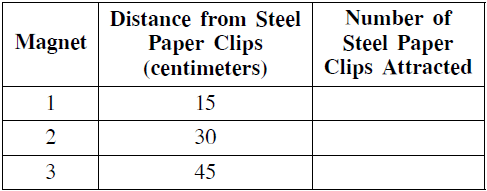
What should the students do to improve the investigation?
A. Use different steel objects for each magnet
B. Place the paper clips farther away from each magnet
C. Place each magnet at the same distance from the paper clips
D. Repeat the investigation using plastic paper clips
C. Place each magnet at the same distance from the paper clips
300
Which statement best describes how glaciers change the surface of Earth?
A. Slow-moving rivers erode the edges of glaciers, forming deltas.
B. The force of strong winds causes melting ice from a glacier to form canyons.
C. Glaciers move slowly over the land, weathering and eroding rock layers to form valleys.
D. The continual melting and freezing of the water in glaciers forms large cracks in the land.
C. Glaciers move slowly over the land, weathering and eroding rock layers to form valleys.
300
The Texas paintbrush is a native Texas wildflower.
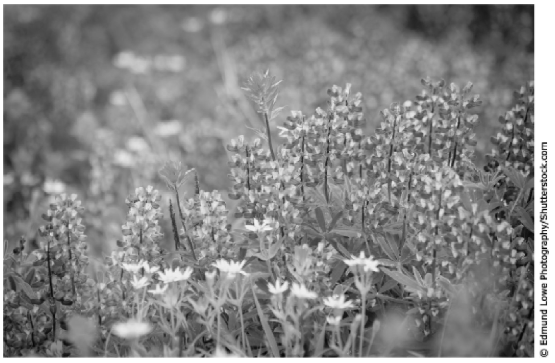
The roots of this plant can pull needed water and nutrients from the root systems of nearby plants.
Which statement describes another way that this interaction between the Texas paintbrush and other plants helps the Texas paintbrush survive in its environment?
A. The Texas paintbrush is protected from animals that feed on plants.
B. The Texas paintbrush slows the growth of nearby plants so that it has plenty of room to grow.
C. The Texas paintbrush grows during different times of the year than nearby plants do.
D. The Texas paintbrush increases in its attractiveness to bees and other pollinators that help it reproduce.
B. The Texas paintbrush slows the growth of nearby plants so that it has plenty of room to grow.
300
An area of land containing living organisms may rapidly or slowly change to a surface covered with a new rock layer that does not contain any living organisms. Which statement best explains why this change occurs?
A. A landslide removes all soil from the area.
B. A hurricane with high winds causes erosion in the area.
C. An earthquake changes the land structures of the area.
D. A volcanic eruption causes lava to flow into the area.
D. A volcanic eruption causes lava to flow into the area.
400
A student drops five objects into a container of water.
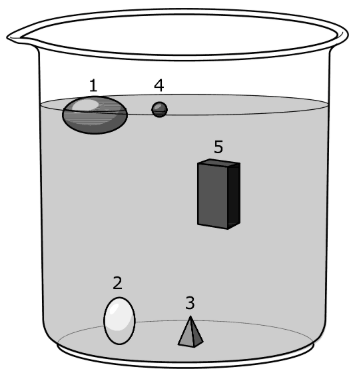
Which statement best classifies some of these objects?
A. Objects 2 and 5 are more dense than water, while Objects 1 and 4 are less dense than water.
B. Objects 1 and 4 are more dense than water, while Objects 2 and 3 have the same density as water.
C. Objects 2 and 3 are less dense than water, while Object 5 is more dense than water.
D. Objects 1 and 4 are less dense than water, while Object 2 is more dense than water.
D. Objects 1 and 4 are less dense than water, while Object 2 is more dense than water.
400
A group of students build the circuit shown.
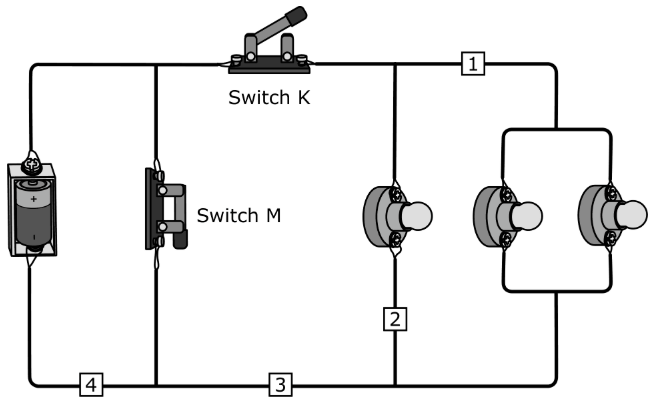
The students want to add an electric motor that still functions when Switch K is open.
At which location should the electric motor be placed?
A. Location 1
B. Location 2
C. Location 3
D. Location 4
D. Location 4
400
A group of students took this picture of Box Canyon while hiking in Big Bend National Park.
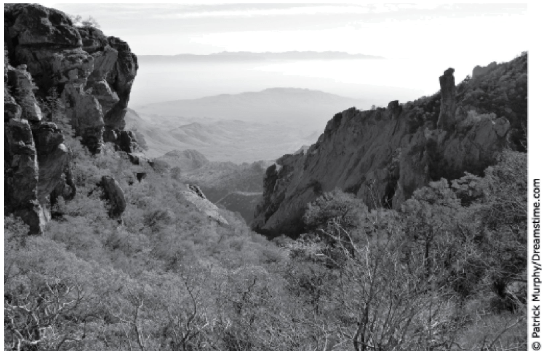
When looking at the picture, the students notice that Box Canyon has a “V” shape. Which process most likely formed Box Canyon?
A. A glacier moving slowly over land
B. Long-term flooding of rivers and lakes
C. River water moving quickly over land
D. Continuous melting and freezing of glaciers
C. River water moving quickly over land
400
The life cycles of a plant and a frog are shown.
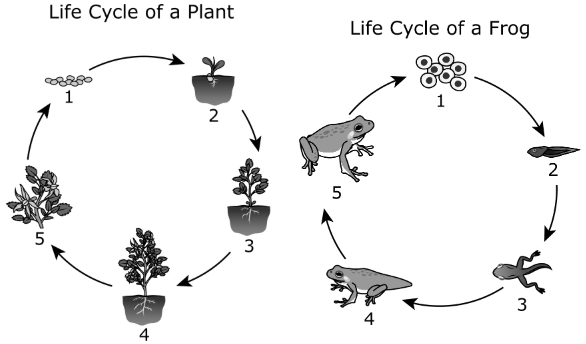
Which life-cycle stage is most similar in the two organisms, and why?
A. Stage 1, because a new living organism has formed
B. Stage 3, because growth has not started yet
C. Stage 4, because growth is complete
D. Stage 5, because more body parts form
A. Stage 1, because a new living organism has formed
400
The life cycles of three organisms are shown.
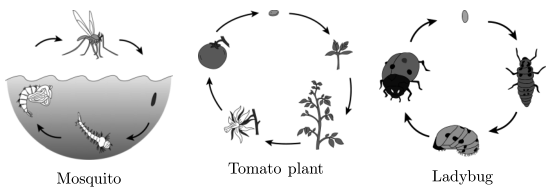
Which statements about the life cycles are correct?
Select TWO correct answers.
A. The tomato plant should have a pupa stage.
B. Part of the mosquito life cycle occurs in water.
C. In all the life cycles, the young organisms look like the adult organisms.
D. The seed of the tomato plant is like the egg of the ladybug and the mosquito.
E. An adult is not needed in the plant life cycle, because plants come from seeds.
B. Part of the mosquito life cycle occurs in water.
D. The seed of the tomato plant is like the egg of the ladybug and the mosquito.
500
A student adds 100 milliliters of water to a beaker and records the mass. The student then adds 12 grams of salt to the water and uses a hot plate to heat the mixture. The student stirs the warm water until the salt can no longer be seen in the water.
The student claims that even though the salt has disappeared, some of the properties of the salt have not changed. What can the student do to support this claim?
A. Pour the water through a paper filter to separate out the salt
B. Add food coloring to the beaker so that the salt can be seen
C. Use a magnet to separate the salt from the water
D. Measure the mass of the water and the salt
D. Measure the mass of the water and the salt
500
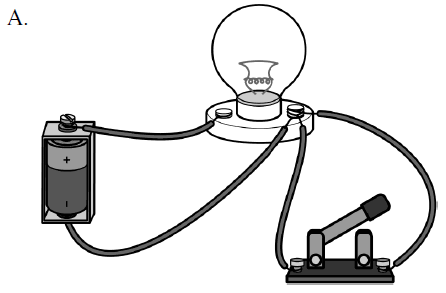
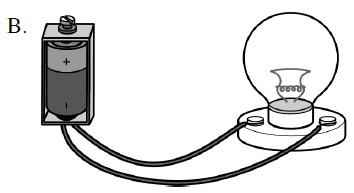
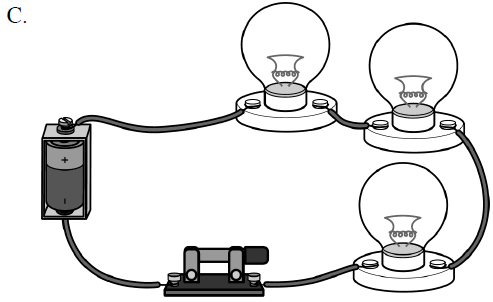
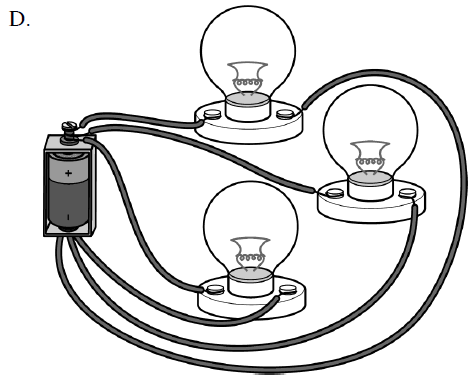
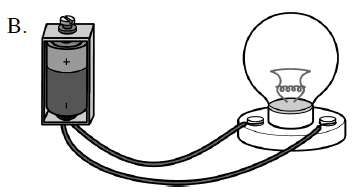
Which circuit is NOT a complete circuit?
500
Which statement best explains a difference between the formation of sedimentary rock and the formation of fossil fuels?
A. Heat is needed for the formation of fossil fuels but not for the formation of sedimentary rock.
B. Cementation occurs in the formation of fossil fuels but not in the formation of sedimentary rock.
C. Decaying organisms must be present for the formation of sedimentary rock but not for the formation of fossil fuels.
D. Time is needed for the formation of sedimentary rock but not for the formation of fossil fuels.
A. Heat is needed for the formation of fossil fuels but not for the formation of sedimentary rock.
500
Students learned about ocean animals and made a table comparing some features of hammerhead sharks and stingrays.
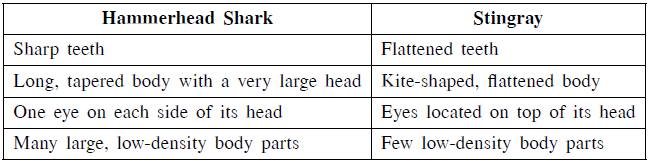
Which piece of evidence provides the least support for the claim that hammerhead sharks are adapted to live in open water and stingrays are adapted to live on the ocean floor?
A. A hammerhead shark has sharp teeth to bite and tear into its prey, while a stingray has flat teeth that can be used to crush prey.
B. A hammerhead shark’s eyes are positioned in a way that allows it to see in many directions, while a stingray’s eyes are positioned so that it can look upward.
C. The slender body shape of a hammerhead shark allows it to swiftly swim through the water, while the flat body shape of a stingray allows it to glide along the ocean bottom and settle into the sand.
D. A hammerhead shark has a body part that is less dense than water and prevents the shark from sinking, while the stingray does not have this body part that helps it float, so it will sink when it stops swimming.
A. A hammerhead shark has sharp teeth to bite and tear into its prey, while a stingray has flat teeth that can be used to crush prey.
500
Scientists examine the diagram shown, which has information about the fossils found in different layers of rock.
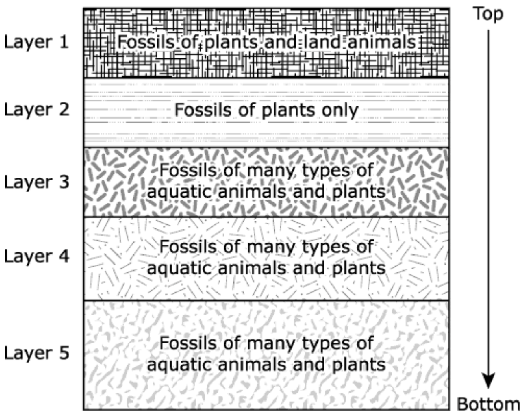
The scientists believe that a sudden change in the environment at one point led to the disappearance of all the animals in the area.
Which statements are supported by the information in the diagram?
Select TWO correct answers.
A. Large trees most likely grew in Layers 4 and 5.
B. At one time the entire area was covered by an ocean.
C. The formation of Layer 4 occurred before the formation of Layer 5.
D. Layer 1 supported only large populations of aquatic plants.
E. The disappearance of the animals occurred before the formation of Layer 1.
B. At one time the entire area was covered by an ocean.
E. The disappearance of the animals occurred before the formation of Layer 1.